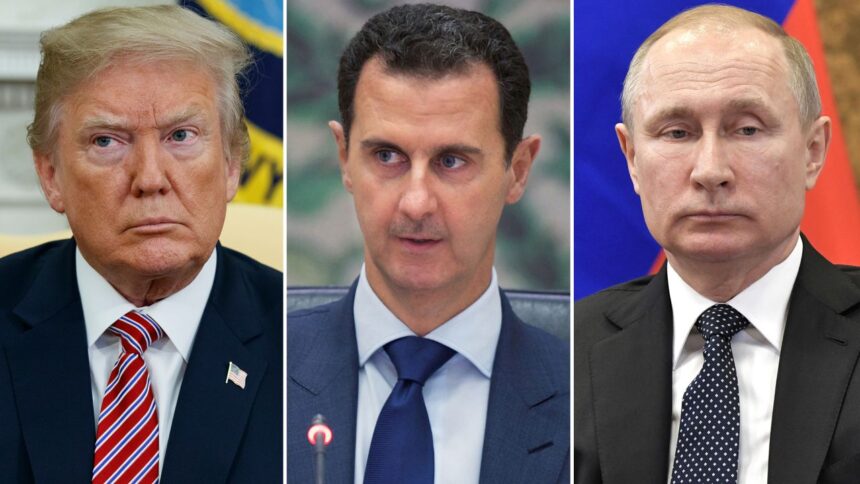
Toppling Syrian President Bashar al-Assad before Donald Trump assumed office was a calculated and strategic move by Israel, aimed at addressing shifting geopolitical realities and the anticipated realignment of U.S. foreign policy under Trump’s leadership. Assad’s regime, heavily supported by Russia, posed a growing threat to Israel’s regional dominance. The potential for Trump to seek alignment with Russia—particularly by resolving the Ukraine conflict in Moscow’s favour—heightened these concerns. Such a development would have allowed Russia to reallocate its focus and resources to the Middle East, reinforcing Assad’s regime and amplifying Russian influence in Syria. Compounding Israel’s concerns was the appointment of U.S. politician Tulsi Gabbard, who has publicly expressed pro-Assad sentiments, as a significant political figure influencing U.S. foreign policy discussions, signalling an even greater challenge to Israel’s ‘strategic’ objectives.
Gabbard’s controversial stance on Assad further complicated the geopolitical calculus for Israel. A vocal critic of U.S. interventionist policies in the Middle East, Gabbard had previously referred to Assad as a leader fighting “terrorists” and dismissed regime-change efforts in Syria as counterproductive. In 2017, she met with Assad during a visit to Damascus—a move widely criticized by U.S. officials and allies. Gabbard’s position echoed a broader narrative that portrayed Assad as a stabilizing force against extremist groups like ISIS, disregarding his regime’s well-documented human rights abuses and alliance with Iran and Hezbollah. Her views were seen as providing political cover for Assad, potentially influencing U.S. foreign policy to take a less confrontational approach toward his regime.
A stable Assad regime, reinforced by Russia and a potential softening of U.S. policy, would have significantly complicated Israel’s ability to maintain its strategic dominance in the Middle East. Gabbard’s statements, coupled with Trump’s potential disengagement from Middle Eastern conflicts, reinforced Israel’s urgency to act decisively during this transitional period.
The broader context of the Trump administration’s anticipated rapprochement with Russia added another layer of complexity. A resolution of the Ukraine conflict in Moscow’s favour would have freed Russia to intensify its military and political presence in Syria, further bolstering Assad’s position. Already, Russia’s involvement in Syria had created challenges for Israel’s dominance in the region as Moscow’s military presence provided a protective umbrella for Assad and his allies. Any further strengthening of Russia’s role in Syria would have curtailed Israel’s ability to achieve its objectives – mainly the Greater Israel project—effectively.
There has also been speculation and analysis suggesting that Donald Trump may perceive some of the legal challenges he has faced as being influenced by individuals or groups linked to the Israeli lobby.
Trump has faced numerous investigations and indictments, including those related to hush money payments, election interference, and classified documents. Some analysts suggest he might view the U.S. legal and political system as being influenced by powerful lobbies, including those with ties to Israel, given the high stakes of U.S.-Israel relations. In other words, Trump’s apparent belief that his legal hurdles are politically or externally motivated reflects his broader narrative of being targeted by “establishment forces.”
Donald Trump is also under the assumption that the Israeli lobby preferred Kamala Harris over him. Donald Trump’s actions during his first term and leading up to his recent electoral campaign suggest a strategic alignment with pro-Israel policies, driven by a combination of personal ambition, electoral calculations, and geopolitical considerations.
Recognizing Jerusalem as Israel’s capital, supporting sovereignty over the Golan Heights, and brokering the Abraham Accords solidified Trump’s image as a strong ally of Israel, particularly among conservative and right-leaning pro-Israel groups.
In addition, Evangelicals, a key base of Trump’s support, are often strongly pro-Israel, viewing support for the Jewish state as a religious and political imperative. By aligning with Israel, Trump solidified his standing with this influential voting bloc. His moves were likely aimed at bolstering his image as a strong ally of Israel, appealing to key domestic and international constituencies for political and electoral advantage.
Trump’s likely approach to Israel in his second term will be very different from his first one. During his initial presidency, he was known for his strong support for Israel. However, as a second-term president who is no longer concerned about reelection, Trump can afford to distance himself from Israel’s agenda and focus on his broader “America First” policy. This included potentially repairing ties with Russia, even at the expense of traditional alliances with Israel. Such a realignment raised concerns in Jerusalem about reduced U.S. backing for Israel’s strategic priorities in the region.
Recognizing the fleeting opportunity presented by the transitional period, Israel sought to align its actions with the outgoing Biden administration, which maintained a firm stance against Assad. Additionally, Israel found common ground with Turkey, which opposed Assad’s regime due to its own interests. By acting decisively, Israel aimed to disrupt the growing power of the Russian influence and secure its long-term interests before a less favourable global environment materialized.
In conclusion, Israel’s efforts to topple Assad before Donald Trump assumed office were driven by a combination of strategic imperatives and the recognition of shifting geopolitical dynamics. The addition of Tulsi Gabbard’s pro-Assad statements to the mix underscored the potential for U.S. foreign policy to shift away from confronting Assad’s regime, further emboldening his alliance with Russia. During this transitional period, Israel sought to preempt unfavourable developments, disrupt adversarial alliances, and maintain and consolidate its position as a dominant power in the Middle East.