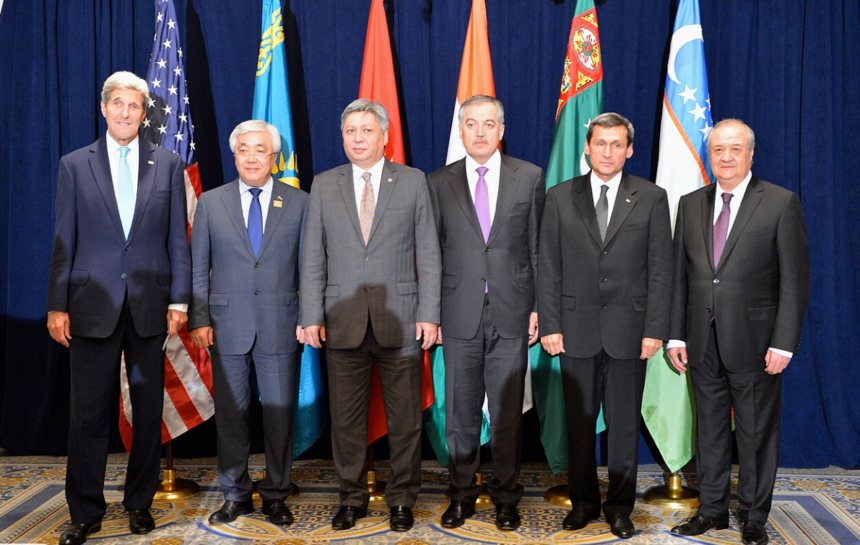
The consolidation of the Central Asia–Azerbaijan format, the growing institutional weight of the Organization of Turkic States, the Middle Corridor and the US-backed Trump Route are beginning to form a broader Eurasian architecture. Taken together, these developments extend Western economic and strategic reach from Europe through Turkey and the South Caucasus into Central Asia—not through NATO enlargement, but through a Turkey-anchored system of connectivity, institutions and strategic alternatives.
The informal gathering of the five Central Asian states and Azerbaijan in Cholpon-Ata, Kyrgyzstan, on July 31, 2026, deserves considerably more attention than its understated diplomatic designation suggests.
Kazakhstan, Kyrgyzstan, Tajikistan, Turkmenistan and Uzbekistan met with Azerbaijan in the expanded format created after Baku became a full participant in the Central Asian consultative mechanism in November 2025. The meeting emphasized transport and digital connectivity, economic integration and the construction of a larger regional development space linking Central Asia with the South Caucasus. It concluded with the adoption of the Cholpon-Ata Declaration and prepared the ground for the next meeting in Turkmenistan.
“C6” remains analytical shorthand rather than the formal title of a treaty organization. Yet the term captures an important geopolitical transformation.
The old C5 was geographically confined to the five post-Soviet Central Asian republics. Azerbaijan’s inclusion carries the emerging regional architecture across the Caspian Sea. For the first time, Central Asian consultation is institutionally connected to the South Caucasus and, indirectly, to Turkey.
This does not mean C6 is a Western creation. Nor should its members be treated as Western proxies. The Central Asian states are pursuing their own strategic autonomy, Azerbaijan has its own regional ambitions, and Turkey’s objectives are not identical to those of Washington or Brussels.
But separate interests are beginning to converge around the same geography.
The Middle Corridor provides the physical infrastructure. The Organization of Turkic States provides a growing institutional network. Azerbaijan serves as the Caspian hinge. TRIPP introduces a direct American stake into South Caucasian connectivity. European capital and markets pull the system westward.
And Turkey sits at the point where these different vectors increasingly meet.
From Central Asian autonomy to a wider Eurasian architecture
The origins of Central Asia’s consultative mechanism are important because the process began not as an instrument of great-power competition, but as a regional response to decades of fragmentation.
Border disputes, water allocation, restricted trade and political rivalries had long prevented the five Central Asian republics from acting collectively. The revival of regional consultation after 2017 represented an attempt to create a political space in which the region could coordinate internally rather than conduct almost every major strategic conversation through Moscow, Beijing, Washington or another external capital.
That regional autonomy should not be confused with geopolitical neutrality.
The stronger the capacity of Central Asian states to coordinate among themselves, the more effectively they can diversify their foreign relationships. A fragmented region must negotiate separately with Russia, China, Europe, Turkey or the United States. A more cohesive region possesses greater bargaining power with all of them.
Regional integration therefore becomes an instrument of strategic autonomy.
Azerbaijan’s inclusion magnifies that effect considerably. The 2025 decision was framed as creating a bridge between Central Asia and the South Caucasus and building a more unified space of cooperation.
Azerbaijan should therefore be understood as more than simply the sixth participant.
It is the hinge that changes the strategic meaning of the format.
On the eastern side of the Caspian lie Central Asia and the approaches to China. On the western side lie Azerbaijan, Georgia, Armenia and Turkey. As the two shores become more closely integrated economically and politically, Central Asia becomes less exclusively an inner-Eurasian landlocked space and acquires a stronger western vector.
That is where the implications become continental.
The Middle Corridor turns geography into geopolitical power
The material foundation of this transformation is the Trans-Caspian International Transport Route, better known as the Middle Corridor.
Its broad architecture stretches from China through Central Asia, crosses the Caspian Sea, traverses Azerbaijan and Georgia, and enters European markets through Turkey. It is not a single railway but an interconnected system of railways, roads, ports, shipping links and logistics infrastructure.
Its strategic importance lies not merely in transportation time.
The corridor redistributes dependence.
Central Asian trade that once relied heavily on northern routes through Russia can increasingly move westward. Europe gains an additional connection to Central Asian resources and Asian markets. China acquires another pathway toward Europe. Azerbaijan becomes a continental transit hub.
Turkey, meanwhile, becomes the principal western junction linking the emerging Trans-Caspian system to Europe.
This produces a distinctive form of geopolitical power.
Turkey does not need territorial expansion or NATO enlargement into Central Asia for its strategic depth to increase. Its importance grows whenever infrastructure east of its borders makes Turkish territory more economically valuable.
A railway completed in Central Asia can strengthen Turkey if it feeds cargo westward. A logistics centre in Uzbekistan can increase Turkey’s importance if its freight crosses the Caspian. Greater ferry capacity between Kazakhstan and Azerbaijan magnifies the relevance of the Baku-Tbilisi-Kars railway. Digitized customs procedures among Central Asian governments can strengthen Turkey simply by making the entire route more competitive.
Turkey’s geopolitical hinterland can therefore expand without Turkey’s borders expanding.
Infrastructure performs much of the work once associated primarily with territorial control.
Ankara’s strategic reach should increasingly be measured not simply from its eastern frontier, but by the extent of the economic networks for which Turkey provides one of the most important western exits.
As those networks move deeper into Central Asia, Turkey’s functional strategic depth moves closer to China.
C6 and the OTS form complementary layers
The significance of this transformation becomes clearer when C6 is examined alongside the Organization of Turkic States.
The two structures are different and should not be conflated.
Turkey does not belong to C6. Tajikistan belongs to C6 but not to the OTS. Azerbaijan, Kazakhstan, Kyrgyzstan and Uzbekistan sit near the centre of both architectures, while Turkmenistan combines participation in Central Asian regionalism with a distinctive position in Turkic cooperation because of its permanent neutrality.
That asymmetry may actually strengthen the wider system.
C6 provides an inclusive Central Asian framework that does not depend on linguistic or ethnic identity. The OTS provides another layer linking much of that space through Azerbaijan to Turkey.
C6 can strengthen coordination across Central Asia and the Caspian. The OTS can deepen functional integration across much of the same geography and extend it westward.
The OTS has already moved well beyond cultural symbolism.
Its members are developing mechanisms for transport coordination, electronic permits, digital freight documentation, customs facilitation, investment cooperation and Middle Corridor development. At the April 2026 meeting of OTS transport ministers in Bishkek, governments emphasized further infrastructure development, implementation of the e-Permit system and acceleration of the e-CMR electronic freight framework.
This matters because geopolitical integration rarely begins with a dramatic political union.
It begins with interoperability.
When trucks cross borders faster, customs systems communicate digitally, investment moves more easily and transport ministries coordinate infrastructure, an abstract political community gradually acquires material substance.
A stronger C6 could reinforce this development by providing greater horizontal coordination among Azerbaijan and the Central Asian states. The OTS could then connect much of that increasingly cohesive space more effectively with Turkey.
For Western governments, the potential attraction is clear.
A more connected Central Asian and Turkic space with a major western outlet through a NATO member would increase the region’s alternatives to excessive dependence on Russia or China without requiring the Central Asian states to join a formal Western alliance.
TRIPP adds a direct American dimension
The Trump Route for International Peace and Prosperity adds a dimension that neither C6 nor the OTS provides by itself: direct American involvement in the connective geography of the South Caucasus.
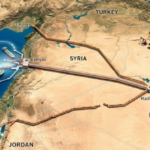
The route emerged from the August 8, 2025 Washington declaration between Armenia and Azerbaijan. Its immediate purpose is to facilitate a connection between Azerbaijan proper and the Nakhchivan Autonomous Republic across Armenian territory while also improving Armenian and wider regional connectivity.
Crucially, the framework preserves Armenian sovereignty and jurisdiction.
The project became more consequential in May 2026, when Armenia and the United States concluded a detailed strategic cooperation framework describing TRIPP as a multimodal link potentially incorporating railways, roads, oil and gas pipelines, fibre-optic infrastructure and electricity projects.
The framework explicitly connects TRIPP to the broader Trans-Caspian trade system.
Under the arrangement, a TRIPP Development Company is to be established as a US-Armenian joint venture. A subsidiary of the US International Development Finance Corporation is intended to hold a 74 percent controlling stake, with Armenia retaining 26 percent. The framework envisages an initial 49-year period of exclusive development and land-use rights in designated project areas, with the possibility of an additional 50-year period under mutually agreed terms.
Whatever its eventual commercial scale, that structure makes TRIPP more than another proposed transit corridor.
It creates the possibility of a long-term American commercial and developmental presence inside the connective geography linking the Caspian basin with Turkey.
TRIPP strengthens the Turkey-anchored western vector
The Middle Corridor has traditionally moved from Azerbaijan through Georgia toward Turkey. TRIPP does not replace that route.
It potentially adds another branch.
Azerbaijan could connect through Armenia to Nakhchivan and onward toward Turkey, increasing the number and resilience of east-west connections across the South Caucasus.
The implications become clearer when the initiatives are considered together.
C6 extends Central Asian regional coordination to Azerbaijan.
The Middle Corridor moves trade and infrastructure across the Caspian.
TRIPP potentially adds another Azerbaijan-Armenia-Nakhchivan-Turkey connection.
Turkey carries much of the resulting western vector toward European and Mediterranean markets.
TRIPP also gives the United States something its traditional Central Asia diplomacy largely lacked: a physical economic stake in one of the corridors supporting Eurasian diversification.
Washington’s C5+1 diplomacy has long emphasized Central Asian sovereignty, connectivity and strategic alternatives. TRIPP potentially converts part of that diplomatic strategy into a durable commercial presence along the route itself.
Europe is investing from the west. The United States is embedding itself in a South Caucasian connectivity project. Azerbaijan links those systems across the Caspian to Central Asia. The OTS is building greater institutional coordination across much of the same geography.
Turkey stands at the western convergence point.
A Western-aligned architecture by convergence rather than design
This emerging system should not be described as a centrally designed Western project.
Its components arose for different reasons.
Central Asian governments want sovereignty, diversification and better access to global markets.
Azerbaijan wants to consolidate its role as a Caspian and continental transit hub.
Turkey wants deeper strategic and commercial engagement across the Turkic world.
Europe wants alternatives to Russian transit and greater access to Central Asian energy, raw materials and markets.
The United States wants stronger regional sovereignty, diminished monopolistic leverage by rival powers and supply chains less vulnerable to Chinese dominance.
These interests are not identical.
But increasingly, they point along the same geographical line.
That line runs from Europe through Turkey, the South Caucasus and the Caspian into Central Asia.
C6 gives the emerging system greater political depth.
The OTS provides institutional connectivity across much of the Turkic space.
The Middle Corridor provides the primary logistical backbone.
TRIPP adds another American-supported artery across the South Caucasus.
Turkey anchors these networks to Europe.
The result is therefore better understood not as a Western bloc, but as an emerging geoeconomic architecture increasingly compatible with Western strategic interests.
Its strategic significance comes precisely from the fact that it does not need to present itself as Western enlargement.
Russia is the immediate geopolitical loser
The most immediate strategic consequence is the gradual erosion of Russia’s traditional transit leverage.
For much of the post-Soviet era, Moscow’s influence in Central Asia rested not only on security relationships, political history or language, but also on infrastructure.
Trade routes, pipelines, railways, labour migration and access to external markets frequently ran through Russia.
Geography reinforced political influence.
The Middle Corridor weakens that structural advantage by creating alternatives.
Kazakhstan becomes less dependent on a single transit direction if larger volumes can cross the Caspian. Uzbekistan gains strategic flexibility if westbound exports can travel through Azerbaijan and Turkey. Additional South Caucasian routes further diversify the regional transport map.
Russia will remain an important Eurasian power. Its economic, linguistic, migration and security relationships are too deeply embedded to disappear.
But the decisive transformation is not the disappearance of Russian influence.
It is the erosion of Russian exclusivity.
C6, the Middle Corridor and expanding South Caucasian connectivity are helping create a post-monopolistic Eurasia in which Moscow remains influential but increasingly competes with alternative networks.
China is the more complex long-term challenge
China presents a different challenge.
Unlike Russia, Beijing does not require territorial or transit monopolies to exercise structural power.
Its influence derives from capital, industrial scale, geographical proximity, technology, trade, infrastructure construction and its dominant position in several critical-mineral processing chains.
China has also built its own China-Central Asia institutional architecture, demonstrating that Beijing increasingly sees the region as an integrated strategic space rather than merely as five separate bilateral relationships.
This means that bypassing Russia does not necessarily mean bypassing Chinese power.
Chinese financing may help construct an alternative railway. Chinese companies may supply its equipment. Chinese digital systems may operate parts of the infrastructure. Chinese firms may dominate commodities moving through the corridor.
A Central Asian mineral may be extracted locally and transported westward while still depending on Chinese processing.
Balancing China therefore requires more than an alternative railway.
It requires an alternative ecosystem.
That means diversified financing, export markets, transportation networks, digital infrastructure, commercial standards, investment partners and mineral-processing capacity.
It also requires Central Asian governments strong enough to negotiate with Beijing rather than becoming individually dependent upon it.
Turkey is well positioned to contribute to such an ecosystem.
Turkey can counterbalance China without becoming anti-China
The strength of the Turkish model lies precisely in the fact that Ankara does not need to become an anti-Chinese containment power.
Turkey supports economic engagement with Beijing and has presented the Middle Corridor as potentially complementary to China’s Belt and Road Initiative.
That is not necessarily a contradiction.
Chinese goods can travel through the Middle Corridor. Chinese firms can invest in Central Asia. Beijing can remain a major regional trading partner.
The strategic question is not whether China participates.
It is whether China becomes indispensable.
A Central Asian state with only one dominant external economic outlet is vulnerable. A government able to trade eastward with China, northward with Russia and westward through Azerbaijan and Turkey possesses substantially greater bargaining power.
If European and American investors can compete for Central Asian resources, if Turkish companies participate in infrastructure and if regional institutions make westward commerce easier, Chinese influence remains substantial but becomes less exclusive.
The most effective challenge to structural dependence is therefore not exclusion.
It is competition.
Turkey can function as an infrastructural counterbalance without becoming a containment power.
For Western strategy, that may be much more realistic than attempting to reproduce Cold War-style bloc politics along China’s western frontier.
Critical minerals reveal the strategic logic
The geopolitical competition becomes particularly clear when critical minerals are added to the equation.
Central Asia possesses substantial reserves of uranium, copper and other resources essential to advanced manufacturing, renewable energy, digital technologies and defence industries.
Europe and the United States increasingly view access to these materials through the lens of supply-chain security because China occupies dominant positions in the processing of several strategically important commodities.
The European Union has therefore linked its Central Asian connectivity strategy with critical raw-material partnerships.
The same European approach that supports Trans-Caspian transportation also seeks diversified mineral value chains.
The strategic logic is straightforward.
Central Asian resources become considerably more valuable to Europe if they can reach Western markets through infrastructure that does not depend exclusively on either Russia or China.
That gives Turkey strategic importance far beyond transit fees.
Turkey can become part of the western supply-chain architecture through which Central Asian resources reach European industry. Azerbaijan provides the Caspian bridge. Additional South Caucasian routes can strengthen the resilience of the system.
The Middle Corridor therefore becomes more than a trade route.
It becomes part of the infrastructure of supply-chain security.
The United States and Europe are approaching the same geography from opposite directions
European and American strategies are increasingly complementary even where they are not centrally coordinated.
Europe has concentrated heavily on financing broader Trans-Caspian connectivity. At the first EU-Central Asia summit in 2025, relations were elevated to a strategic partnership, while European and international financial institutions backed the mobilization of approximately €10 billion for sustainable transport connectivity.
Critical raw materials, energy and digital infrastructure were integrated into the same strategic framework.
The United States approaches the region differently.
Its C5+1 mechanism has long emphasized Central Asian sovereignty and diversification. Critical minerals have added a more direct strategic-economic dimension. TRIPP potentially goes further by giving Washington a durable developmental position in infrastructure connecting the South Caucasus with the wider Trans-Caspian network.
The two approaches increasingly meet geographically in Turkey.
European investment moves eastward.
American-supported connectivity moves westward.
Central Asian infrastructure crosses Azerbaijan.
The OTS promotes functional integration across much of the route.
At the centre of this convergence sits a NATO member with the geography, commercial relationships and political networks necessary to connect these separate initiatives.
That considerably increases Turkey’s strategic value to the West.
Turkey can go where formal Western enlargement cannot
There are clear political limits to direct Western institutional expansion into Central Asia.
The region borders Russia and China, and its governments attach extraordinary importance to strategic autonomy. Any attempt to transform Central Asia explicitly into a NATO-oriented geopolitical bloc would generate resistance and could undermine the very sovereignty Western governments claim to support.
Turkey offers a different mechanism.
Its relationships with Central Asia have cultural, historical and commercial dimensions that Washington and Brussels cannot reproduce.
Its participation in the OTS gives Ankara an institutional platform rooted in regional cooperation rather than formal Western security expansion. Turkish businesses operate across the region. Azerbaijan gives Ankara a particularly close strategic partner on the western shore of the Caspian.
At the same time, Turkey remains a NATO member, participates deeply in European economic structures and forms an indispensable part of Western security geography.
This dual position is what gives Ankara unusual strategic value.
Turkey can expand a Western-compatible geoeconomic space without requiring that space to define itself formally as Western.
Indeed, Ankara may serve this function most effectively when it retains enough strategic autonomy to avoid appearing as an executor of American or European policy.
A division of geopolitical labour is emerging
The architecture now taking shape can be understood as a loose division of geopolitical labour.
C6 strengthens regional political cohesion.
The OTS deepens functional integration across much of the Turkic space.
Azerbaijan provides the hinge across the Caspian.
The Middle Corridor supplies the main east-west logistics backbone.
TRIPP potentially provides an additional US-backed connection across the South Caucasus.
Europe contributes capital, technology and destination markets.
The United States contributes geopolitical weight and increasingly direct commercial participation.
Turkey provides the western geography through which much of this architecture connects with Europe.
None of these elements is sufficient alone.
Together, however, they begin to form a strategically coherent system.
It is neither a new NATO nor an anti-China alliance.
It is a geoeconomic architecture built around diversification: more routes, more markets, more investment partners and fewer monopolies.
Turkey is increasingly its western anchor.
Infrastructure will decide whether the strategy succeeds
There remains, however, an enormous difference between drawing a corridor on a geopolitical map and making that corridor commercially competitive.
The Middle Corridor still faces limited Caspian ferry capacity, insufficient port infrastructure, inconsistent railway performance, administrative delays and fragmented customs procedures. Falling Caspian water levels introduce another structural challenge.
TRIPP also remains a developing framework whose ultimate commercial importance will depend on financing, construction, political normalization between Armenia and Azerbaijan and effective integration with surrounding networks.
Legal agreements do not themselves move freight.
The strategic contest will therefore be determined by implementation.
Europe and the United States cannot compete with Chinese infrastructure through declarations that remain unfunded.
The OTS cannot become geopolitically consequential through cultural rhetoric alone.
Turkey cannot become a primary Eurasian transit hub if its railways, ports or border crossings become bottlenecks.
Central Asian strategic autonomy will remain theoretical if alternative routes are too costly or unreliable to compete commercially.
In twenty-first-century Eurasia, infrastructure is not simply an instrument of geopolitics.
Infrastructure is geopolitics.
Turkey’s strategic frontier is moving toward China
The significance of the Cholpon-Ata meeting can now be understood more clearly.
It did not create a new military bloc. Azerbaijan’s inclusion did not suddenly transform Central Asia into a Western sphere of influence.
What it did was strengthen another component of an emerging Eurasian architecture whose cumulative direction increasingly opens westward.
C6 connects Central Asia more closely with Azerbaijan.
Azerbaijan links Central Asia across the South Caucasus.
The Middle Corridor provides the principal physical artery.
The OTS gives much of the same geography an increasingly functional institutional framework connected to Turkey.
TRIPP inserts a long-term American developmental stake into another potentially important South Caucasian connection.
European capital and markets pull the system farther west.
China will remain one of Eurasia’s dominant economic actors and may itself benefit substantially from these corridors.
That does not diminish their strategic value to the West.
A route can carry Chinese commerce while simultaneously reducing Beijing’s ability to determine the political and economic terms under which the surrounding region interacts with the outside world.
That is the central paradox—and opportunity—of the emerging order.
The objective is not to drive China out of Central Asia.
It is to ensure that China does not become its only organizing centre.
The objective is not to eliminate Russia.
It is to end Moscow’s inherited monopoly over westward connectivity.
And the objective is not to absorb the Central Asian states into a Western bloc.
It is to give them enough alternative routes, markets and partners that their strategic autonomy becomes materially sustainable.
Turkey is unusually well positioned to facilitate that outcome.
What began three decades ago primarily as Ankara’s cultural reconnection with the Turkic republics is evolving into something considerably more consequential.
The OTS is acquiring institutional depth.
The Middle Corridor is acquiring infrastructure.
C6 is producing stronger regional coordination.
TRIPP is introducing a direct American stake into part of the connective architecture of the South Caucasus.
Together, these developments are changing Turkey’s geopolitical meaning for both Eurasia and the West.
Turkey’s strategic frontier no longer needs to be understood as ending at the Black Sea, the Caucasus or even the Caspian.
Through railways, ports, pipelines, digital infrastructure, investment networks and regional institutions, its functional geopolitical reach can extend across Central Asia toward Xinjiang and China’s western frontier.
The West did not create every element of this architecture. Nor does every participant share the same geopolitical objective.
But Western interests increasingly converge around its success. European capital is helping construct parts of it. The United States is developing a direct stake in one of its most consequential South Caucasian links. Central Asian governments seek the strategic alternatives it can provide.
What is emerging is therefore best understood as a Turkey-anchored geoeconomic axis across Eurasia that increasingly aligns with Western strategic interests.
It is not an anti-China military bloc.
It is an alternative to the emergence of a China-centred continental order in which Central Asia lacks meaningful options.
If C6 consolidates, if the OTS continues its evolution from cultural affinity toward functional integration, if the Middle Corridor becomes commercially competitive and if TRIPP develops into an effective additional Trans-Caspian connection, the geopolitical consequence could be profound.
Turkey will no longer merely connect Europe and Asia.
It will increasingly become the country through which Europe and the wider West project economic and strategic connectivity across the heart of Eurasia toward China’s western frontier.
By: GEOPOLIST – Istanbul Center for Geopolitics