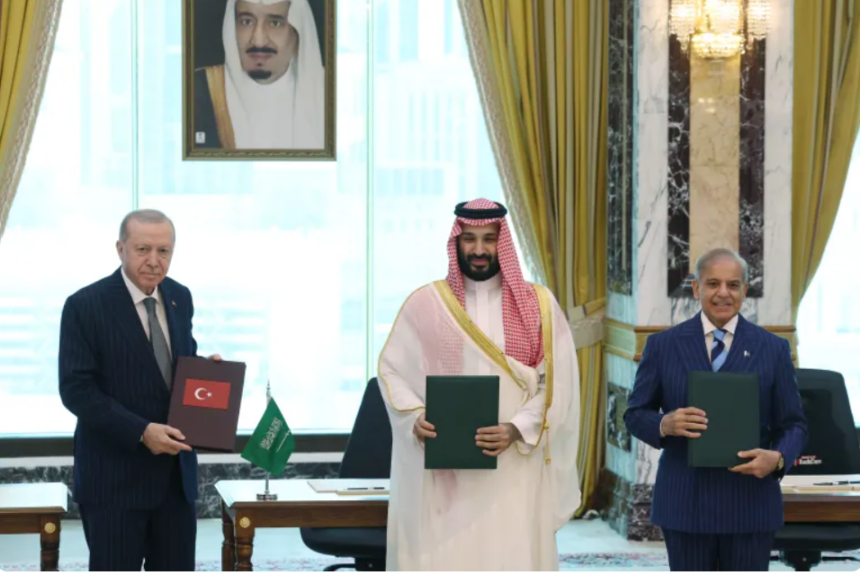
Trilateral agreement declares an attack on one country an attack on all three, creating a new security framework linking NATO member Turkey, nuclear-armed Pakistan and Gulf power Saudi Arabia
MECCA — Turkey, Saudi Arabia and Pakistan signed a landmark joint defence agreement in Mecca on Friday, establishing a collective security framework that commits the three countries to regard an armed attack against any one of them as an attack against all.
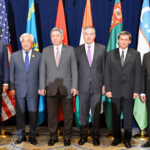
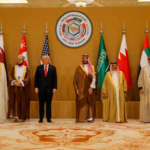
Turkish President Recep Tayyip Erdoğan, Saudi Crown Prince Mohammed bin Salman and Pakistani Prime Minister Shehbaz Sharif concluded the agreement on August 7 following months of negotiations, bringing together three of the Muslim world’s most strategically influential states at a time of extraordinary military instability across the Middle East.
Pakistan’s powerful army chief, Field Marshal Asim Munir, also attended the meetings surrounding the signing.
Officially named the Mecca Joint Defence Agreement, the pact is intended to strengthen collective deterrence and expand military cooperation among the three countries.
According to the joint statement, the agreement reflects Ankara, Riyadh and Islamabad’s determination to strengthen their collective security both within the region and beyond.
The most consequential provision is the pact’s mutual-defence clause: an armed attack against Turkey, Saudi Arabia or Pakistan will be treated as an attack against all three.
The agreement also calls for the development of defence cooperation “in all its dimensions”, potentially opening the way for significantly deeper coordination involving military training, defence industries, intelligence, air and missile defence, exercises and strategic planning.
The governments have not yet publicly detailed precisely what military obligations would be triggered by an attack or whether the agreement will eventually establish permanent joint command structures.
Reuters reported that a Turkish official described the pact as “purely defensive in nature”, saying it was not directed against any particular country and would not replace the three states’ existing bilateral or multilateral alliances. The official also said the framework was open to participation by other regional countries.
Agreement comes amid escalating Iran war
The timing of the agreement is particularly significant.
It comes as the Middle East faces a widening regional conflict following the February 28 US-Israeli attacks on Iran and subsequent Iranian and Iran-aligned attacks against targets across the Gulf.
Saudi Arabia and other Gulf states have come under missile and drone pressure, while disruption in and around the Strait of Hormuz has threatened one of the world’s most important energy corridors.
Before the current conflict, roughly one-fifth of global energy supplies passed through the Strait of Hormuz, according to Reuters. Much of that shipping has been disrupted as the confrontation with Iran has expanded.
The security environment around Saudi Arabia has deteriorated particularly sharply.
A senior Saudi official said this week that Riyadh expected possible coordinated attacks from Iran-aligned Iraqi militias from the north and Yemen’s Houthis from the south. Saudi civilian and economic infrastructure, including energy installations, ports and airports, are among the potential targets causing concern in Riyadh.
The Mecca agreement therefore gives Saudi Arabia another layer of deterrence at precisely the moment when questions about the future reliability and limits of the traditional American security umbrella have become increasingly important in Gulf capitals.
At the same time, Ankara, Riyadh and Islamabad have stressed that their agreement is not formally directed against Iran — or any other country.
That distinction could prove important as all three governments attempt to combine deterrence with continued diplomatic flexibility.
Three countries bring very different capabilities
What makes the new alliance particularly significant is the complementary nature of the three countries.
Turkey brings conventional military power and an increasingly formidable defence-industrial base.
As a NATO member, Turkey possesses the alliance’s second-largest military. It also operates significant naval, air and land forces across several neighbouring regions and has dramatically expanded its domestic defence industry over the past two decades.
Turkish defence exports have risen sharply, with the country becoming a major international supplier of drones, armoured vehicles, missiles, warships and other military systems.
Reuters reported in June that Turkish defence and aerospace exports had tripled since 2021 to approximately $10 billion, with Ankara seeking to expand them still further as countries around the world increase defence spending.
Saudi Arabia has already become an important customer for Turkish military technology.
In 2023, Riyadh agreed to purchase Turkish drones in what Ankara described at the time as the largest defence export contract in Turkish history.
Pakistan adds another dimension altogether.
It possesses one of the largest militaries in the Muslim world and, crucially, is the only Muslim-majority country with nuclear weapons.
Pakistan has also maintained decades-long defence relations with Saudi Arabia, including military training and technical assistance.
According to Reuters, Islamabad has deployed around 8,000 troops, fighter aircraft, drones and an air-defence system to Saudi Arabia as the kingdom has strengthened its defences during the regional conflict.
Pakistan’s relations with Turkey are also extensive.
The two countries have developed close military ties involving training, naval cooperation and defence-industrial projects. Turkey and Pakistan have exchanged warships and training aircraft, while defence companies from both countries have increasingly explored joint production and technology cooperation.
Saudi Arabia, meanwhile, contributes financial power, energy influence and extraordinary strategic geography.
The kingdom is one of the world’s largest oil exporters, the largest Arab economy and the home of Mecca and Medina, Islam’s two holiest cities.
Its enormous financial resources also make Riyadh potentially capable of financing large-scale defence-industrial projects involving Turkish and Pakistani technology.
The decision to sign the agreement in Mecca adds an unmistakable layer of political and religious symbolism to what is formally a security arrangement.
Not a Muslim NATO — at least not yet
The mutual-defence language has inevitably generated comparisons with NATO’s Article 5 collective-defence provision.
But significant differences remain.
The public declaration does not establish anything approaching NATO’s existing integrated military command structure, permanent headquarters, decades of common operational planning or extensive standardisation of weapons and military procedures.
Nor have Turkey, Saudi Arabia and Pakistan publicly explained exactly what assistance would be required if one member were attacked.
A collective-defence commitment can range from political and logistical assistance to direct military intervention. The practical significance of the Mecca agreement will therefore depend heavily on the institutions created to implement it.
Among the major questions will be whether the three states establish permanent military coordination bodies, integrated air and missile defences, intelligence-sharing mechanisms, joint contingency plans, common military exercises and coordinated weapons procurement.
If those institutions emerge, the agreement could eventually evolve into something considerably more consequential than a political declaration.
Pakistan’s nuclear weapons raise an obvious question
Pakistan’s participation also raises one of the most sensitive questions surrounding the pact: whether its nuclear arsenal could eventually form part of the alliance’s deterrence.
There is currently no public evidence that Pakistan has extended a formal nuclear guarantee to either Saudi Arabia or Turkey.
Mansoor Ahmed of the Australian National University’s Strategic and Defence Studies Centre told Reuters that he did not expect the agreement to contain a nuclear component, noting that Pakistan’s nuclear posture remains principally oriented toward India.
That distinction is important.
The mutual-defence agreement should therefore not automatically be interpreted as placing Saudi Arabia or Turkey under a Pakistani nuclear umbrella.
Nevertheless, Pakistan’s status as a nuclear-armed state inevitably changes the strategic perception of any security framework in which it participates.
How India, Iran, Israel and other regional powers interpret that development may become nearly as important as the formal provisions of the agreement itself.
Saudi Arabia and Turkey move beyond years of rivalry
The agreement also represents a remarkable transformation in relations between Ankara and Riyadh.
Only several years ago, Turkey and Saudi Arabia stood on opposing sides of some of the Middle East’s most consequential political conflicts.
Following the Arab uprisings that began in 2011, Erdoğan’s government generally supported political movements emerging from popular uprisings, including Islamist-oriented parties that Saudi Arabia and several other Gulf monarchies regarded with considerable suspicion.
The rivalry subsequently extended across the region.
Turkey strongly opposed the 2013 military overthrow of Egyptian President Mohamed Morsi and became one of the sharpest critics of President Abdel Fattah el-Sisi, who enjoyed strong Saudi and Emirati support.
Ankara and Riyadh’s regional partners also found themselves backing competing sides in Libya.
Turkey sided with Qatar during the 2017-2021 blockade imposed on Doha by Saudi Arabia, the United Arab Emirates, Bahrain and Egypt.
Relations deteriorated even further following the 2018 killing of Saudi journalist Jamal Khashoggi inside the Saudi consulate in Istanbul.
But the regional environment began changing around 2021.
Saudi Arabia moved toward reconciliation with Qatar, while Turkey simultaneously embarked on a broader normalisation campaign with Saudi Arabia, the United Arab Emirates and Egypt.
Economic interests, changing US priorities and growing concern over regional instability gradually replaced the ideological competition that had defined the previous decade.
Friday’s agreement demonstrates how far that realignment has progressed.
A relationship once characterised by regional competition has now developed into a formal mutual-defence framework.
Pakistan provides a strategic bridge
Pakistan has played a considerably different role in the relationship.
Islamabad has historically maintained strong relations with both Ankara and Riyadh, making it a natural connecting point between the two.
Pakistan and Saudi Arabia have enjoyed decades of military and economic cooperation, while relations between Pakistan and Turkey have traditionally been politically warm and increasingly defence-oriented.
The new arrangement therefore connects security systems that previously existed largely through bilateral relationships.
Instead of separate Saudi-Pakistani, Turkish-Pakistani and Turkish-Saudi defence relationships, the Mecca agreement establishes an umbrella under which all three can coordinate collectively.
That could eventually allow the countries to combine Saudi financial resources, Turkish defence technology and manufacturing capacity, and Pakistani military manpower and strategic capabilities.
Implications for the United States and NATO
The agreement could also have implications beyond the immediate region.
Turkey remains a central member of NATO, while Saudi Arabia and Pakistan have both maintained extensive security relationships with Washington.
A Turkish official stressed that the new pact does not cancel, replace or undermine those existing commitments.
That means Ankara is not formally choosing the new trilateral framework instead of NATO.
Rather, Turkey appears to be adding another layer to its increasingly multidirectional security policy.
For Washington, the emergence of the agreement could be interpreted in two different ways.
A stronger regional defence arrangement among American partners could reduce the direct burden on the United States and help deter attacks.
But it could also demonstrate that important US partners increasingly believe they need independent security structures rather than relying primarily on Washington.
Saudi Arabia in particular has spent recent years diversifying its diplomatic and security relationships while retaining its fundamental partnership with the United States.
Israel and Iran will be watching closely
Two capitals likely to scrutinise the new arrangement particularly carefully are Tehran and Jerusalem.
The agreement comes amid an escalating conflict involving Iran, but the governments involved have avoided presenting the pact as an anti-Iran alliance.
Turkey and Pakistan both have long borders with Iran and substantial economic, political and security interests in maintaining workable relations with Tehran.
Saudi Arabia, despite its historic rivalry with the Islamic Republic, has also pursued diplomatic engagement with Iran in recent years.
At the same time, Israeli military operations across Gaza, Lebanon, Syria and Iran have generated growing concern in Ankara and elsewhere in the region.
Reuters reported that the three countries are concerned about the increasingly aggressive military postures of both Israel and Iran.
That makes the pact difficult to categorise using the Middle East’s traditional alliance divisions.
Rather than simply forming another anti-Iran coalition, Turkey, Saudi Arabia and Pakistan appear to be attempting to create a degree of strategic autonomy from a regional system increasingly characterised by direct military confrontations.
Could other countries join?
One of the potentially most consequential aspects of the agreement is that it may not remain trilateral.
A Turkish official said the framework is open to other regional countries.
That raises questions about whether other states could eventually seek association with the pact.
For now, however, there is no publicly confirmed list of prospective members.
Expansion would dramatically increase the agreement’s geopolitical importance.
A broader framework incorporating additional Middle Eastern or Muslim-majority states could begin to resemble a new regional security organisation rather than simply an agreement among three governments.
But much will depend on how effectively the founding members implement the commitments they have already made.
A potentially historic agreement whose real test comes next
The signing in Mecca represents a significant diplomatic achievement for all three governments.
It connects the financial and energy weight of Saudi Arabia, Turkey’s conventional military and rapidly expanding defence industry, and Pakistan’s large armed forces and nuclear status under a single mutual-defence framework.
Yet the ultimate significance of the pact will be determined not by the language signed on Friday but by what happens afterward.
If the agreement produces little more than consultations, exercises and defence sales, its importance may remain primarily political.
If, however, Ankara, Riyadh and Islamabad establish permanent joint institutions, integrate military planning and air defences, coordinate intelligence and develop mechanisms for responding collectively to an attack, the Mecca Joint Defence Agreement could mark the beginning of a substantially different regional security order.
For the moment, the clearest message from the three capitals is one of deterrence.
At a time when wars and missile attacks have spread across much of the Middle East, Turkey, Saudi Arabia and Pakistan have declared that their security can no longer be viewed separately.