Turkey’s proposed transfer of American-made missiles, rocket launchers and large ammunition stocks to Ukraine would be significant on its own. What makes it more consequential is the sequence of events that preceded it. In early July, President Donald Trump signaled that Washington was prepared to improve defense relations with Ankara, including moving toward the removal of sanctions imposed over Turkey’s purchase of Russia’s S-400 air-defense system and reconsidering Turkey’s access to the F-35. Only three days later, Kremlin spokesman Dmitry Peskov described the possible disposal or retransfer of Turkey’s S-400 system as an “extremely sensitive” issue and confirmed that Moscow remained in contact with Ankara over its fate. Then, on July 22, the U.S. State Department formally told Congress that Turkey still had not met the legal conditions required for an F-35 transfer: Ankara must cease possessing the S-400 and associated equipment and provide the necessary assurances against reacquiring it. Less than two weeks later, Washington notified Congress that Turkey wanted authorization to send a substantial collection of older U.S.-origin weapons from Turkish stocks to Ukraine.
The chronology is striking, but it should not be mistaken for proof of retaliation. There is no public evidence that Recep Tayyip Erdoğan told Vladimir Putin that Turkey would arm Ukraine unless Moscow facilitated the removal of the S-400. Nor is there evidence of a formal arrangement linking Turkish military assistance to Kyiv with Russian cooperation over Ankara’s American fighter ambitions. What the sequence reveals instead is something more subtle and potentially more important: the S-400, the F-35 and Turkey’s military support for Ukraine are becoming harder to treat as separate strategic files.
For years, keeping such files separate was precisely how Erdoğan and Putin managed their relationship. Ankara and Moscow backed opposing forces in Syria and Libya, competed in the South Caucasus, disagreed fundamentally over Crimea and occasionally confronted one another militarily, yet repeatedly prevented individual disputes from destroying cooperation elsewhere. Turkey could oppose Russia in Syria while deepening energy ties. Erdoğan could reject Russia’s annexation of Crimea while purchasing the S-400. Ankara could sell Bayraktar drones to Ukraine while refusing to join comprehensive Western sanctions. Moscow could complain about Turkish military support for Kyiv while Russian tourists continued arriving in Turkey and Rosatom continued building the Akkuyu nuclear plant.
Their relationship has never depended primarily on trust.
It has depended on mutual utility.
The current dispute matters because those separate bargaining tables may now be starting to merge.
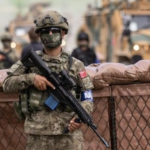
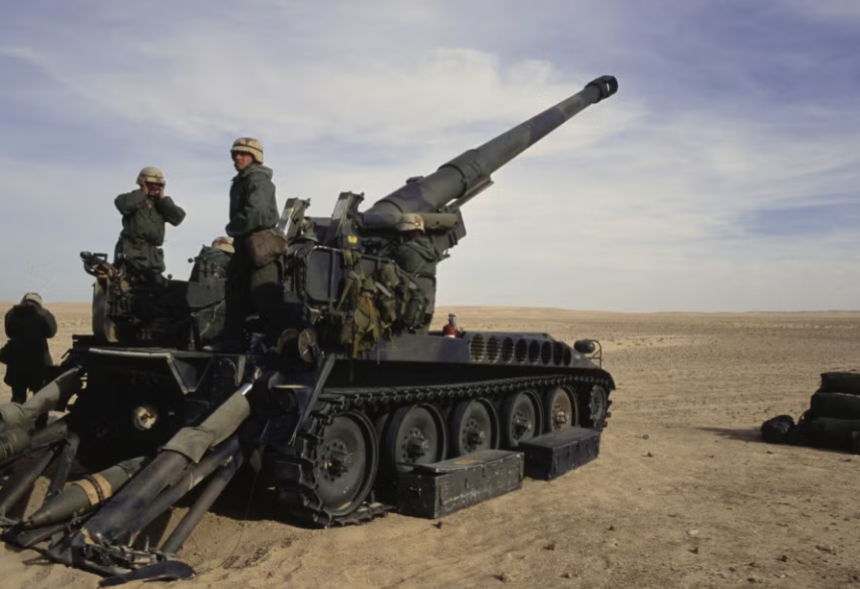
Turkey’s proposed package to Ukraine is substantial. Ankara is seeking permission to transfer 12 M270 Multiple Launch Rocket System launchers, 70 M39 ATACMS tactical ballistic missiles, 2,524 M26 227-mm rockets and 47,000 M509A1 203-mm artillery shells. The package has been valued at roughly $250–280 million. Washington indicated that it was prepared to authorize the transaction, while Turkey’s rationale was presented partly as military modernization: dispose of aging stocks, reduce the burden of maintaining older systems and redirect resources toward newer capabilities.
There is an important factual distinction. The U.S. process concerns a proposed retransfer. It is not evidence that the entire package has already arrived in Ukraine. But Moscow does not need to wait for the first launcher to cross the border before drawing political conclusions.
Russian Foreign Ministry spokeswoman Maria Zakharova made that clear. Her reaction went beyond another routine denunciation of Western military support for Kyiv. She demanded explanations from Ankara and Washington and warned that the proposed transfer would cause “serious harm” to Russia’s bilateral relations with both countries. She also argued that supplying lethal weapons to Ukraine would undermine the mutual trust on which Moscow’s dealings with Ankara depend.
That language is significant. Russia has protested Turkish military cooperation with Ukraine before. Bayraktar drones irritated Moscow. Ankara’s refusal to recognize the annexation of Crimea irritated Moscow. Turkey’s application of the Montreux Convention after the 2022 invasion constrained Russian naval movements through the Straits. But Zakharova’s decision to frame the new transfer as a question of bilateral trust suggests that Moscow is treating the package not simply as another Ukrainian procurement decision, but as a Turkish political choice with implications for the broader Erdoğan-Putin relationship.
That is where the S-400 becomes especially relevant.
When Turkey purchased the Russian system, Erdoğan presented the decision as a demonstration of strategic autonomy. Ankara argued that Turkey had the sovereign right to acquire whichever air-defense system it considered necessary and would not allow Washington to dictate its procurement decisions. The S-400 therefore became more than military hardware. It was a political symbol of Turkey’s willingness to operate independently even within NATO.
The strategic cost was severe. Turkey was removed from the F-35 program in 2019 and sanctioned under CAATSA in 2020. Ankara had not merely been waiting to purchase aircraft. Turkey had been an industrial participant in the multinational F-35 project, Turkish companies produced components, and the Turkish Air Force expected eventually to acquire a substantial fleet. The dispute disrupted both Turkish military modernization and the institutional relationship between the Turkish and American defense establishments.
Seven years later, what was once presented as an instrument of independence has become an obstacle Ankara increasingly wants to remove.
Turkey is developing the indigenous KAAN fighter and has built a far more capable domestic defense industry than it possessed a decade ago. Yet the F-35 remains strategically important. Israel already operates it. Greece is moving toward acquiring it. A growing number of NATO air forces are structuring their future combat architecture around the aircraft. For Turkey, returning to the program would therefore mean more than buying another fighter. It would reconnect Ankara to one of NATO’s most advanced networks of stealth aviation, sensors, data-sharing and high-end interoperability.
Trump’s July opening mattered politically. The July 22 State Department letter to Congress mattered legally.
The State Department informed Congress that Turkey had “not yet met” the statutory conditions required for F-35 transfers. Ankara would have to cease possessing the S-400 and associated equipment and provide the required assurances regarding future acquisition. The importance of that formulation is straightforward: political rapprochement between Erdoğan and Trump cannot, by itself, solve the F-35 problem. So long as the Russian system remains in Turkish possession, the legal obstacle remains.
That makes the fate of the S-400 more than a procurement question.
Reports have suggested that Ankara has explored selling or transferring the system to a third country in the Gulf. The United Arab Emirates has figured particularly prominently in reporting, while Qatar has also been mentioned as a possible destination. Such an arrangement would offer Erdoğan a politically attractive way out. Turkey would not have to destroy equipment for which it paid billions of dollars, and the government could avoid explicitly admitting that the original procurement had become a strategic mistake. Ankara could instead portray the transfer as another sovereign transaction while telling Washington that the Russian system was no longer in Turkish possession.
There is, however, a concrete complication. Turkey purchased the S-400 as the system’s end user, and Russian military exports are accompanied by end-user restrictions governing their subsequent transfer. Russian officials have previously stated specifically in relation to Turkey’s S-400s that re-export to a third country requires Moscow’s authorization. The precise private contract is not publicly available, but the Russian position on unauthorized re-export has been publicly articulated. This makes reported Turkish efforts to sell the system to the UAE, Qatar or another Gulf state considerably more complicated than an ordinary second-hand arms sale.
Ankara may possess the system, but it cannot simply treat it as unrestricted military equipment that can be resold anywhere without regard to the original supplier.
Moscow’s consent therefore matters.
That gives Putin an unusually effective bargaining instrument. By withholding or delaying authorization for a third-country transfer, Russia can help keep the S-400 formally in Turkish possession while U.S. law continues to keep Turkey outside the F-35 program. In an unusual geopolitical twist, Washington’s own statutory restrictions can magnify Moscow’s leverage over Ankara precisely when Erdoğan is trying to repair Turkey’s defense relationship with the United States.
Russia also has powerful reasons not to make Turkey’s escape from the S-400 problem easy. The original transaction produced geopolitical benefits far beyond the commercial value of the sale. It helped generate one of the deepest disputes between Ankara and Washington in decades, removed an important NATO military power from the F-35 program, triggered American sanctions and created years of uncertainty about Turkey’s strategic orientation.
From Moscow’s perspective, the S-400 may have been more successful as a political wedge inside NATO than as an operational Turkish air-defense system.
If Turkey now disposes of it, satisfies the American legal conditions and eventually regains access to the F-35, much of that Russian geopolitical gain begins to disappear. Ankara would move back toward Western fifth-generation aviation, Turkish-American defense relations would deepen, and one of the Kremlin’s clearest symbols of division inside NATO would lose much of its value.
Why should Putin help Erdoğan accomplish that—particularly while Erdoğan is preparing to arm the country Russia is fighting?
This is where the possibility of Russian retaliation becomes more interesting, but also where analytical discipline is required. There is no evidence that Putin has already decided to punish Turkey over Ukraine by refusing permission for an S-400 sale. But Zakharova has now explicitly said the proposed Ukrainian arms transfer threatens the broader relationship and mutual trust. Moscow therefore does not need to announce dramatic sanctions for the deterioration she describes to acquire practical consequences.
The S-400 offers an obvious pressure point.
Russia could certainly retaliate in more traditional ways. It could complicate energy arrangements, tourism, trade or cooperation in regional theaters. The 2015 crisis after Turkey shot down a Russian Su-24 demonstrated Moscow’s willingness to impose painful economic restrictions. But those measures also carry costs for Russia. Energy exports produce revenue. Russian tourists benefit from Turkey. Akkuyu represents a huge Russian strategic investment. Escalation in Syria or the Black Sea could push Ankara closer to Washington.
By contrast, refusing to make the S-400 re-export easy costs Moscow relatively little while preserving something Russia already values.
This might be understood as retaliation by obstruction—not as an established fact, but as a plausible strategic option. Putin need not impose a new punishment on Turkey. He can simply decline to remove an existing constraint.
And Turkey has leverage of its own.
The weapons Ankara wants to transfer are old, but they remain militarily relevant. The M39 is the first operational ATACMS variant, with a range of roughly 160–165 kilometers. It is not the later 300-kilometer version that became central to earlier debates over Ukrainian strikes deeper into Russia. It uses inertial guidance and carries 950 M74 submunitions. The M270 is a tracked launcher capable of firing both ATACMS and 227-mm rockets. The package would also provide Ukraine with thousands of M26 rockets and tens of thousands of heavy artillery rounds.
Seventy older ATACMS will not decide the war. Twelve additional launchers will not overturn Russia’s overall military advantages.
They do not have to.
Wars of attrition are shaped by cumulative pressure. Additional ballistic missiles can force Russia to disperse logistics hubs, relocate ammunition depots and command posts, reposition aircraft and devote more air-defense capacity to rear areas. More launchers complicate targeting. More ammunition allows Ukrainian formations to sustain fires longer. A finite stock can therefore impose operational costs much larger than its absolute numbers suggest.
More important for the Erdoğan-Putin relationship is the political fact that Turkey controls military assets Russia strongly prefers not to see transferred to Ukraine.
That creates another kind of leverage.
Historically, Turkey has influenced Russia through geography, commerce and regional politics. Ankara controls the Bosphorus and Dardanelles. Turkey is an important market for Russian energy, a major tourism destination and a consequential actor in Syria, the South Caucasus and the Black Sea. Its NATO membership makes it particularly valuable to Moscow precisely because Erdoğan has repeatedly shown that he will not automatically follow Washington.
Turkey’s growing defense role now adds another instrument: the ability to strengthen countries resisting Russian power.
Ukraine is the clearest example.
Ankara does not need to join every Western sanction or sever economic relations with Moscow in order to increase Russia’s costs. It can continue buying Russian energy, welcoming Russian tourists, cooperating at Akkuyu and maintaining presidential dialogue while simultaneously helping Ukraine fight more effectively.
This is a particularly Turkish form of pressure because it seeks to preserve the relationship while changing its price.
Still, the argument for direct retaliation should not be overstated. Turkey has strong independent reasons to support Ukraine that existed long before the current S-400 controversy. Ankara has never recognized Russia’s annexation of Crimea and continues to support Ukraine’s territorial integrity. Turkey also has particular historical and political concerns regarding the Crimean Tatars. More broadly, preventing Russia from dominating the northern Black Sea is a long-standing Turkish strategic interest.
Turkish-Ukrainian defense cooperation likewise predates the current dispute. Bayraktar TB2 drones became internationally famous during the first phase of the full-scale invasion, but the relationship has expanded into aerospace, engines, production and naval projects. Ankara’s application of the Montreux Convention after February 2022 constrained belligerent naval movements while Turkey simultaneously discouraged a larger permanent NATO naval presence in the Black Sea.
This captures the logic of Ankara’s strategy better than labels such as “pro-Russian” or “pro-Western.” Turkey does not want Russia to dominate the Black Sea. But neither does it want the Black Sea transformed into a permanent theater of direct NATO-Russian confrontation.
Turkey’s policy remains fundamentally Turkish.
There is also a convincing modernization explanation for the Ukrainian transfer. Turkey’s defense industry has expanded rapidly, and aging American-origin systems have declining value to an armed force investing heavily in newer domestic capabilities. Transferring them to Ukraine allows Ankara to dispose of old stocks, assist a strategic partner and demonstrate usefulness to NATO at the same time.
These factors weaken any simplistic argument that Turkey is sending the weapons primarily to punish Putin over the S-400.
They do not mean the transfer carries no message.
Foreign-policy decisions rarely have a single motive. Turkey can retire aging equipment, strengthen Ukraine, improve its standing in Washington, support its Black Sea strategy and signal to Russia that Ankara possesses ways of imposing costs—all through the same transaction.
The distinction between retaliation and strategic signaling is therefore critical.
There is no evidence that Erdoğan told Putin: approve the S-400 transfer or Turkey will arm Ukraine.
There does not need to be such an ultimatum for bargaining to emerge.
Moscow knows that Ankara wants a credible path back to the F-35. Ankara knows that Moscow wants to restrict Ukraine’s access to Western missiles and ammunition. Russia possesses a formal role in any authorized re-export of the S-400. Turkey possesses weapons Russia does not want reaching Kyiv.
Each side therefore controls something the other values.
The July 22 State Department letter made Turkey’s vulnerability particularly explicit. Washington was effectively telling Ankara that relations may improve politically, but a Russian weapons system still stands between Turkey and the F-35.
Putin understands that.
Erdoğan understands it as well.
And the Ukraine transfer shows that Ankara is not without its own instruments.
This is how diplomatic compartments begin to merge.
For years, Erdoğan and Putin built their relationship by preventing exactly this kind of linkage. Syria did not have to determine tourism. Crimea did not have to determine gas. Libya did not determine Akkuyu. Turkish drones in Ukraine did not automatically end Russian-Turkish trade. The peculiar durability of their relationship came from the ability to disagree almost everywhere while continuing to transact somewhere.
The S-400 connects Russia directly to Turkey’s relationship with Washington. The F-35 connects that dispute to NATO’s future military architecture. The Ukraine transfer connects Turkish defense decisions directly to Russian battlefield costs. If Moscow’s behavior regarding the S-400 begins influencing Ankara’s willingness to strengthen Kyiv, and if Turkish support for Kyiv begins influencing Russia’s willingness to accommodate Ankara elsewhere, the relationship moves from compartmentalization toward strategic linkage.
Competitive interdependence becomes more coercive.
The cluster-munition component adds another uncomfortable layer. The M39, M26 and M509A1 all disperse submunitions, and the proposed package contains more than ten million individual bomblets. Turkey, the United States, Russia and Ukraine are not parties to the Convention on Cluster Munitions, so the legal issue cannot simply be reduced to a treaty violation. The humanitarian risk, however, is considerable. Unexploded submunitions can remain dangerous long after the battlefield has moved elsewhere, leaving Ukraine itself with contamination that may take years or decades to clear.
That sits uneasily beside Ankara’s diplomatic identity. Turkey has built international standing through the Black Sea Grain Initiative, prisoner exchanges, mediation efforts and calls for restraint around commercial shipping. Moscow can now point to a proposed Turkish transfer involving millions of submunitions and argue that Ankara’s peacemaking rhetoric increasingly conflicts with its military behavior.
Zakharova’s argument about eroding trust should be understood partly in this context.
Yet supplying weapons to one side does not automatically make mediation impossible. Turkey has never been a neutral mediator in the classical sense. Its diplomatic usefulness derives from maintaining meaningful relationships with both belligerents. Ukraine values Ankara because Turkey supports Ukrainian sovereignty and contributes to Ukrainian military capacity. Russia values Turkey because Erdoğan has refused comprehensive Western alignment, preserved economic ties and maintained a direct political relationship with Putin.
Turkey can mediate because both sides still need something from it.
The difficulty begins when one side concludes that the military cost created by Turkey’s relationship with the other exceeds the diplomatic value Ankara provides.
Russia’s sharper language suggests that Moscow at least wants Erdoğan to consider that possibility.
Still, neither government has much interest in rupture. Russia benefits enormously from a Turkey that remains difficult for Washington: a major NATO state that resists some Western policies, refuses comprehensive sanctions and maintains independent commercial and diplomatic channels with Moscow. A Turkey fully reconciled with Washington, operating F-35s, more deeply integrated into Western defense production and supplying Ukraine on a much larger scale would be a considerably worse outcome for Russia.
The Kremlin’s preferred Turkey is therefore not necessarily a pro-Russian Turkey.
It is a troublesome NATO ally.
Erdoğan’s preferred Russia is similarly not a conventional ally. It is a powerful neighbor that remains commercially and diplomatically useful without becoming dominant enough to dictate Turkish behavior.
That mutual utility is why predictions of a dramatic Turkish-Russian break are usually premature.
But a relationship can survive while becoming increasingly adversarial at its margins.
That may be the more important trend.
If Moscow becomes less cooperative over the S-400 because Turkey arms Ukraine, Ankara gains an incentive to deepen its Western defense relationships. If Turkey moves further into Western defense structures, Russia acquires an even stronger reason to preserve whatever leverage it retains over Ankara. Turkey can respond by expanding military cooperation with Ukraine, which gives Moscow still less reason to accommodate Erdoğan.
A self-reinforcing cycle can emerge without either leader consciously choosing a rupture.
This is precisely why the July 22 State Department letter to Congress deserves to sit near the center of the analysis rather than appear as a bureaucratic footnote. It formalized Turkey’s problem. Trump may politically favor Erdoğan’s return to the F-35, but Washington has told Congress that Turkey remains legally ineligible while the S-400 issue is unresolved.
Days earlier, Moscow had already reminded Ankara that the S-400’s future was an “extremely sensitive” matter.
Weeks later, Turkey was proposing to transfer ATACMS, M270s and large ammunition stocks to Ukraine.
Then Zakharova warned that the transaction would seriously damage relations and undermine trust.
These facts do not establish a secret bargain.
But together they define a bargaining environment.
The evidence therefore does not justify saying that Erdoğan is arming Ukraine because Putin is blocking Turkey’s return to the F-35. That would turn an analytical hypothesis into an asserted fact. The stronger argument is more nuanced: Turkey’s long-standing military support for Ukraine now intersects with a moment when Ankara urgently wants to remove one of Russia’s most consequential sources of leverage over Turkish-American relations. Moscow has little reason to facilitate that process if Turkey is simultaneously increasing the military costs Russia faces in Ukraine. Ankara, meanwhile, has every reason to demonstrate its strategic usefulness to Washington precisely when Russian cooperation over the S-400 matters more than before.
The result is not necessarily retaliation.
It is reciprocal leverage.
One weapons system is Russian, and Turkey increasingly wants to send it away.
Another collection of weapons is American, and Turkey wants to send it to Russia’s enemy.
The Russian S-400 that once symbolized Erdoğan’s willingness to defy Washington may now give Putin leverage over Turkey’s return to the F-35. The ATACMS missiles, M270 launchers and ammunition sitting in Turkish stocks give Erdoğan a way of demonstrating that Turkey also possesses options capable of imposing costs on Russian interests.
There is no evidence yet that one has been explicitly exchanged for the other.
But there is increasingly a strategic logic connecting them.
For years, Erdoğan and Putin preserved their relationship by keeping every contradiction in its own compartment. The question now is whether they can continue doing so when the S-400, the F-35 and Ukraine increasingly sit on the same bargaining table.
If they cannot, Turkish-Russian relations do not necessarily move toward collapse. Something more characteristic of both leaders is likely: cooperation continues, but becomes more expensive. Concessions in one arena acquire prices in another. Arms transfers become diplomatic signals. Procurement disputes become instruments of geopolitical pressure.
Erdoğan’s balancing act would then become less about simply standing between Russia and the West and more about using each relationship to extract leverage over the other.
That would be a far more consequential development than the transfer of seventy missiles alone.
By: GEOPOLIST – Istanbul Center for Geopolitics