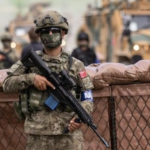
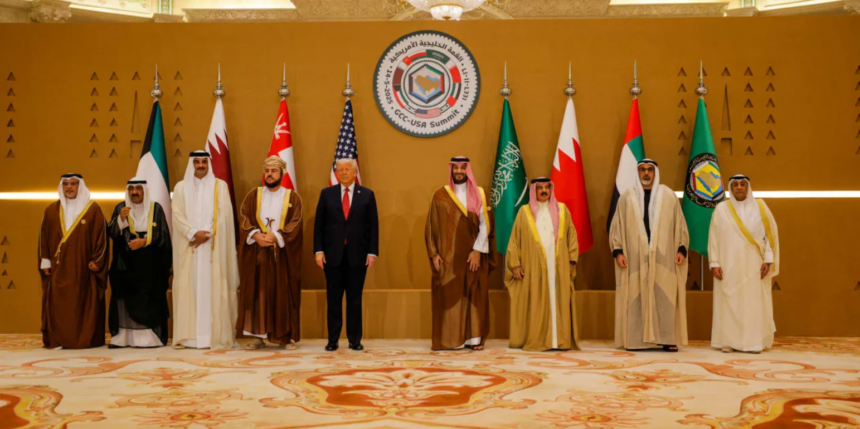
The security relationship between the U.S and the Gulf States dates back to the Cold War era. For roughly half a century, the Gulf security was based on a simple formula of exchanging oil for protection. Upon this arrangement, the United States started establishing a vast military infrastructure across the Arabian Peninsula right from the start of 1970s. From establishing airbases in Qatar and the UAE to naval facilities in Bahrain, the U.S provided guarantee to the Gulf States that any existential threat to Gulf regimes or energy supply routes would be met with overwhelming American force. In return, the GCC states accepted a form of strategic partnership by granting the U.S wide operational latitude to conduct military and intelligence activities from their territory. That arrangement delivered a degree of stability in Persian Gulf, especially for GCC States. However, it also carried costs that were hidden due to the absence of a direct challenge. The U.S.-Israel-Iran conflict of 2025 and 2026 proved consequential and for the first time, the full weight of those costs, in terms of security, political partnership, and social unrest, descended on the Gulf States so acutely that compelled them to revisit their decades old security partnership framework.
A New Threat Landscape
The 2026 U.S-Israel-Iran conflict revealed that the geo-strategic environment of the Gulf has shifted in fundamental ways. On February 28 Iranian ballistic missiles and drones struck 6 Gulf States even though none of these states had fired a single missile towards Iran. Foreign Minister Abbas Aragchi later explained to Al Jazeera that these attacks were not meant for the Gulf States rather these were retaliatory strikes against the U.S presence in these states. Iran entered into the conflict with the assumption that all GCC states are embedded within the regional American security architecture and regardless of any individual Gulf state’s diplomatic position on the conflict, the presence of U.S. bases on their soil provided sufficient basis for retaliation. Apart from targeting bases, the conflict also revealed that ports, oil terminals, desalination plants, and urban centres had also become target of Iranian missiles and drone strikes. Gulf States have, thus, become primary targets in adversarial calculations despite their security partnership with the U.S. The protective umbrella is no longer cost-free as revealed by the recent conflict.
GCC Defensive Posture:
During the 2026 conflict, approximately 83% of Iran’s missile and drone strikes were directed at Gulf States, with the UAE absorbing the heaviest burden. Through these strikes Iran did not seek to overwhelm the defences of Gulf States in a single stroke but to put a sustained pressure, reveal vulnerabilities and increase strategic tension for longer period of time. Gulf States, on the other hand, refrained from retaliating militarily but demonstrated effective defensive capabilities. Collectively, the GCC’s overall interception rate was around 90% with the UAE intercepting more than 96% of incoming strikes. These figures represent credible defensive capabilities that somehow reduced the strategic utility of Iran’s asymmetric pressure campaign. The high interception rates demonstrate that Iranian approach could be blunted. However, sustaining such a defensive approach requires more effort and fundamental reassessment of what the Gulf security actually costs. Furthermore, in addition to defensive capabilities, there is need to include deterrence measures in Gulf States’ security architecture. This does not mean that Gulf States should take a shift towards confrontation but there should be a comprehensive deterrence framework that could be utilized to enhance the effectiveness of defence with clear set of responses in a time of strategic uncertainty.
A Partnership of Convenience:
The other problem in the regional landscape is the conduct of the U.S itself. Perhaps nothing has bothered Gulf States more sharply than the manner in which the United States entered this conflict. The U.S entered into the conflict with close coordination with Israel and without any meaningful prior consultation with its Gulf partners and disregarded the security and political costs that might be faced by its partners. For the Gulf States that host the bases, absorb the retaliatory strikes, and manage the domestic political fallout; this murkiness is not a small inconvenience but a structural failure of alliance management. What makes this failure more glaring is the sheer asymmetry between what the Gulf had put into the relationship and what it received in return when security actually matters. For over half a century, GCC states have poured time, energy, and financial capital into the U.S. This security partnership has only deepened in recent years, often in deeply personal terms. In 2025, Qatar’s royal family gifted a $400 million Boeing 747-8 to the U.S. Air Force. In 2024, a Saudi Public Investment Fund company controlled by Crown Prince Mohammed bin Salman poured $2 billion into the private equity firm run by Jared Kushner, President Trump’s son-in-law and senior advisor. Following the same pattern, an Abu Dhabi-based firm backed by the UAE’s national security advisor acquired a 49 percent stake in Donald Trump’s crypto venture in 2026. These are the kind of access-buying gestures that are normally reserved for one’s closest allies to channel directly into the inner circle of American power.
However, when the actual threat to sovereignty emerged in 2025, this access bought nothing. When Israel struck Qatar in 2025 during the mediation process with Hamas’s leadership, the U.S. response was a verbal condemnation only and distancing itself by saying that they had not been consulted beforehand. A close ally’s territory was bombed, and the most powerful state in the alliance distanced itself instead of defending its partner. The lesson one might draws from this recent conflict is that decades of strategic deference and billions in defense purchases may not translate into a seat at the table when decisions affecting partners’ security are actually made.
Furthermore, during and after the conflict, Israel demonstrated expansionist ambitions. Israel, with combination of technological superiority, cross-theater operational reach, and deep intelligence penetration, shifted its aspiration into operational practice. Gulf leadership, maintaining complex relationships with Israel, is unwilling to accept a regional hierarchy in which Israeli freedom of action goes unchecked. Israel’s escalatory conduct in Lebanon and Syria has been viewed across the Gulf not as defensive necessity but as evidence of expansionist intent. The U.S disregard of its security partnership coupled with Israel’s rouge behavior should be a strong reminder for the Gulf States to restructure their regional political and security architecture.
How to Improve Regional Security?
In the light of recent developments, there is a need for the Gulf States to institute a comprehensive security framework. First, such a regional security framework should not only rely on improving defensive capabilities but also incorporate a credible deterrence strategy. Saudi Arabia and the UAE should take the lead in this context, given their central role in the Gulf’s security architecture. Their technological modernization, substantial defense investments, and large-scale acquisition of advance military systems would help them. Gulf States’ deterrence strategy should begin with a clear articulation of escalation thresholds and predefined response options across different levels of conflict intensity. Furthermore, an effective deterrence posture should extend beyond conventional kinetic responses and include broader tools, including economic measures, technological countermeasures, strategic signaling, and diplomatic initiatives. This multidimensional approach would provide greater flexibility, adaptability, and escalation control while shaping adversaries’ perceptions and decision-making calculations. By diversifying their deterrence mechanisms, Gulf States can move beyond a purely reactive defense posture toward a more resilient security framework capable of preventing escalation and managing future threats. These measures could only be taken on national level because collective GCC deterrence would be hard to achieve due to complex regional cross currents.
Secondly, in terms of security partnership, no Gulf State has the interest or capacity to replace the U.S in the near future. However, there should be a fundamental renegotiation of the terms on which that relationship should operate. The Gulf States should be genuinely consulted before making decisions about military operation, objectives, escalation scenarios, retaliation risks and exit strategies in their region. It is imperative that the U.S should acknowledge Gulf States as political stakeholders that can object, veto or modify proposed actions. Furthermore, in exchange for using Gulf territory, the U.S should increase Air Defence cooperation, military exercises and technology transfer to Gulf States.
Finally, alongside this political reconfiguration, the Gulf States should invest in defence and economic diversification. They can expand procurement relationships with European partners and deepen their engagement with other Asian powers. There is an increasingly prominent Chinese economic presence in the region that could be utilized to reduce single-point dependency revolving around the U.S. China’s role as the primary consumer of Gulf energy exports gives it structural leverage in Gulf strategic calculations. However, this diversification strategy carries its own dilemmas. Bringing China, and potentially Russia, more deeply into the Gulf security architecture would exacerbate great-power competition in the region. Managing multiple great-power relationships simultaneously, demands strategic sophistication and diplomatic acumen that no GCC state has fully demonstrated as yet.
The Road Ahead
The question facing Gulf policymakers is not to maintain or abandon security relationship with the U.S. Answer to this is clear, but the important aspects are on what terms and with what internal coherence. The old architecture, based on open-ended strategic delegation in exchange for an existential guarantee, has proved untenable by the very conflict it was meant to prevent. A successor architecture based on comprehensive deterrence framework, conditional partnership, genuine consultation, and diversification would be more sustainable and honest about the distribution of risks and costs. This transition will not be smooth. It will require Gulf States to invest in the military, political and diplomatic institutional capacity to become genuine partners rather than protected clients. It will require both sides to acknowledge that the security relationship, for all its asymmetries is not unilateral American provision. The war has clarified what was previously obscured and that clarity is uncomfortable. But it is also an opportunity to build security architecture on foundations that are more durable, more equitable, and more honest about the world as it actually is.
By: Sidra Shaukat – a research officer at the Strategic Vision Institute (SVI), a leading Pakistani think tank focused on nuclear and strategic affairs. She works on issues related to the peaceful uses of nuclear technology and nuclear non-proliferation. Her research and commentary have addressed peaceful uses of nuclear technologies and broader geostrategic developments in South Asia, the Asia Pacific, and the Middle East across various platforms. A full list of my publications is available on SVI’s website.