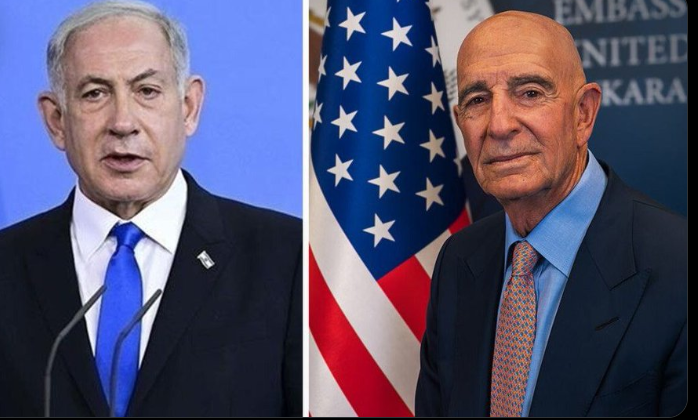
In the last week of August, two external signals arrived in close succession: a U.S. articulation of a Syria governance, “short of federalism“, was articulated by its envoy to Syria and ambassador to Ankara, Tom Barrack, alongside reports of Israel-Syria security discussions related to the 1974 disengagement lines. Within days, coastal organizers announced a federalism-oriented political council, while Druze factions in Suwayda moved to consolidate under a single banner. The sequencing does not, by itself, establish causation, but it illustrates how external messaging can interact with local calculations about authority and security.
On the coast, organizers of the Political Council of Central and Western Syria describe federalism as a legal framework that would shift dispute resolution from force to law, assign defined resource authorities to regions, and widen participation beyond its Alawite starting base to include Christians, Turkmens, and Sunni Arabs across Latakia, Tartus, Homs, and parts of Hama’s countryside. The title intentionally avoids sectarian labeling to signal inclusivity. The platform references implementation of UN Security Council Resolution 2254 and a UN-sponsored national conference, alongside proposals for transitional-justice pathways, while also emphasizing locally resonant issues such as detainee accounting, due process, equal opportunity, and freedom of expression. The announcement was made from outside Syria, reflecting—among other factors—the absence of a cohesive local security counterpart on the coast and the associated risk to prominent insiders.
In Suwayda, the armed map is converging with political aims. After costly clashes and an uneven ceasefire, more than two dozen Druze formations declared a merger under a clerically guided “National Guard,” and the Suwayda Military Council stated it was ready to join. Proponents frame consolidation as a practical response to coordination gaps revealed during recent fighting, with the goals of standardizing rules of engagement, protecting civilians and religious sites, and clarifying lines of authority. Organizers say the concept predates the summer events and note that Druze views toward Damascus range from calls for substantial constitutional change to expressions of disenchantment with remaining inside Syria. Whether the merger translates into operational unification will depend on enforceable command, shared communications and logistics, and the coalition’s ability to manage both hardline and pragmatic currents.
In the northeast, the Autonomous Administration continues to run schools, courts, and municipalities, but tensions with Damascus are rising as both sides test red lines over administrative recognition, security coordination, and control of crossings and revenues. Friction typically centers on periodic restrictions of fuel and wheat flows, competing claims over taxation and customs at river and land corridors, conscription and civil-registry integration, and ad hoc detentions of local officials or activists. Limited confidence-building steps—prisoner exchanges, deconfliction channels, or co-administration arrangements in mixed urban districts—have been sporadic and reversible, leaving each side to use economic pressure and localized security incidents to recalibrate bargaining positions.
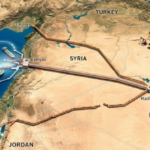
Israel’s role warrants pointed scrutiny. The sketched package—Syrian-side demilitarization on the Golan, restrictions on systems Israel deems threatening, and a humanitarian passage to Druze areas—reads less like isolated confidence-building and more like pieces of a broader design often described as a “David Corridor”, the operational arm of a broader Greater Israel strategy. In that reading, corridor logic would stitch together a de-facto security belt from the occupied Golan across southern Syria, leveraging pockets of local autonomy (Suwayda, and farther northeast) to segment Damascus’s control and lock in long-term constraints on Syria’s future force posture.
Critically, such a package risks normalizing a one-way constraint regime—Syrian-side limits without commensurate obligations on Israeli operations—that many Syrians will read as coercive rather than confidence-building. By spotlighting and arguably amplifying autonomy momentum in Suwayda and along the coast to pressure Damascus, the approach risks instrumentalizing communities as leverage rather than engaging them as interlocutors with their own governance demands.
It also invites backlash: if Damascus comes to see autonomy initiatives as an Israeli cudgel, it is more likely to repress them to avoid negotiating from perceived weakness. Security arrangements that rely on dividing the Syrian landscape to obtain concessions may provide temporary calm, but they undermine the legitimacy necessary for a sustainable settlement. This can lead to the long-term instability that these agreements are intended to prevent, which may be what Israel desires in the future.