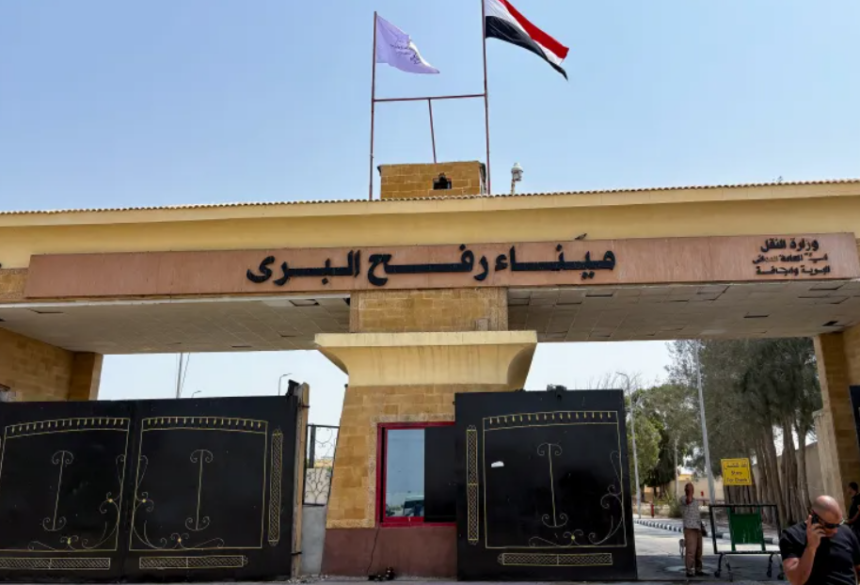
Turkey and seven other Muslim-majority countries have issued a sharp joint warning to Israel against opening Gaza’s Rafah crossing “in one direction only,” saying they will not accept any move that could push Palestinians into Egypt under the guise of humanitarian relief.
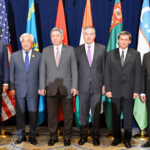
In a statement released on Friday, the foreign ministers of Pakistan, Egypt, Jordan, the United Arab Emirates, Indonesia, Turkey, Saudi Arabia and Qatar said they were “deeply concerned” by recent Israeli remarks about using Rafah primarily to move Gaza residents into Egyptian territory. They stressed their “absolute rejection of any attempts to expel the Palestinian people from their land,” framing Israel’s proposal as a potential step toward large-scale displacement.
The warning comes days after Israel announced it intends to reopen Rafah “within days” to allow civilians to leave Gaza, presenting the plan as a humanitarian measure for thousands of people who need medical treatment or seek safety abroad. Under the Israeli proposal, the crossing would initially function only as an exit route from Gaza into Egypt, with no corresponding right of return for those who leave.
Call for full adherence to Trump’s Gaza plan and UNSC 2803
In their statement, the eight governments anchored their position in the US-brokered “Comprehensive Plan to End the Gaza Conflict,” also known as President Donald Trump’s 20-point Gaza plan, which was endorsed by the UN Security Council in Resolution 2803 in November.
They said this framework requires Rafah to remain open in both directions and explicitly prohibits any attempt to compel Gaza residents to leave the territory. Resolution 2803 endorses the ceasefire, authorizes an International Stabilization Force (ISF) for Gaza, and supports the creation of a Palestinian governing body to take over day-to-day administration — with the long-term objective of restoring a unified Palestinian Authority role in both Gaza and the West Bank.
Rather than facilitating what they see as a disguised population transfer, the ministers urged the international community to “create the right conditions for [Palestinians] to stay on their land and participate in building their homeland,” stressing that any large outflow into Sinai would be destabilizing, irreversible and contrary to the spirit of the UN resolution.
They also thanked Trump for what they described as his “commitment to regional peace” and called for the “full implementation” of his Gaza plan. That, they argued, means consolidating the ceasefire, easing civilian suffering, allowing the “unrestricted entry of humanitarian assistance,” beginning large-scale reconstruction and enabling the Palestinian Authority to resume a central administrative role in Gaza under international supervision.
Egypt pushes back on one-way opening
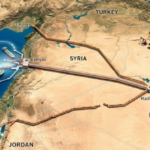
Egypt, which controls the Rafah crossing on its side of the border, has publicly rejected any “exit-only” arrangement and has repeatedly warned that mass or de facto permanent resettlement of Palestinians in Sinai is unacceptable. Egyptian officials have gone further in recent days, suggesting that a unilateral Israeli decision to open Rafah only for departures would breach the terms of the Egypt-Israel peace treaty and undermine regional stability.
Cairo insists that any reopening of Rafah must allow movement in both directions, in line with Resolution 2803 and the US-backed ceasefire plan. Arab and Muslim states fear that if Palestinians leave Gaza without clear guarantees of return, the international community will eventually be asked to accept a “new reality” in which hundreds of thousands are stranded outside their homeland — a scenario many in the region compare to a second Nakba.
Israel’s position and humanitarian stakes
Israeli officials say the proposed one-way opening is intended to provide a safety valve for civilians who wish to flee a devastated Gaza and to ease pressure on a health system heavily damaged by months of war. International agencies estimate that well over 15,000 Gaza residents require urgent medical evacuation abroad, while most hospitals in the enclave are operating far below capacity or have been destroyed.
However, critics argue that an exit-only arrangement, especially while most other crossings remain tightly controlled, risks transforming what begins as a humanitarian corridor into a mechanism for long-term demographic engineering. The eight Muslim-majority states say any such plan would contradict both the letter and the spirit of the Trump-backed “Comprehensive Plan” and UNSC 2803, which were billed as steps toward stabilizing Gaza, not emptying it.
Linking Rafah to the two-state horizon
In their joint statement, the ministers reaffirmed that their end goal remains a two-state solution leading to an independent Palestinian state “on the lines of June 4, 1967, including the occupied territories in Gaza and the West Bank, with East Jerusalem as its capital.” They stressed that any measures taken under the current ceasefire must be judged by whether they bring that outcome closer or push it further away.
By tying their rejection of an “exit-only” Rafah to UN Resolution 2803 and Trump’s Gaza plan, the eight countries are effectively warning that humanitarian arrangements cannot be allowed to morph into a political fait accompli. The coming weeks — and how Israel, Egypt and Washington handle Rafah’s reopening — will test whether the ceasefire framework is used to rebuild Gaza and preserve Palestinians’ presence on their land, or becomes another chapter in a long history of contested displacement.