By using this site, you agree to the Privacy Policy and Terms of Use.
Accept
GEOPOLISTGEOPOLISTGEOPOLIST
  • Home
  • Geopolitics
    Geopolitics
    Discover professional insights into international relations, regional conflicts, and global power dynamics by visiting Geopolist. Keep up on the ways in which these changes impact…
    Show More
    Top News
    Turkey vs. Israel in a Hypothetical War: The Myths and the Realities
    August 6, 2025
    Operation Spiderweb: The Death of Strategic Depth in the Drone Age
    August 6, 2025
    The End of Vertical War: Operation Spiderweb and the Rise of Horizontal War-Making
    August 6, 2025
    Latest News
    Yemen Could Become the First Test of the Turkey–Pakistan–Saudi Defense Pact
    September 11, 2026
    Too Useful Against Iran to Disarm? The PJAK Exception
    September 11, 2026
    Netanyahu’s Perfect Assist from Abu al-Duhur: How Erdoğan Can Score on Kurdish Peace and National Discontent
    August 22, 2026
    Erdoğan Arms Ukraine as Putin Complicates Turkey’s F-35 Comeback
    August 16, 2026
  • Security
    SecurityShow More
    Too Useful Against Iran to Disarm? The PJAK Exception
    August 28, 2026
    Blocked by Politics, Turkish Defence Firms Enter Europe Through Industry
    May 21, 2026
    Broad Buy-In, Rival Readings, Future Risks: SDF and Damascus Clash Over Integration Terms
    January 31, 2026
    Jeffrey’s Autonomy Model for Syria Matches NAT’s Earlier Proposal
    January 26, 2026
    Strategic and Ideological Missteps of Syria’s SDF
    January 24, 2026
  • Commentary
    CommentaryShow More
    Yemen Could Become the First Test of the Turkey–Pakistan–Saudi Defense Pact
    September 11, 2026
    Too Useful Against Iran to Disarm? The PJAK Exception
    August 28, 2026
    Netanyahu’s Perfect Assist from Abu al-Duhur: How Erdoğan Can Score on Kurdish Peace and National Discontent
    August 21, 2026
    Erdoğan Arms Ukraine as Putin Complicates Turkey’s F-35 Comeback
    August 16, 2026
    Spitting on the Cross: The Rise of Anti-Christian Hostility in Israel
    August 11, 2026
  • Economy
    • Energy
  • Regions
    • Europe
    • Middle East & Africa
    • Eurasia
  • Risk Advisory
  • Jobs
    • Jobs
    • Post a Job
  • Register
  • My Bookmarks
Reading: China Publicly Labels U.S. and Japanese Destroyers as Enemy Targets
Share
Notification Show More
Font ResizerAa
GEOPOLISTGEOPOLIST
Font ResizerAa
  • Home
  • Geopolitics
  • Security
  • Commentary
  • Economy
  • Regions
  • Risk Advisory
  • Jobs
  • Register
  • My Bookmarks
  • Home
  • Geopolitics
  • Security
  • Commentary
  • Economy
    • Energy
  • Regions
    • Europe
    • Middle East & Africa
    • Eurasia
  • Risk Advisory
  • Jobs
    • Jobs
    • Post a Job
  • Register
  • My Bookmarks
Have an existing account? Sign In
Follow US
  • Advertise
© 2022 Foxiz News Network. Ruby Design Company. All Rights Reserved.
GEOPOLIST > Blog > Regions > Southeast Asia > China Publicly Labels U.S. and Japanese Destroyers as Enemy Targets
GeopoliticsSoutheast Asia

China Publicly Labels U.S. and Japanese Destroyers as Enemy Targets

Last updated: August 6, 2025 3:17 pm
By GEOPOLIST | Istanbul Center for Geopolitics Published April 25, 2025 989 Views 4 Min Read
Share
SHARE

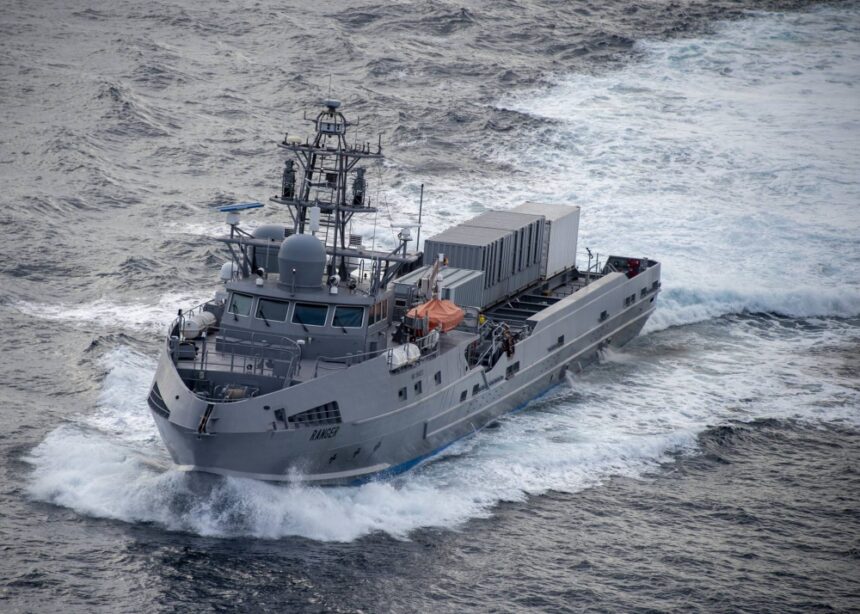
In a rare and pointed display of military signaling, China’s navy has publicly identified U.S. and Japanese warships as enemy targets during a naval open day, drawing attention amid rising tensions in the Taiwan Strait.

During the public tour of the Nanjing, a Type 052D guided-missile destroyer in Taizhou, visitors saw an onboard display naming the U.S. Arleigh Burke-class and Japan’s Atago-class destroyers as “enemy surface vessels.” The information was part of an exhibit promoting the YJ-18A, a long-range, supersonic anti-ship cruise missile.

“The YJ-18A can strike large and medium-sized enemy surface vessels such as the U.S. Arleigh Burke-class and Japan’s Atago-class destroyers,” the display read. The exhibit touted the missile’s accuracy, supersonic terminal speed, and ability to boost China’s maritime strike capabilities.

The timing of the display appeared deliberate, coinciding with the passage of the USS William P. Lawrence, an Arleigh Burke-class destroyer, through the Taiwan Strait. The move, labeled “routine” by U.S. Indo-Pacific Command, sparked a strong response from Chinese military officials, who accused the United States of provocation.

Senior Colonel Shi Yi, spokesperson for the PLA’s Eastern Theatre Command, said Chinese forces took “lawful countermeasures” in response to the transit, and the military released footage of the U.S. warship. At a separate briefing, Defense Ministry spokesperson Zhang Xiaogang warned that U.S. support for Taiwan would “backfire” and urged Washington to stop escalating tensions.

Military observers say the decision to publicly name adversary vessels during peacetime marks a shift in China’s defense communications. Analysts argue it reflects growing confidence within the People’s Liberation Army Navy (PLAN) and signals its readiness to deter what it sees as foreign encroachment.

Wang Yanan, editor-in-chief of Aerospace Knowledge, said the public mention of the U.S. and Japanese destroyers shows “clear internal consensus” within the PLA. He noted that the YJ-18A’s reported range of more than 600 kilometers and terminal speed exceeding Mach 3 gives it a significant advantage over older systems like the U.S. Harpoon missile, which remains subsonic and has a shorter reach.

“In a one-on-one encounter, a Type 052D can engage an Arleigh Burke from outside its strike range,” Wang said, noting the PLA’s confidence in its close-in weapon systems to intercept return fire.

Japan’s Atago-class destroyers, with similar features to later Arleigh Burke variants, are seen as offering limited additional defense against the YJ-18A, Wang added.

The development comes as Japan invests in next-generation Aegis destroyers with advanced radar systems, expected to enter service by 2028. Meanwhile, China has continued to highlight its modernization efforts, including unveiling its 10,000-ton Type 055 destroyer.

China’s identification of named enemy vessels marks a new phase in regional military posturing. While it is not unusual for militaries to plan against potential adversaries, publicly identifying them in this manner during peacetime is seen by analysts as a deliberate form of strategic messaging.

The move reflects the broader trend of hardening rhetoric and military preparedness in the Indo-Pacific as U.S.-China tensions persist over Taiwan and regional maritime control.

Read more here.

You Might Also Like

Yemen Could Become the First Test of the Turkey–Pakistan–Saudi Defense Pact

Too Useful Against Iran to Disarm? The PJAK Exception

Netanyahu’s Perfect Assist from Abu al-Duhur: How Erdoğan Can Score on Kurdish Peace and National Discontent

Erdoğan Arms Ukraine as Putin Complicates Turkey’s F-35 Comeback

From C5 to C6: Turkey’s Geopolitical Reach Expands Toward China’s Western Frontier

Share This Article
Facebook Twitter Email Print
Previous Article The Fracturing Nuclear Order and the Uneasy Dawn of a Third Nuclear Age
Next Article The Saudi-Israeli Blueprint: From Arab revolt, 9/11 to Assad’s Downfall

Stay Connected

TwitterFollow
YoutubeSubscribe

Latest News

Spitting on the Cross: The Rise of Anti-Christian Hostility in Israel
Commentary Human Rights Middle East & Africa
Turkey, Saudi Arabia and Pakistan Sign Landmark Mutual Defence Pact in Mecca
Eurasia Geopolitics Middle East & Africa
As Israel Becomes a Liability, Turkey Becomes Indispensable: Baniyas Marks the Latest Shift
Commentary Energy Geopolitics Middle East & Africa
Rethinking GCC Security Architecture After the U.S.–Israel–Iran War
Commentary Geopolitics Middle East & Africa

Find Us on Socials

© 2026 Geopolist | Istanbul Center for Geopolitics. All Rights Reserved.
  • Submit an Op-Ed + Risk Advisory & Job Posting
  • Jobs
  • Post Jobs & Ads for Free
Welcome Back!

Sign in to your account

Register Lost your password?