By using this site, you agree to the Privacy Policy and Terms of Use.
Accept
Geopolist | Istanbul Center for GeopoliticsGeopolist | Istanbul Center for GeopoliticsGeopolist | Istanbul Center for Geopolitics
  • Home
  • Geopolitics
    Geopolitics
    Discover professional insights into international relations, regional conflicts, and global power dynamics by visiting Geopolist. Keep up on the ways in which these changes impact…
    Show More
    Top News
    Operation Spiderweb: The Death of Strategic Depth in the Drone Age
    August 6, 2025
    The End of Vertical War: Operation Spiderweb and the Rise of Horizontal War-Making
    August 6, 2025
    A map of Israel and Lebanon showing large numbers of strikes by Israel and Hezbollah near the border since October 7, 2023
    Understanding the Impact of Growing Hezbollah-Israel Tensions and the Gaza Conflict on Lebanon
    April 13, 2025
    Latest News
    Eight Muslim States Warn Israel Against ‘Exit-Only’ Rafah Plan
    December 7, 2025
    Five Turkish defense firms enter SIPRI Top 100 with record $10.1 billion in 2024 sales
    December 1, 2025
    Turkey’s Kızılelma drone fires radar-guided missile in beyond-visual-range test
    December 1, 2025
    TUAF543: Accident at FL240—or a Message to Ankara?
    November 12, 2025
  • Security
    SecurityShow More
    Five Turkish defense firms enter SIPRI Top 100 with record $10.1 billion in 2024 sales
    December 1, 2025
    Turkey’s Kızılelma drone fires radar-guided missile in beyond-visual-range test
    December 1, 2025
    More Than Mischief: How a Weakened Moscow Seeks to Dismantle NATO from Within
    September 21, 2025
    Turkey pairs air-defense deliveries with nationwide shelter plan
    August 27, 2025
    From Concrete to Cruise Missiles: IDEF 2025 and the New Face of Turkey’s Defence Industry
    July 27, 2025
  • Commentary
    CommentaryShow More
    TUAF543: Accident at FL240—or a Message to Ankara?
    November 12, 2025
    More Than Mischief: How a Weakened Moscow Seeks to Dismantle NATO from Within
    September 21, 2025
    Jerusalem as Political Football: Netanyahu’s “Assists” and Erdoğan’s Easy Goals
    September 18, 2025
    Brokered “Peace”: Erdoğan, Barrack, and the Drive to Disarm the SDF and Hezbollah
    September 7, 2025
    From Barrack’s Remarks to Security Overtures: Alawite and Druze Autonomy Speeds Up
    August 28, 2025
  • Economy
    • Energy
  • Regions
    • Europe
    • Middle East & Africa
    • Eurasia
  • Risk Advisory
  • Jobs
    • Job Dashboard
    • Jobs
    • Post a Job
  • Register
  • My Bookmarks
Reading: China’s Strategic Engagement with the Global South: Implications for the Indo-Pacific and Western Response
Share
Notification Show More
Font ResizerAa
Geopolist | Istanbul Center for GeopoliticsGeopolist | Istanbul Center for Geopolitics
Font ResizerAa
  • Home
  • Geopolitics
  • Security
  • Commentary
  • Economy
  • Regions
  • Risk Advisory
  • Jobs
  • Register
  • My Bookmarks
  • Home
  • Geopolitics
  • Security
  • Commentary
  • Economy
    • Energy
  • Regions
    • Europe
    • Middle East & Africa
    • Eurasia
  • Risk Advisory
  • Jobs
    • Job Dashboard
    • Jobs
    • Post a Job
  • Register
  • My Bookmarks
Have an existing account? Sign In
Follow US
  • Advertise
© 2022 Foxiz News Network. Ruby Design Company. All Rights Reserved.
Geopolist | Istanbul Center for Geopolitics > Blog > Regions > Indo-Pacific > China’s Strategic Engagement with the Global South: Implications for the Indo-Pacific and Western Response
CommentaryGeopoliticsIndo-Pacific

China’s Strategic Engagement with the Global South: Implications for the Indo-Pacific and Western Response

Last updated: September 14, 2024 12:27 am
By GEOPOLIST | Istanbul Center for Geopolitics Published September 14, 2024 718 Views 4 Min Read
Share
Understanding and Countering China’s Global South Strategy in the Indo-Pacific
SHARE

Summary by Geopolist | Istanbul Center for Geopolitics

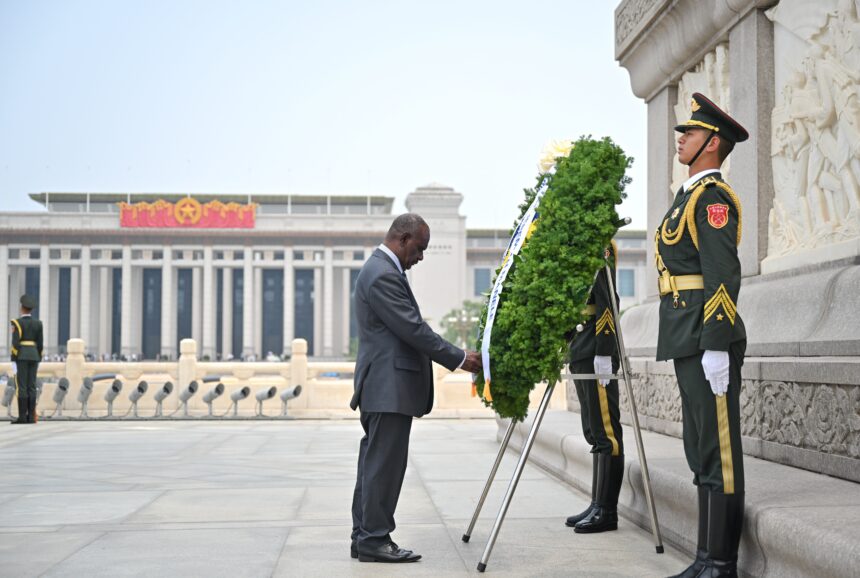
Dr. John Lee’s research from the Hudson Institute meticulously analyzes China’s strategic engagement with the Global South, focusing specifically on the Indo-Pacific region. It asserts that although major economies in Europe, North America, and Asia are growing increasingly wary of China’s global ambitions, other emerging nations are embracing China’s model. This trend stems from China’s ability to offer economic development strategies that prioritize regime stability and rapid growth over liberal economic principles and individual rights, making China an appealing ally for countries that feel marginalized by the U.S.-centric global order.

China’s Global South policy is shaped by historical narratives, notably Mao Zedong’s notion of a cohesive alliance of developing nations opposing Western imperialism. Under Xi Jinping, this strategy has evolved, utilizing economic, political, and ideological tools to alter global power dynamics. China claims its position as a leader of the Global South, offering an alternative to Western models of growth and governance. This entails depicting Western-led globalization as a failure for post-colonial nations and presenting China’s state-led model as a more effective and culturally appropriate method of modernization.

The Belt and Road Initiative (BRI) is essential to this strategy, serving as a channel for China’s economic influence. The Belt and Road Initiative extends beyond infrastructure development; it seeks to create a China-centric economic network that entraps nations in a cycle of reliance. China seeks to establish economic corridors via strategic investments that both commence and terminate in Chinese provinces, so situating itself at the center of global trade networks. This infrastructural network, coupled with standards and governance frameworks aligned with Chinese interests, undermines the ability of the U.S. and its allies to influence economic norms and laws in these nations.

Moreover, the study investigates how China utilizes its growing influence to alter the political and security structures of these nations. China promotes alternative governance frameworks that prioritize state sovereignty and regime security, often at the cost of individual freedoms. By advocating concepts like “cyber-sovereignty” and state-led growth, China appeals to authoritarian-leaning governments in the Global South, providing them with tools to maintain control while fostering economic advancement. This policy undermines the liberal democratic ideas promoted by Western nations, contributing to the decline of democratic governance in these regions.

The study emphasizes the necessity for the U.S. and its allies to curtail China’s growing influence in the Global South. It promotes a strategy framework that includes providing alternative economic and developmental assistance that respects the sovereignty and liberal values of these nations. This involves addressing the issues that make China’s model attractive, such as economic inequality and the perception of Western indifference. Moreover, it promotes a more cohesive effort to enhance governance structures that uphold human rights, economic liberalization, and the rule of law. By doing so, the U.S. and its allies can articulate a compelling counter-narrative to China’s state-centric economic model and aid in preserving a balanced global order.
View full PDF

You Might Also Like

Eight Muslim States Warn Israel Against ‘Exit-Only’ Rafah Plan

Five Turkish defense firms enter SIPRI Top 100 with record $10.1 billion in 2024 sales

Turkey’s Kızılelma drone fires radar-guided missile in beyond-visual-range test

TUAF543: Accident at FL240—or a Message to Ankara?

More Than Mischief: How a Weakened Moscow Seeks to Dismantle NATO from Within

Share This Article
Facebook Twitter Email Print
Previous Article The Sick Man of Eurasia The Decline of Russia: A Modern Day ‘Sick Man’ of Eurasia
Next Article Russia’s Burevestnik Missile: Assessing the Risks and Limitations of a Nuclear-Powered Threat
Leave a comment

Leave a Reply Cancel reply

Your email address will not be published. Required fields are marked *

Stay Connected

TwitterFollow
YoutubeSubscribe

Latest News

Jerusalem as Political Football: Netanyahu’s “Assists” and Erdoğan’s Easy Goals
Commentary Geopolitics Middle East & Africa
Brokered “Peace”: Erdoğan, Barrack, and the Drive to Disarm the SDF and Hezbollah
Commentary Geopolitics Middle East & Africa
Barrack Says Israel Treats Sykes–Picot Borders as Meaningless
Geopolitics Middle East & Africa
From Barrack’s Remarks to Security Overtures: Alawite and Druze Autonomy Speeds Up
Commentary Geopolitics Middle East & Africa

Find Us on Socials

© GeoPolist. All Rights Reserved.
  • Submit an Op-Ed + Risk Advisory
  • Jobs
  • Post Jobs & Ads for Free
Welcome Back!

Sign in to your account

Register Lost your password?