By using this site, you agree to the Privacy Policy and Terms of Use.
Accept
Geopolist | Istanbul Center for GeopoliticsGeopolist | Istanbul Center for GeopoliticsGeopolist | Istanbul Center for Geopolitics
  • Home
  • Geopolitics
    Geopolitics
    Discover professional insights into international relations, regional conflicts, and global power dynamics by visiting Geopolist. Keep up on the ways in which these changes impact…
    Show More
    Top News
    Operation Spiderweb: The Death of Strategic Depth in the Drone Age
    August 6, 2025
    The End of Vertical War: Operation Spiderweb and the Rise of Horizontal War-Making
    August 6, 2025
    Navigating a Dangerous World: Trump’s Strategy Amid Rising Global Threats
    November 13, 2024
    Latest News
    Great-Power Condominium or Great-Power Mirage?
    January 12, 2026
    This Week’s Global Fault Lines: Venezuela, Greenland, and the New Coercion (Jan 01–07, 2026)
    January 8, 2026
    Global Fault Lines: Weekly Developments Across Key Geopolitical Theaters (Dec 22–28, 2025)
    December 29, 2025
    Gaza, Not Ankara: The Real Motive Behind Israel’s Somaliland Recognition
    December 27, 2025
  • Security
    SecurityShow More
    Erdoğan’s Self-Inflicted Airpower Wounds: How Turkey Lost the Skies
    December 26, 2025
    Ahmed al-Ahmed: The Hero Islamophobes and Anti-Immigrant Voices Did Not Expect
    December 15, 2025
    Five Turkish defense firms enter SIPRI Top 100 with record $10.1 billion in 2024 sales
    December 1, 2025
    Turkey’s Kızılelma drone fires radar-guided missile in beyond-visual-range test
    December 1, 2025
    More Than Mischief: How a Weakened Moscow Seeks to Dismantle NATO from Within
    September 21, 2025
  • Commentary
    CommentaryShow More
    Great-Power Condominium or Great-Power Mirage?
    January 12, 2026
    Gaza, Not Ankara: The Real Motive Behind Israel’s Somaliland Recognition
    December 27, 2025
    Erdoğan’s Self-Inflicted Airpower Wounds: How Turkey Lost the Skies
    December 26, 2025
    Ahmed al-Ahmed: The Hero Islamophobes and Anti-Immigrant Voices Did Not Expect
    December 15, 2025
    TUAF543: Accident at FL240—or a Message to Ankara?
    November 12, 2025
  • Economy
    • Energy
  • Regions
    • Europe
    • Middle East & Africa
    • Eurasia
  • Risk Advisory
  • Jobs
    • Job Dashboard
    • Jobs
    • Post a Job
  • Register
  • My Bookmarks
Reading: China’s Shift Toward Restraint: Can It Lead to a More Constructive U.S.-China Rivalry?
Share
Notification Show More
Font ResizerAa
Geopolist | Istanbul Center for GeopoliticsGeopolist | Istanbul Center for Geopolitics
Font ResizerAa
  • Home
  • Geopolitics
  • Security
  • Commentary
  • Economy
  • Regions
  • Risk Advisory
  • Jobs
  • Register
  • My Bookmarks
  • Home
  • Geopolitics
  • Security
  • Commentary
  • Economy
    • Energy
  • Regions
    • Europe
    • Middle East & Africa
    • Eurasia
  • Risk Advisory
  • Jobs
    • Job Dashboard
    • Jobs
    • Post a Job
  • Register
  • My Bookmarks
Have an existing account? Sign In
Follow US
  • Advertise
© 2022 Foxiz News Network. Ruby Design Company. All Rights Reserved.
Geopolist | Istanbul Center for Geopolitics > Blog > Commentary > China’s Shift Toward Restraint: Can It Lead to a More Constructive U.S.-China Rivalry?
CommentaryGeopoliticsSecurity

China’s Shift Toward Restraint: Can It Lead to a More Constructive U.S.-China Rivalry?

Last updated: August 18, 2024 1:26 pm
By GEOPOLIST | Istanbul Center for Geopolitics Published August 16, 2024 735 Views 10 Min Read
Share
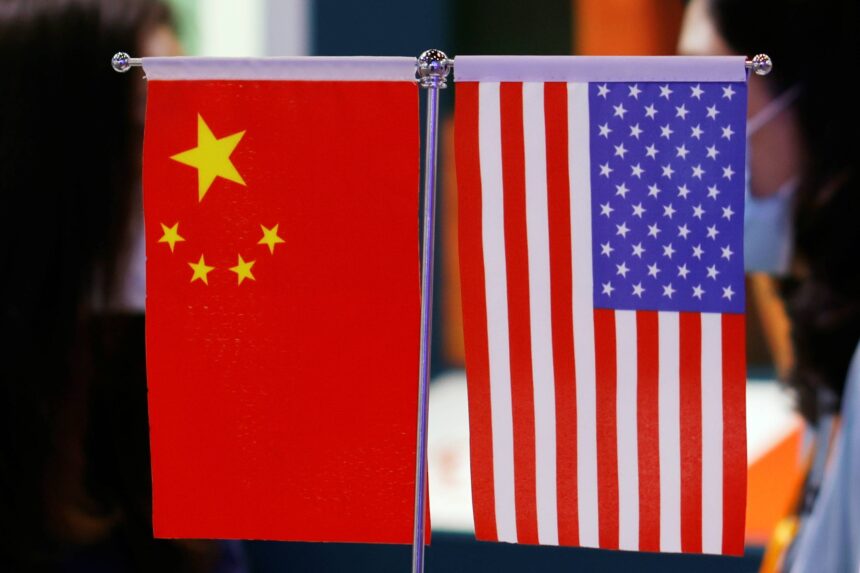
Staff members chat behind Chinese and U.S. flags displayed at the 2021 China International Fair for Trade in Services (CIFTIS) in Beijing, China September 4, 2021. REUTERS/Florence Lo
SHARE
Summary by GEOPOLIST

The article from the South China Morning Post explores whether China’s recent demonstration of restraint in its international behavior can lead to a more peaceful competition with the United States. Here is a detailed summary of the article:

  1. Background Context: The article starts by describing the tense and competitive relationship between the US and China. Historically, the rivalry between these two superpowers has been characterized by strategic competition and frequent conflicts, especially over issues such as trade, technology, and regional influence.
  2. China’s Recent Restraint: The article sheds light on recent instances where China has shown a more cautious approach in its foreign policy. For instance, China’s reactions to U.S. actions like sanctions and diplomatic pressure have been more moderate compared to its previous aggressive stances.
  3. Strategic Calculations: The author suggests that China’s change in behaviour could be a strategic decision aimed at avoiding escalation and managing international perceptions. By demonstrating restraint, China could be trying to stabilise its international relationships and reduce the risk of direct conflict with the United States.
  4. Implications for U.S.-China Relations: The article examines how this approach could impact the dynamics of the rivalry. If China continues to demonstrate restraint, it could encourage a more constructive dialogue and collaboration on global issues such as climate change and economic stability.
  5. Challenges and Skepticism: Despite these positive signs, there is doubt about whether China’s restraint will lead to lasting peace. The article points out that the fundamental problems and disagreements are still significant, and there is a risk that these underlying tensions could reemerge.
  6. Conclusion: The article concludes by considering whether China’s more restrained approach could lead to a more peaceful and stable competition with the United States. It highlights that although restraint is a positive step, achieving a more cooperative international environment will require consistent efforts and genuine commitment from both parties.

Overall, the article expresses optimism about the possibility of reduced tensions between the U.S. and China. However, it also cautions about the long-term outlook for U.S.-China relations.

Read more below.


Can China’s restraint inspire a more peaceful rivalry with the US?

When the curtain fell on the Paris Summer Olympics last weekend, people from all over the world took note that the United States and China tied for first place with 40 gold medals each, leading the rest of the competing countries by quite a margin.

Graham Allison, a Harvard professor who is best known for his 2017 book, Destined for War: Can America and China Escape Thucydides’s Trap?, observed in The National Interest late last week, “China’s rise from essentially nowhere to become the leading rival of the United States in the Olympics mirrors its rise in virtually every other dimension to become the defining geopolitical rival in the [21st century].”

Allison got the point, but the analogy can go only so far. While competition in the Paris Olympics did not go much beyond accusations and counter accusations over doping controversies, the stakes in any geopolitical contest are incomparably higher as it entails loss of property and human lives. The ongoing war in Ukraine has painfully reminded us of this every day for the past two and half years.
The Chinese understand this, especially owing to their tradition of learning from history, which is all but tantamount to a religious belief in their culture. More than 2,000 years ago, legendary military strategist Sun Tzu, warned about the grave consequences of starting a war. “Warfare is of vital importance to a state,” he said in his classic work, The Art of War, adding, “It is a matter of life and death, a road to either to safety or to ruin. Hence it is a subject which by no account can be neglected.”
Beijing knows that Washington’s path to hegemony cannot be copied. For one thing, there is no Second- or- Third Reich equivalent in today’s world to distract and exhaust America as the contemporary version of the British Empire. Today’s Russia is far from a historical equivalent given its total factor weakness.

Beijing knows more acutely that even allowing for America’s global supremacy as a result of a series of fortunate events, Washington had been painfully patient about its fruition. By the late 19th century, America’s purchasing power parity had caught up with Britain’s. US gross domestic product was nearly triple that of Britain’s when World War I started, yet it did not take the baton of world hegemony till 1945. This also explains Beijing’s strategic forbearance, in both economic and military domains.

China has been determined not to engage tit-for-tat in any excessive retaliation against American trade sanctions and technological restrictions, although rhetorically it has made its indignation loud and clear, and has hit back in some carefully chosen areas.
Allison once related an anecdotal story in which President Xi Jinping told a group of US senators visiting Beijing that the American and Chinese economies are deeply intertwined with each other; it is an “I am in you and you are in me” situation and both sides benefit from each other’s growth and development. The phrase left the American guests perplexed, according to Allison, who said he was requested to offer explanatory paraphrasing. This is a vivid example of how different levels of cultural imbibition in two societies can cause a subtle gap in thinking.
Another example can come from looking at the Chinese Communist Party’s third plenum convened last month. The meeting called for a greater opening of the economy, as well as measures to enhance technological innovation and productivity. Where commentators in America and Europe have expressed concern about overcapacity and missing consumption stimuli, I see Chinese decision-makers aiming to be more robustly integrated in international markets.

According to The Economist, a mere US$1.5 trillion in overseas sales were earned in 2023 by publicly listed companies in China, as opposed to US$5.8 trillion and US$6.4 trillion respectively by those in the US and Europe. One can imagine how big a catch-up game China’s businesses have to play beyond its borders, while those who have vocally indicted Beijing find no reason to cease being critical.

In his meeting with US Secretary of State Antony Blinken in Vientiane last month, Foreign Minister Wang Yi emphasised yet again the Taiwan issue as Beijing’s first “red line”. In reality, however, Beijing tends not to assert it as aggressively as one might imagine.
That was the case when Beijing was provoked by former US House speaker Nancy Pelosi’s visit to the island two years ago. That was the case again when Beijing accused Taiwan’s new president William Lai Ching-te of sending “dangerous signals” about seeking independence that undermine peace and stability across the Taiwan Strait in his inaugural address this May, presumably with Washington’s acquiescence or even at its prodding. In both cases, drills were carried out around Taiwan to vent Beijing’s anger and exhibit its ability to inflict punishment. That was largely all there was to it.
The same restraint has been seen over the disputes in the South China Sea, perhaps most notably with the Philippines. The worn-out Philippine warship in the Second Thomas Shoal has been sufficiently fortified to last at least a few more years, despite China claiming that it won’t allow construction material and equipment to be delivered to the vessel.

Let’s hope Beijing’s strategic forbearance continues. In this sense, perhaps the quote from Allison should evoke a wish for the US-China geopolitical rivalry to mirror the Paris Olympics – a fierce, but peaceful, competition.

By: Terry Su –  president of Lulu Derivation Data Ltd, a Hong Kong-based online publishing house and think tank specialising in geopolitics

Source: South China Morning Post

You Might Also Like

Great-Power Condominium or Great-Power Mirage?

This Week’s Global Fault Lines: Venezuela, Greenland, and the New Coercion (Jan 01–07, 2026)

Global Fault Lines: Weekly Developments Across Key Geopolitical Theaters (Dec 22–28, 2025)

Gaza, Not Ankara: The Real Motive Behind Israel’s Somaliland Recognition

Erdoğan’s Self-Inflicted Airpower Wounds: How Turkey Lost the Skies

TAGGED:China
Share This Article
Facebook Twitter Email Print
Previous Article U.S.-China War Scenarios: Risks, Strategies, and Global Implications
Next Article Kursk could hasten Russia’s post-Putin political succession Ukraine’s Kursk Offensive: Dyumin’s Leadership and the Potential End of Putin’s Era
Leave a comment

Leave a Reply Cancel reply

Your email address will not be published. Required fields are marked *

Stay Connected

TwitterFollow
YoutubeSubscribe

Latest News

Ahmed al-Ahmed: The Hero Islamophobes and Anti-Immigrant Voices Did Not Expect
Commentary Geopolitics Human Rights Terrorism
Eight Muslim States Warn Israel Against ‘Exit-Only’ Rafah Plan
Geopolitics Human Rights Middle East & Africa
Five Turkish defense firms enter SIPRI Top 100 with record $10.1 billion in 2024 sales
Defence Technology Geopolitics
Turkey’s Kızılelma drone fires radar-guided missile in beyond-visual-range test
Defence Technology Geopolitics

Find Us on Socials

© GeoPolist. All Rights Reserved.
  • Submit an Op-Ed + Risk Advisory
  • Jobs
  • Post Jobs & Ads for Free
Welcome Back!

Sign in to your account

Register Lost your password?