By using this site, you agree to the Privacy Policy and Terms of Use.
Accept
Geopolist | Istanbul Center for GeopoliticsGeopolist | Istanbul Center for GeopoliticsGeopolist | Istanbul Center for Geopolitics
  • Home
  • Geopolitics
    Geopolitics
    Discover professional insights into international relations, regional conflicts, and global power dynamics by visiting Geopolist. Keep up on the ways in which these changes impact…
    Show More
    Top News
    Operation Spiderweb: The Death of Strategic Depth in the Drone Age
    August 6, 2025
    The End of Vertical War: Operation Spiderweb and the Rise of Horizontal War-Making
    August 6, 2025
    Seeking Protection: How the U.S. Asylum Process Works
    Seeking Protection: How the U.S. Asylum Process Works
    April 13, 2025
    Latest News
    Global Fault Lines: Weekly Developments Across Key Geopolitical Theaters (Dec 22–28, 2025)
    December 29, 2025
    Gaza, Not Ankara: The Real Motive Behind Israel’s Somaliland Recognition
    December 27, 2025
    Erdoğan’s Self-Inflicted Airpower Wounds: How Turkey Lost the Skies
    December 27, 2025
    Ahmed al-Ahmed: The Hero Islamophobes and Anti-Immigrant Voices Did Not Expect
    December 15, 2025
  • Security
    SecurityShow More
    Erdoğan’s Self-Inflicted Airpower Wounds: How Turkey Lost the Skies
    December 26, 2025
    Ahmed al-Ahmed: The Hero Islamophobes and Anti-Immigrant Voices Did Not Expect
    December 15, 2025
    Five Turkish defense firms enter SIPRI Top 100 with record $10.1 billion in 2024 sales
    December 1, 2025
    Turkey’s Kızılelma drone fires radar-guided missile in beyond-visual-range test
    December 1, 2025
    More Than Mischief: How a Weakened Moscow Seeks to Dismantle NATO from Within
    September 21, 2025
  • Commentary
    CommentaryShow More
    Gaza, Not Ankara: The Real Motive Behind Israel’s Somaliland Recognition
    December 27, 2025
    Erdoğan’s Self-Inflicted Airpower Wounds: How Turkey Lost the Skies
    December 26, 2025
    Ahmed al-Ahmed: The Hero Islamophobes and Anti-Immigrant Voices Did Not Expect
    December 15, 2025
    TUAF543: Accident at FL240—or a Message to Ankara?
    November 12, 2025
    More Than Mischief: How a Weakened Moscow Seeks to Dismantle NATO from Within
    September 21, 2025
  • Economy
    • Energy
  • Regions
    • Europe
    • Middle East & Africa
    • Eurasia
  • Risk Advisory
  • Jobs
    • Job Dashboard
    • Jobs
    • Post a Job
  • Register
  • My Bookmarks
Reading: Trump’s Trade War 2.0: Asia Braces for Economic Shockwaves
Share
Notification Show More
Font ResizerAa
Geopolist | Istanbul Center for GeopoliticsGeopolist | Istanbul Center for Geopolitics
Font ResizerAa
  • Home
  • Geopolitics
  • Security
  • Commentary
  • Economy
  • Regions
  • Risk Advisory
  • Jobs
  • Register
  • My Bookmarks
  • Home
  • Geopolitics
  • Security
  • Commentary
  • Economy
    • Energy
  • Regions
    • Europe
    • Middle East & Africa
    • Eurasia
  • Risk Advisory
  • Jobs
    • Job Dashboard
    • Jobs
    • Post a Job
  • Register
  • My Bookmarks
Have an existing account? Sign In
Follow US
  • Advertise
© 2022 Foxiz News Network. Ruby Design Company. All Rights Reserved.
Geopolist | Istanbul Center for Geopolitics > Blog > Regions > Southeast Asia > Trump’s Trade War 2.0: Asia Braces for Economic Shockwaves
CommentaryEconomyGeopoliticsSoutheast Asia

Trump’s Trade War 2.0: Asia Braces for Economic Shockwaves

Last updated: November 19, 2024 7:33 pm
By GEOPOLIST | Istanbul Center for Geopolitics Published November 19, 2024 673 Views 5 Min Read
Share
SHARE

Summary by Geopolist | Istanbul Center for Geopolitics:

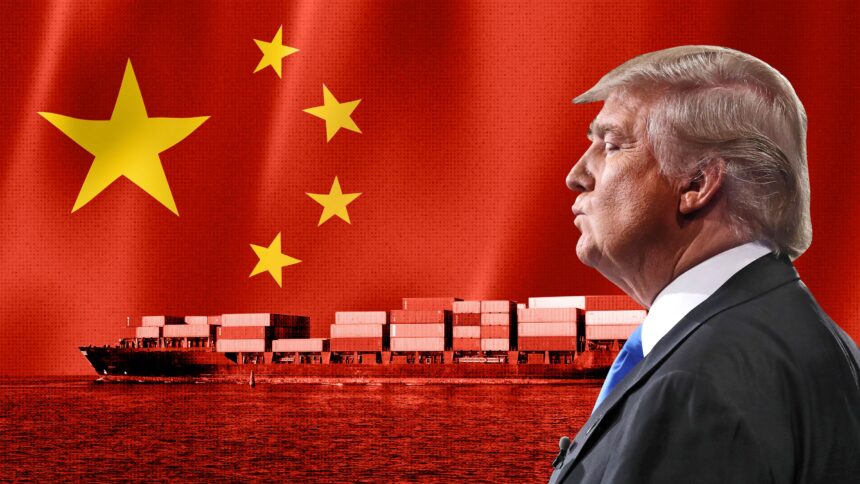
The article investigates the potential repercussions that could result from Donald Trump’s re-election and the appointment of China hawks to critical jobs in the United States-China relationship, which could have significant repercussions across the whole Asian region. Concerns of a resumption of trade hostilities have been heightened as a result of President Trump’s proposal to impose a tax of sixty percent on Chinese goods, as well as the possibility of similar steps being taken against other countries. There is a high probability that key Asian economies, including as Taiwan, Korea, Vietnam, and Japan, would experience repercussions. China may respond by expanding its alliances and increasing the degree to which it is economically self-sufficient inside its own borders.

According to Trump’s plan, which is based on trade policies from the 1980s, the goal is to address trade imbalances and preserve U.S. interests through the use of protectionist measures and tariffs that are aggressive. This highlights a significant shift in U.S. strategy, as it stands in stark contrast to the more diplomatic attempts that Vice President Biden has been making to negotiate rivalry with China. A strict approach that may worsen tensions is indicated by Trump’s cabinet appointments, which include Marco Rubio as Secretary of State and other renowned opponents of China. One of these individuals is Marco Rubio.

The economies of Asia are getting ready for the consequences, as a number of countries in the region have significant trade surpluses with the United States, which makes them targets for President Trump. Concerns have been raised by economists over the possibility that the entire region could get embroiled in conflict, particularly in light of the fact that the Trump administration is anticipated to focus on international trade deficits. Taiwan, Korea, and Vietnam are examples of countries that have benefited from the decoupling of the United States and China in the midst of previous trade disputes. These countries may therefore be vulnerable to additional tariffs or other forms of retaliatory actions now.

China, under the leadership of President Xi Jinping, is trying to find ways to lessen the impact of the protectionist policies that Trump has implemented. In order to combat the isolationism of the United States, Xi may make use of China’s influence among the BRICS and countries of the Global South. The strengthening of relations with Russia and the engagement of other key economies, such as Germany and Japan, are seen as potential strategies to alleviate the potential economic implications of economic instability. It is possible that China would like to present itself as the advocate of globalization in order to counteract what is regarded to be a protectionist stance taken by Trump.

Trump’s proposal to impose a tariff of sixty percent on imports from China, in addition to possibly increasing tariffs for particular industries, may have a negative impact on American consumers by worsening inflation, which is comparable to the effects that were observed during his first term in office. According to the findings of the study, such actions would most likely lead to an increase in prices on the market in the United States and would have an effect on a variety of industries, including vehicle manufacturing and consumer electronics. In addition, economists warn that such measures are unlikely to bring back employment or raise productivity, which would be a repetition of the unproductive effects that Trump’s earlier tariffs brought about to the economy.

From the conclusion of the article, it can be concluded that the second term of President Trump could force China to reevaluate its development model, shifting from an economy that is driven by exports to one that is more dependent on domestic consumption. At the same time, China may decide to take a variety of retaliatory actions, such as devaluing its currency or restricting market access for American businesses. These actions have the potential to escalate the situation into a more broad geopolitical conflict.

Read more here.

You Might Also Like

Global Fault Lines: Weekly Developments Across Key Geopolitical Theaters (Dec 22–28, 2025)

Gaza, Not Ankara: The Real Motive Behind Israel’s Somaliland Recognition

Erdoğan’s Self-Inflicted Airpower Wounds: How Turkey Lost the Skies

Ahmed al-Ahmed: The Hero Islamophobes and Anti-Immigrant Voices Did Not Expect

Eight Muslim States Warn Israel Against ‘Exit-Only’ Rafah Plan

Share This Article
Facebook Twitter Email Print
Previous Article Ukraine’s Drone Strategy Halts Russian Advances Near Pokrovsk
Next Article Trump’s Return: What It Means for Saudi-U.S. Relations in 2025
Leave a comment

Leave a Reply Cancel reply

Your email address will not be published. Required fields are marked *

Stay Connected

TwitterFollow
YoutubeSubscribe

Latest News

Five Turkish defense firms enter SIPRI Top 100 with record $10.1 billion in 2024 sales
Defence Technology Geopolitics
Turkey’s Kızılelma drone fires radar-guided missile in beyond-visual-range test
Defence Technology Geopolitics
TUAF543: Accident at FL240—or a Message to Ankara?
Commentary Eurasia Geopolitics
More Than Mischief: How a Weakened Moscow Seeks to Dismantle NATO from Within
Commentary Eurasia Europe Geopolitics War

Find Us on Socials

© GeoPolist. All Rights Reserved.
  • Submit an Op-Ed + Risk Advisory
  • Jobs
  • Post Jobs & Ads for Free
Welcome Back!

Sign in to your account

Register Lost your password?