By using this site, you agree to the Privacy Policy and Terms of Use.
Accept
Geopolist | Istanbul Center for GeopoliticsGeopolist | Istanbul Center for GeopoliticsGeopolist | Istanbul Center for Geopolitics
  • Home
  • Geopolitics
    Geopolitics
    Discover professional insights into international relations, regional conflicts, and global power dynamics by visiting Geopolist. Keep up on the ways in which these changes impact…
    Show More
    Top News
    Operation Spiderweb: The Death of Strategic Depth in the Drone Age
    August 6, 2025
    The End of Vertical War: Operation Spiderweb and the Rise of Horizontal War-Making
    August 6, 2025
    Seeking Protection: How the U.S. Asylum Process Works
    Seeking Protection: How the U.S. Asylum Process Works
    April 13, 2025
    Latest News
    Salafi Consolidation: Is Iraq—and the KRG—Next After Syria and Yemen?
    January 19, 2026
    Great-Power Condominium or Great-Power Mirage?
    January 12, 2026
    This Week’s Global Fault Lines: Venezuela, Greenland, and the New Coercion (Jan 01–07, 2026)
    January 8, 2026
    Global Fault Lines: Weekly Developments Across Key Geopolitical Theaters (Dec 22–28, 2025)
    December 29, 2025
  • Security
    SecurityShow More
    Erdoğan’s Self-Inflicted Airpower Wounds: How Turkey Lost the Skies
    December 26, 2025
    Ahmed al-Ahmed: The Hero Islamophobes and Anti-Immigrant Voices Did Not Expect
    December 15, 2025
    Five Turkish defense firms enter SIPRI Top 100 with record $10.1 billion in 2024 sales
    December 1, 2025
    Turkey’s Kızılelma drone fires radar-guided missile in beyond-visual-range test
    December 1, 2025
    More Than Mischief: How a Weakened Moscow Seeks to Dismantle NATO from Within
    September 21, 2025
  • Commentary
    CommentaryShow More
    Salafi Consolidation: Is Iraq—and the KRG—Next After Syria and Yemen?
    January 19, 2026
    Great-Power Condominium or Great-Power Mirage?
    January 12, 2026
    Gaza, Not Ankara: The Real Motive Behind Israel’s Somaliland Recognition
    December 27, 2025
    Erdoğan’s Self-Inflicted Airpower Wounds: How Turkey Lost the Skies
    December 26, 2025
    Ahmed al-Ahmed: The Hero Islamophobes and Anti-Immigrant Voices Did Not Expect
    December 15, 2025
  • Economy
    • Energy
  • Regions
    • Europe
    • Middle East & Africa
    • Eurasia
  • Risk Advisory
  • Jobs
    • Job Dashboard
    • Jobs
    • Post a Job
  • Register
  • My Bookmarks
Reading: Trump’s Return: What It Means for Saudi-U.S. Relations in 2025
Share
Notification Show More
Font ResizerAa
Geopolist | Istanbul Center for GeopoliticsGeopolist | Istanbul Center for Geopolitics
Font ResizerAa
  • Home
  • Geopolitics
  • Security
  • Commentary
  • Economy
  • Regions
  • Risk Advisory
  • Jobs
  • Register
  • My Bookmarks
  • Home
  • Geopolitics
  • Security
  • Commentary
  • Economy
    • Energy
  • Regions
    • Europe
    • Middle East & Africa
    • Eurasia
  • Risk Advisory
  • Jobs
    • Job Dashboard
    • Jobs
    • Post a Job
  • Register
  • My Bookmarks
Have an existing account? Sign In
Follow US
  • Advertise
© 2022 Foxiz News Network. Ruby Design Company. All Rights Reserved.
Geopolist | Istanbul Center for Geopolitics > Blog > Regions > Middle East & Africa > Trump’s Return: What It Means for Saudi-U.S. Relations in 2025
CommentaryGeopoliticsMiddle East & Africa

Trump’s Return: What It Means for Saudi-U.S. Relations in 2025

Last updated: November 19, 2024 7:42 pm
By GEOPOLIST | Istanbul Center for Geopolitics Published November 19, 2024 1k Views 3 Min Read
Share
SHARE

Summary by Geopolist | Istanbul Center for Geopolitics:

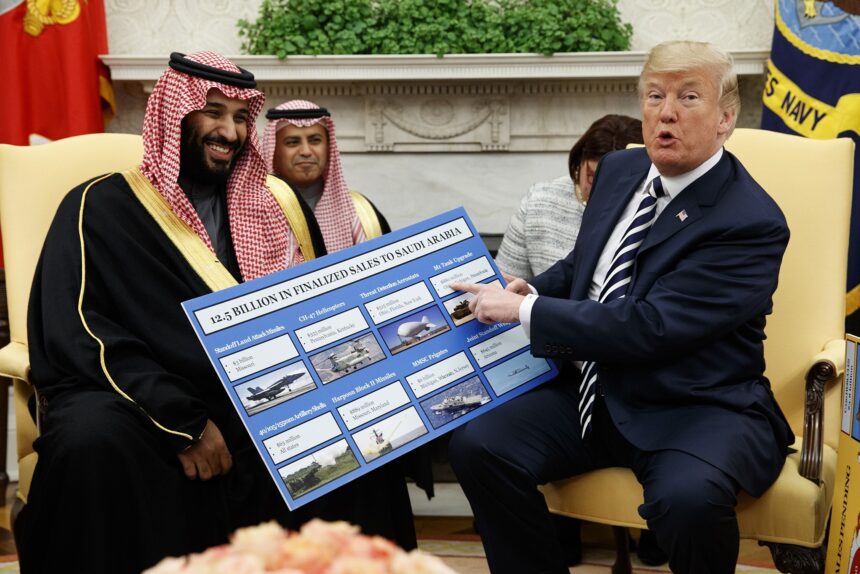
The essay dives into Saudi Arabia’s anticipations in the wake of Donald Trump’s return to the White House, analyzing both the chances and the problems that lie ahead. Over the course of its history, Saudi Arabia has shown a preference for Republican administrations. During the first term of President Trump, the kingdom discovered a helpful ally, which results in beneficial cooperation. Now, Saudi officials are hoping for similar benefits, such as larger investments from the United States in Vision 2030 and stronger defence cooperation.

Although these hopes are present, there are many unknowns. Challenges can be found in issues such as the price of oil, wars in the region, and the unexpected policies of President Trump. As a key priority of the Trump administration, restoring relations with Israel is of special significance to Saudi Arabia. However, this is contingent upon the resolution of ongoing crises in Gaza and Lebanon, as well as Saudi stipulations relating to the establishment of a Palestinian sovereign state. The Saudis are also concerned about the potential impact that Trump’s economic policy, which includes increasing oil output in the United States, could have on their intentions to stabilize the price of oil.

Additionally, the shifting connection that occurred during the presidency of Joe Biden is explored, with particular emphasis placed on the difficulties that arose as a result of Biden’s first critiques, the Yemen war, and human rights issues. In contrast, relations between Saudi Arabia and Israel improved during the latter part of Vice President Joe Biden’s term. This was characterized by efforts to stabilize oil prices and accelerate normalization negotiations between the two countries.

The anticipation that Saudi Arabia has regarding the return of President Trump is tempered by prudence. Despite the fact that they see the possibility of opportunity, there is no assurance that Trump’s policies will be in complete accordance with their strategic objectives. The position that Trump takes on Iran, for instance, is yet unknown, and any rise in the amount of oil produced by the United States could be detrimental to Saudi Arabia’s economic interests. The policies of the kingdom continue to be hedged in order to keep a balanced relationship with regional foes such as Iran.

However, Saudi Arabia must navigate an unstable international landscape as President Trump prepares for a second term in office. Saudi Arabia’s overall hope is that economic and security cooperation would be revived.

Read more here.
You Might Also Like

Salafi Consolidation: Is Iraq—and the KRG—Next After Syria and Yemen?

Great-Power Condominium or Great-Power Mirage?

This Week’s Global Fault Lines: Venezuela, Greenland, and the New Coercion (Jan 01–07, 2026)

Global Fault Lines: Weekly Developments Across Key Geopolitical Theaters (Dec 22–28, 2025)

Gaza, Not Ankara: The Real Motive Behind Israel’s Somaliland Recognition

Share This Article
Facebook Twitter Email Print
Previous Article Trump’s Trade War 2.0: Asia Braces for Economic Shockwaves
Next Article Balancing Influence: China’s Multilateral Approach Through BRICS and Beyond
Leave a comment

Leave a Reply Cancel reply

Your email address will not be published. Required fields are marked *

Stay Connected

TwitterFollow
YoutubeSubscribe

Latest News

Erdoğan’s Self-Inflicted Airpower Wounds: How Turkey Lost the Skies
Commentary Defence Technology Geopolitics Middle East & Africa
Ahmed al-Ahmed: The Hero Islamophobes and Anti-Immigrant Voices Did Not Expect
Commentary Geopolitics Human Rights Terrorism
Eight Muslim States Warn Israel Against ‘Exit-Only’ Rafah Plan
Geopolitics Human Rights Middle East & Africa
Five Turkish defense firms enter SIPRI Top 100 with record $10.1 billion in 2024 sales
Defence Technology Geopolitics

Find Us on Socials

© GeoPolist. All Rights Reserved.
  • Submit an Op-Ed + Risk Advisory
  • Jobs
  • Post Jobs & Ads for Free
Welcome Back!

Sign in to your account

Register Lost your password?