The collapse of the SDF’s de facto autonomy in northeastern Syria is being sold—especially in Ankara—as a clean geopolitical outcome: the Kurdish project is being folded into the Syrian state, and Turkey’s core security obsession along its southern border is finally being addressed. Yet the “day after” is already revealing something more dangerous: not just a redistribution of territory, but a redistribution of ideological space—the kind that Salafi-jihadist ecosystems exploit faster than any army can redeploy.
In Turkey, that shift is being lubricated by a political rebranding campaign that treats Syria’s new leader, Ahmed al-Sharaa, not as a former jihadist figure but as a legitimate “counterterror” partner—and, in nationalist discourse, increasingly as a statesman who delivered what Ankara wanted: the rollback of Kurdish self-rule. Turkish security sources have framed the Damascus–SDF integration deal as a “historic turning point,” explicitly linking it to Turkey’s domestic anti-terror agenda and portraying Ankara as a decisive backer of Sharaa. Erdoğan has publicly praised Sharaa and discussed joint steps against both ISIS and Kurdish militants, reinforcing the message that this is a partner to work with, not a radical to quarantine. Even Bahçeli has endorsed Sharaa’s moves as timely and correct for Syria’s unity—language that effectively “normalizes” him inside Turkey’s nationalist ecosystem and, by extension, among the youth networks that take cues from it. The risk is that this rehabilitation doesn’t only launder one leader; it launders the broader ideological traffic around him—shrinking the stigma around Salafi-adjacent currents at precisely the moment the SDF’s removal is eroding the region’s most important containment architecture against ISIS.
Salafism’s Rise from Syria’s Ashes
The Syrian civil war that erupted in 2011 transformed into fertile ground for Salafi-jihadist ideology. What began as a largely local uprising against Bashar al-Assad soon saw ultraconservative Islamist factions – from Jabhat al-Nusra to the Islamic State – dominate the battlefield. By 2012, hardline groups like Ahrar al-Sham and al-Nusra had emerged as leading rebel forces, espousing a Salafi-jihadist vision. Over the next few years, Salafism steadily moved from the fringes to the forefront of the anti-Assad insurgency, infusing the rebellion with extremist currents. Crucially, this ideological shift did not occur in a vacuum. It was enabled and accelerated by external backers – chief among them, Turkey. Indeed, the insurgent coalition that would eventually topple Assad in late 2024 was partly backed by Turkey and with roots in jihadist Sunni Islam, a dynamic that Western states can no longer ignore. In essence, Ankara’s policies throughout the war helped Salafism take root and gain momentum, with profound consequences for Syria and the wider region.
Ankara’s Early Gamble: Open Borders and Jihadist Proxies
In the war’s first years, Turkey cast aside its earlier friendship with Assad and bet on Syria’s opposition – even as its character turned Islamist. Turkey’s Erdoğan swiftly abandoned Assad in 2011, hoping to install a friendly Sunni Islamist regime in Damascus that would align with Ankara’s interests. Turkey hosted the Syrian National Council in Istanbul in August 2011, an opposition coalition dominated by the Muslim Brotherhood. This ideological kinship set the tone: Turkey was signaling that Islamist factions, not secular dissidents, would be its partners of choice.
By early 2012, Turkey’s intelligence agency (MIT) was providing weapons, funds, and logistical support to Syrian rebel groups on Erdoğan’s orders. Crucially, this support continued even as extremist factions became impossible to ignore. By mid-2012, U.S.-designated terrorist groups like Jabhat al-Nusra and Ahrar al-Sham were active in the fight, yet Ankara did not shut the pipeline. On the contrary, these Salafi militias came to depend on Ankara’s provision of military and communications equipment, as well as the ability to cross into Turkey for sanctuary and supplies. In effect, Turkey turned its long border with Syria into a revolving door for jihadi logistics. The Islamic State (ISIS) and other jihadists were “heavily exploiting Turkey’s porous borders, which became a key conduit for the flow of foreign fighters, illicit financing, weapons, and even black-market oil into Syria. Turkish border towns swelled into staging grounds for the insurgency. By some estimates, in 2013 alone some 30,000 militants traversed Turkish soil – a veritable “jihadi highway” into Syria. Ankara’s border guards often looked the other way.
This permissive approach was part strategic calculation and part willful blindness. Determined to hasten Assad’s fall, Turkey tolerated – even facilitated – the growth of Salafi-jihadist networks on its soil and next door. Weapons flowed, fighters mobilized, and extremist leaders found refuge in Turkey, all under the banner of regime change. For a time, this gamble appeared to be working: the Assad regime was on the defensive, and Ankara’s favored rebel coalitions gained strength. But the short-term gains came at the cost of empowering some of the world’s most dangerous Islamist actors. Turkish officials insisted they backed only “moderate” rebels, yet the reality was far murkier. In truth, Ankara’s actions helped fuel the rise of ISIS in Syria – a fact often downplayed in Turkish rhetoric. Turkey’s lack of action in policing its border was a significant factor in ISIS’s growth. Even wounded ISIS fighters were reportedly treated in Turkish hospitals in 2014, and Turkish intermediaries were implicated in the group’s illicit oil trade. Such indulgences belied Ankara’s later claims of fighting terrorism, revealing a dangerous double standard in its Syria policy.
Post-2016: Cracking Down on Moderates, Courting Extremists—and Grooming Bilal’s Base
The failed coup attempt in July 2016 marked a turning point in Turkey’s domestic and regional posture. In its aftermath, President Erdoğan launched an unprecedented purge at home—and an ideological recalibration that, paradoxically, widened the space in which harder-line Sunni currents could operate. The coup was blamed on Fethullah Gülen’s movement, a faith-based civic network that had once been an AKP ally and then became Ankara’s principal internal enemy. After July 2016, “FETÖ” was declared Public Enemy No. 1, and Erdoğan’s rhetoric deliberately collapsed distinctions between rivals and jihadists: he publicly argued there was “no difference” between FETÖ, ISIS (Daesh), and the PKK. That framing helped legitimize a sweeping securitization of society, with tens of thousands detained or purged and a broad institutional ecosystem shut down.
The education sector was a prime target. In the first months after the coup attempt, authorities closed Gülen-linked universities and roughly a thousand secondary schools, alongside other institutions. Within the religious bureaucracy, the Directorate of Religious Affairs (Diyanet) also became a purge zone: hundreds were removed immediately after the coup, followed by reports of more than a thousand personnel dismissed soon after. The cumulative effect was not just administrative cleansing; it was an ideological re-sorting of the state’s “acceptable” Islam—more centralized, more loyalty-tested, and less tolerant of autonomous religious networks.
What made this rupture strategically consequential is that the Gülen movement—whatever one thinks of its politics—had long functioned as a major pipeline of Turkey’s “moderate,” education-forward Islamic socialization at home and abroad. Its school networks were a well-known soft-power instrument, often providing modern, high-quality instruction (languages, sciences) and projecting a socially conservative but globally legible Turkish profile in dozens of countries. Carnegie’s pre-2016 assessment, for example, described Gülen-associated schools as delivering strong secular education and serving as an important vector of Turkish soft power in places like Africa. When that ecosystem was ripped out after 2016—schools closed, dorms and prep-course circuits dismantled, international networks criminalized—Turkey did not simply eliminate a rival; it also removed a large institutional “shock absorber” that had shaped religious youth through disciplined education, upward mobility, and outward-facing professionalism.
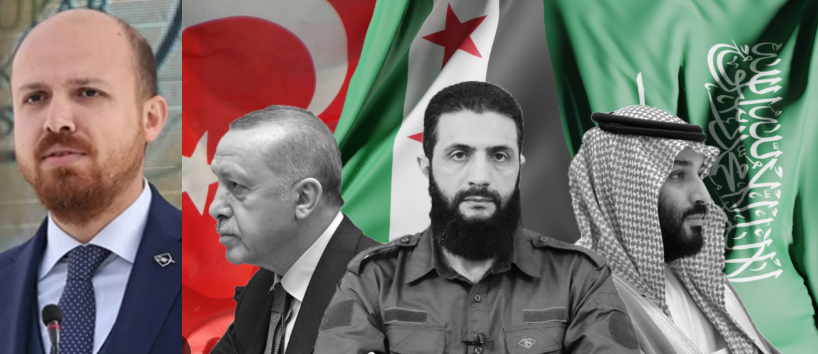
The vacuum did not remain empty for long. Part of it was filled by state-aligned, quasi-corporatist youth structures that fuse piety with political loyalty. Bilal Erdoğan is closely associated with this ecosystem; He serves as a board member at the TÜGVA youth foundation, underscoring how such platforms overlap with family-centered continuity projects in the Erdoğan era.
For Erdoğan, this youth architecture also functions as succession infrastructure. In a system where institutions have been hollowed out and politics is increasingly personalized, continuity is less about party platforms than about social reproduction: who controls the dorms, scholarships, networks, conferences, and “values” ecosystem that molds the next cohort of bureaucrats, activists, and loyalists. That is why Bilal Erdoğan’s prominence around TÜGVA matters politically even without a formal office. It helps accustom a conservative-nationalist youth base to a family-centered notion of leadership—normalizing the idea that the Erdoğan era can be inherited rather than merely extended. And here the “hardening” dynamic becomes tactically useful: a more combative, purity-coded conservatism can mobilize faster, police internal dissent more aggressively, and delegitimize rivals as existential threats. But it also carries the built-in hazard of every controlled radicalization project: once the center of religious youth politics is trained to speak in absolutist terms, Salafi-adjacent entrepreneurs can present themselves as the “authentic” upgrade—turning the regime’s succession scaffolding into an ideological escalator it may not be able to stop.
An Ideological Balancing Act: Fighting Some Terrorists, Tolerating Others
Turkey’s evolving counterterrorism posture in this period was riddled with contradictions. On one hand, Ankara did take steps to suppress jihadist violence – particularly when it directly threatened Turkish lives. Starting in 2015, after ISIS bombings struck Turkish cities and tourist sites, the government began tightening border controls and conducting raids on ISIS networks. By August 2015, under pressure from Washington, Turkey finally agreed to secure its frontier and even joined U.S.-led airstrikes against ISIS, after years of laissez-faire transit. Turkish security forces arrested hundreds of ISIS suspects inside Turkey, and in 2016 the Turkish army itself pushed ISIS out of key border towns in Syria. In the rhetoric of Erdoğan’s government, Turkey was aggressively combating “Daesh” (ISIS) terror.
Yet, on the other hand, Turkey continued to selectively tolerate or even collaborate with other extremist groups that aligned with its interests. Perhaps the clearest example is Ankara’s ambivalent relationship with Hay’at Tahrir al-Sham (HTS), the powerful al-Qaeda successor controlling Idlib in northwest Syria. Turkey has officially designated HTS a terrorist organization – as have the U.S. and UN – but in practice Ankara maintained communication and collaboration with the group. Until HTS’s formal dissolution earlier this year, Turkey provided indirect assistance to it. Turkish troops deployed in Idlib acted as a buffer shielding HTS from full-scale assaults by Assad’s forces. Moreover, Turkey funneled humanitarian aid and trade into HTS-held territory, propping up the local economy and by extension HTS’s legitimacy among the populace. This delicate arrangement kept Idlib as a Turkish protectorate of sorts, where an explicitly Salafi-jihadist faction could rule so long as it served a strategic purpose. The pattern is a familiar one: much like Pakistan’s double game with militants, Turkey distinguishes between “bad” jihadists who must be fought and “useful” Islamist actors who can be co-opted. HTS was kept on a tight leash but not eliminated – a stark contrast to Turkey’s uncompromising war on Kurdish militias.
The permissiveness extended beyond Syria’s borders, bleeding back into Turkey itself. In recent years, Turkish society has shown signs of Salafi infiltration that alarm even Islamist elders. In 2020, a prominent Turkish preacher, Ahmet Mahmut Ünlü (popularly known as “Cübbeli Ahmet Hoca”), warned that some 2,000 Salafist organizations in Turkey were arming themselves and preparing for conflict. Ünlü – who is staunchly pro-government – publicly alleged that 3.6% of Turkey’s population had adopted Salafi views (up to 8–10% in certain provinces) and accused the state’s own Diyanet of spreading Wahhabi-Salafi ideas by hosting extremist preachers. These claims were explosive, suggesting that Turkey’s leniency toward Salafi currents abroad was backfiring at home. The Interior Ministry was forced to open an investigation, and opposition lawmakers pressed the government on whether radical groups were stockpiling weapons. The Diyanet angrily denied promoting Salafism. But the episode underscored a deeper reality: by tolerating certain extremist networks for strategic reasons, Ankara risks empowering an ideology that could eventually threaten Turkish society from within. It is a precarious balancing act – cracking down on ISIS and domestic terror plots, while turning a blind eye (or worse, extending a hand) to jihadist ideologues who do not immediately challenge the Turkish state.
The contradictions in Turkey’s counterterrorism posture became impossible to paper over after the Yalova raid, when what began as a targeted operation turned into an almost eight-hour standoff that left three police officers dead and six ISIS suspects killed, with additional security personnel wounded. The aftermath was just as revealing as the firefight itself: Ankara launched a sweeping wave of follow-on operations, with the interior minister announcing 357 detentions across 21 provinces in raids that included 114 addresses in Istanbul. Turkish authorities and prosecutors said 41 of the Istanbul detainees were linked to the Yalova cell and were allegedly preparing similar attacks during New Year’s celebrations—a detail that underscored how these networks are not merely residual “sympathizers,” but functioning nodes with operational intent. Even then the dragnet continued: within days, Turkey detained another 125 suspected ISIS members in coordinated raids across 25 provinces, reflecting official concern that the threat was not contained to one house in Yalova but embedded across multiple local ecosystems.
The Kurdish Collapse and Consolidation of Salafi Influence
Fast forward to the latest turning point in the Syrian saga. In December 2024, Assad’s regime fell to a coalition of rebel forces led largely by HTS and other Islamist fighters. The victory, enabled by Turkish support, was trumpeted in Ankara as vindication of its long-standing stance. Erdogan had gambled on Sunni Islamist proxies, and now one of them – HTS commander Abu Mohammed al-Golani, newly reinvented under his real name Ahmad al-Sharaa – stood as Syria’s transitional president. Turkey lost no time in embracing the new reality. Within days of Assad’s ouster, Ankara re-established formal ties with Damascus. Turkish Foreign Minister Hakan Fidan and intelligence chief İbrahim Kalın paid personal visits to the HTS-brokered leadership. In early 2025, Erdogan hosted al-Sharaa in Ankara, lavishing praise on the Islamist leader’s commitment to fighting “terror groups” – namely ISIS and the Kurdish-led SDF.
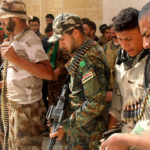
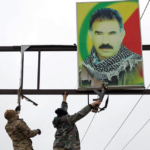
Subsequent events bore out this deal. Freed from the specter of Assad and backed by the US, Turkey and Israel, the new Syrian government moved swiftly to assert control over areas held by the U.S.-allied Syrian Democratic Forces (SDF). Fighting erupted as al-Sharaa’s Islamist-dominated forces advanced into the Kurdish-held regions. By early 2025, the Kurdish experiment in autonomy – Rojava’s multi-ethnic, secular-left governance – was effectively snuffed out. A recent ceasefire saw the Syrian central government (now under HTS influence) take almost full control of the country, ending de facto Kurdish autonomy. The SDF was dismantled. For Turkey, this outcome was a strategic triumph: its two main adversaries in Syria (the Assad regime and the Kurdish self-administration) were gone in one fell swoop. But this came at the cost of Salafi-jihadists consolidating unprecedented influence in Syria’s future. With the secular Baathists and the secular Kurds sidelined, the power vacuum is being filled by Islamists who share HTS’s fundamentalist worldview. Al-Sharaa, the new president, may have shed al-Qaeda’s name for pragmatic reasons, but the group remained committed to its Salafi-jihadi ideology despite cosmetic changes. In governing, he has empowered HTS loyalists who share his Islamist ideology and even appointed relatives to key positions, hardly the inclusive, moderate approach Ankara advertises.
Turkish officials now find themselves in a curious position. They champion Syria’s post-Assad government as a fresh start, hoping to lead reconstruction efforts and gain international legitimacy for their client regime. Turkish diplomats argue that the new authorities will be moderate and inclusive – noting, for example, al-Sharaa’s public pledges to respect all ethnic and religious groups. But these assurances ring hollow when juxtaposed with the facts on the ground. In truth, Syria’s new rulers owe their victory to hardline Islamist brigades and to Turkey’s machinations. The “beacon for the Islamic nation” that Jolani/Al-Sharaa promised in his victory speech is likely to be one guided by Salafist thought. For the region, this could herald a new chapter of Sunni Islamist ascendancy. Other jihadist factions – from Idlib to Iraq – may be emboldened by the sight of an Islamist regime in Damascus that succeeded where ISIS failed, by securing state power. And while Turkey basks in the downfall of Assad and the clipping of Kurdish wings, it must now contend with the reality that its southern neighbor is governed by erstwhile jihadist comrades.
Does Erdoğan Care About Salafism—or About What Salafism Can Do for Bilal?
Turkey’s role in Syria shows the danger of fusing cold geopolitical ambition with religious extremism. In chasing short-term objectives—toppling Assad, crushing Kurdish autonomy, projecting influence—Ankara helped cultivate an ecosystem in which Salafi-jihadist networks did not merely survive the Syrian war but, in key arenas, adapted and matured. That legacy now stretches from Idlib to Damascus and to Yalova.
But the deeper question is motive. The pattern increasingly looks less like a coherent national security doctrine than a regime survival strategy—one that treats ideology as a tool. From that angle, Salafi-adjacent hardening is not embraced because the leadership “believes” in it, but because it can be useful: it hardens the base, narrows pluralism, disciplines youth through loyalty-coded religiosity, and reframes politics as an existential struggle. That environment is also where succession projects are built. If the Erdoğan camp is cultivating continuity through networks like TÜGVA and through Bilal Erdoğan’s visibility in that ecosystem, then any current—Salafi drift included—that strengthens mobilization and reduces internal dissent can appear strategically attractive, even if it degrades the state’s long-term resilience.
The risk is that a tool used for consolidation can become a force that no longer obeys its handlers. The “day after the SDF” is precisely when this gamble becomes hardest to control: security vacuums widen, jihadist narratives regain oxygen, and the blowback potential rises inside Turkey itself. If succession politics becomes the overriding compass—if what matters most is keeping the base intact for a Bilal-era continuity—then Ankara may keep making tradeoffs that look rational for the dynasty but reckless for the republic. And once you normalize the ecosystem, you don’t get to choose which part of it grows fastest.
By: GEOPOLIST – Istanbul Center for Geopolitics