By using this site, you agree to the Privacy Policy and Terms of Use.
Accept
Geopolist | Istanbul Center for GeopoliticsGeopolist | Istanbul Center for GeopoliticsGeopolist | Istanbul Center for Geopolitics
  • Home
  • Geopolitics
    Geopolitics
    Discover professional insights into international relations, regional conflicts, and global power dynamics by visiting Geopolist. Keep up on the ways in which these changes impact…
    Show More
    Top News
    The End of Vertical War: Operation Spiderweb and the Rise of Horizontal War-Making
    August 6, 2025
    Operation Spiderweb: The Death of Strategic Depth in the Drone Age
    August 6, 2025
    The Chinese Way to Peace: China’s Role in Peacebuilding and Peacekeeping in South Sudan
    April 13, 2025
    Latest News
    Eight Muslim States Warn Israel Against ‘Exit-Only’ Rafah Plan
    December 7, 2025
    Five Turkish defense firms enter SIPRI Top 100 with record $10.1 billion in 2024 sales
    December 1, 2025
    Turkey’s Kızılelma drone fires radar-guided missile in beyond-visual-range test
    December 1, 2025
    TUAF543: Accident at FL240—or a Message to Ankara?
    November 12, 2025
  • Security
    SecurityShow More
    Five Turkish defense firms enter SIPRI Top 100 with record $10.1 billion in 2024 sales
    December 1, 2025
    Turkey’s Kızılelma drone fires radar-guided missile in beyond-visual-range test
    December 1, 2025
    More Than Mischief: How a Weakened Moscow Seeks to Dismantle NATO from Within
    September 21, 2025
    Turkey pairs air-defense deliveries with nationwide shelter plan
    August 27, 2025
    From Concrete to Cruise Missiles: IDEF 2025 and the New Face of Turkey’s Defence Industry
    July 27, 2025
  • Commentary
    CommentaryShow More
    TUAF543: Accident at FL240—or a Message to Ankara?
    November 12, 2025
    More Than Mischief: How a Weakened Moscow Seeks to Dismantle NATO from Within
    September 21, 2025
    Jerusalem as Political Football: Netanyahu’s “Assists” and Erdoğan’s Easy Goals
    September 18, 2025
    Brokered “Peace”: Erdoğan, Barrack, and the Drive to Disarm the SDF and Hezbollah
    September 7, 2025
    From Barrack’s Remarks to Security Overtures: Alawite and Druze Autonomy Speeds Up
    August 28, 2025
  • Economy
    • Energy
  • Regions
    • Europe
    • Middle East & Africa
    • Eurasia
  • Risk Advisory
  • Jobs
    • Job Dashboard
    • Jobs
    • Post a Job
  • Register
  • My Bookmarks
Reading: Palestinian Cause in Crisis: How Arab States Prioritize Stability Over Solidarity
Share
Notification Show More
Font ResizerAa
Geopolist | Istanbul Center for GeopoliticsGeopolist | Istanbul Center for Geopolitics
Font ResizerAa
  • Home
  • Geopolitics
  • Security
  • Commentary
  • Economy
  • Regions
  • Risk Advisory
  • Jobs
  • Register
  • My Bookmarks
  • Home
  • Geopolitics
  • Security
  • Commentary
  • Economy
    • Energy
  • Regions
    • Europe
    • Middle East & Africa
    • Eurasia
  • Risk Advisory
  • Jobs
    • Job Dashboard
    • Jobs
    • Post a Job
  • Register
  • My Bookmarks
Have an existing account? Sign In
Follow US
  • Advertise
© 2022 Foxiz News Network. Ruby Design Company. All Rights Reserved.
Geopolist | Istanbul Center for Geopolitics > Blog > Regions > Middle East & Africa > Palestinian Cause in Crisis: How Arab States Prioritize Stability Over Solidarity
CommentaryGeopoliticsMiddle East & Africa

Palestinian Cause in Crisis: How Arab States Prioritize Stability Over Solidarity

Last updated: October 8, 2024 12:32 am
By GEOPOLIST | Istanbul Center for Geopolitics Published October 8, 2024 2.5k Views 2 Min Read
Share
SHARE


Summary by Geopolist | Istanbul Center for Geopolitics

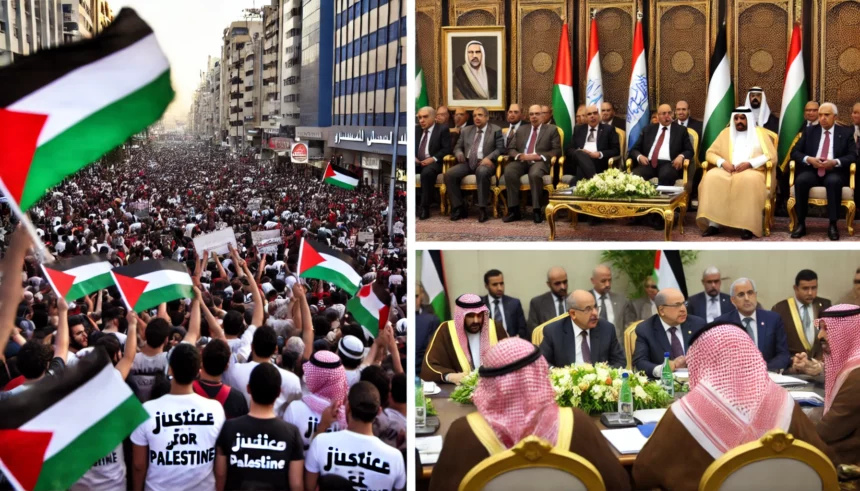
The article examines the response of the Arab world in the aftermath of a pivotal event that occurred on October 7. In contrast to the elevated anticipations of extensive public mobilization akin to the Arab Spring, the region experienced a notable scarcity of protests. This phenomenon can be attributed to the tendency of authoritarian regimes in the Middle East to prioritize stability at the expense of solidarity with Palestine. The authorities implemented strategies to stifle or regulate protests, highlighting a dissonance between societal feelings and governmental directives.


Historically, the Palestinian struggle was essential to pan-Arabism; but, in recent decades, national concerns have persistently eclipsed it. The four principal Arab-Israeli wars, while ostensibly framed as a defense of Palestine, were predominantly waged for the distinct objectives of separate states. The 1979 peace accord between Egypt and Israel clearly demonstrated the conclusion of the pan-Arab ideal and initiated an emphasis on nation-specific solutions.

Currently, popular support for Palestine persists robustly, evidenced by demonstrations in nations such as Morocco, Jordan, and Yemen, whilst countries like Algeria and Egypt have suppressed protests to avert their transformation into venues for anti-regime sentiments. Countries that have normalized relations with Israel, including Bahrain and the UAE, exercise heightened caution, suppressing opposition to preserve these affiliations.

The Arab regimes have inadequately transformed public support into political leverage, relegating the Palestinian cause to mere symbolic language instead of implementable policy. Their position has diminished their potential contribution to a comprehensive regional resolution of the Israeli-Palestinian problem.

Read the full article here.

You Might Also Like

Eight Muslim States Warn Israel Against ‘Exit-Only’ Rafah Plan

Five Turkish defense firms enter SIPRI Top 100 with record $10.1 billion in 2024 sales

Turkey’s Kızılelma drone fires radar-guided missile in beyond-visual-range test

TUAF543: Accident at FL240—or a Message to Ankara?

More Than Mischief: How a Weakened Moscow Seeks to Dismantle NATO from Within

Share This Article
Facebook Twitter Email Print
Previous Article Israel’s Existential Crossroads: Navigating Internal Strife and External Conflict Amid a Crisis of Democracy
Next Article The Unpredictable Superpower: How U.S. Foreign Policy Volatility Weakens Its Global Influence
Leave a comment

Leave a Reply Cancel reply

Your email address will not be published. Required fields are marked *

Stay Connected

TwitterFollow
YoutubeSubscribe

Latest News

Jerusalem as Political Football: Netanyahu’s “Assists” and Erdoğan’s Easy Goals
Commentary Geopolitics Middle East & Africa
Brokered “Peace”: Erdoğan, Barrack, and the Drive to Disarm the SDF and Hezbollah
Commentary Geopolitics Middle East & Africa
Barrack Says Israel Treats Sykes–Picot Borders as Meaningless
Geopolitics Middle East & Africa
From Barrack’s Remarks to Security Overtures: Alawite and Druze Autonomy Speeds Up
Commentary Geopolitics Middle East & Africa

Find Us on Socials

© GeoPolist. All Rights Reserved.
  • Submit an Op-Ed + Risk Advisory
  • Jobs
  • Post Jobs & Ads for Free
Welcome Back!

Sign in to your account

Register Lost your password?