By using this site, you agree to the Privacy Policy and Terms of Use.
Accept
Geopolist | Istanbul Center for GeopoliticsGeopolist | Istanbul Center for GeopoliticsGeopolist | Istanbul Center for Geopolitics
  • Home
  • Geopolitics
    Geopolitics
    Discover professional insights into international relations, regional conflicts, and global power dynamics by visiting Geopolist. Keep up on the ways in which these changes impact…
    Show More
    Top News
    Operation Spiderweb: The Death of Strategic Depth in the Drone Age
    August 6, 2025
    The End of Vertical War: Operation Spiderweb and the Rise of Horizontal War-Making
    August 6, 2025
    A map of Israel and Lebanon showing large numbers of strikes by Israel and Hezbollah near the border since October 7, 2023
    Understanding the Impact of Growing Hezbollah-Israel Tensions and the Gaza Conflict on Lebanon
    April 13, 2025
    Latest News
    The Epstein Files and the Chomsky Reckoning on the Left
    February 6, 2026
    The Gülen Diaspora and the Return of a Calvinist Moment in Islam
    February 3, 2026
    Broad Buy-In, Rival Readings, Future Risks: SDF and Damascus Clash Over Integration Terms
    January 31, 2026
    İbrahim Kalın: Erdoğan’s Most Geopolitically Credible Successor
    January 30, 2026
  • Security
    SecurityShow More
    Erdoğan’s Self-Inflicted Airpower Wounds: How Turkey Lost the Skies
    December 26, 2025
    Ahmed al-Ahmed: The Hero Islamophobes and Anti-Immigrant Voices Did Not Expect
    December 15, 2025
    Five Turkish defense firms enter SIPRI Top 100 with record $10.1 billion in 2024 sales
    December 1, 2025
    Turkey’s Kızılelma drone fires radar-guided missile in beyond-visual-range test
    December 1, 2025
    More Than Mischief: How a Weakened Moscow Seeks to Dismantle NATO from Within
    September 21, 2025
  • Commentary
    CommentaryShow More
    The Epstein Files and the Chomsky Reckoning on the Left
    February 6, 2026
    The Gülen Diaspora and the Return of a Calvinist Moment in Islam
    February 3, 2026
    Broad Buy-In, Rival Readings, Future Risks: SDF and Damascus Clash Over Integration Terms
    January 31, 2026
    İbrahim Kalın: Erdoğan’s Most Geopolitically Credible Successor
    January 30, 2026
    Jeffrey’s Autonomy Model for Syria Matches NAT’s Earlier Proposal
    January 26, 2026
  • Economy
    • Energy
  • Regions
    • Europe
    • Middle East & Africa
    • Eurasia
  • Risk Advisory
  • Jobs
    • Job Dashboard
    • Jobs
    • Post a Job
  • Register
  • My Bookmarks
Reading: Will Macron be the undoing of European centrist politics?
Share
Notification Show More
Font ResizerAa
Geopolist | Istanbul Center for GeopoliticsGeopolist | Istanbul Center for Geopolitics
Font ResizerAa
  • Home
  • Geopolitics
  • Security
  • Commentary
  • Economy
  • Regions
  • Risk Advisory
  • Jobs
  • Register
  • My Bookmarks
  • Home
  • Geopolitics
  • Security
  • Commentary
  • Economy
    • Energy
  • Regions
    • Europe
    • Middle East & Africa
    • Eurasia
  • Risk Advisory
  • Jobs
    • Job Dashboard
    • Jobs
    • Post a Job
  • Register
  • My Bookmarks
Have an existing account? Sign In
Follow US
  • Advertise
© 2022 Foxiz News Network. Ruby Design Company. All Rights Reserved.
Geopolist | Istanbul Center for Geopolitics > Blog > Commentary > Will Macron be the undoing of European centrist politics?
CommentaryGeopolitics

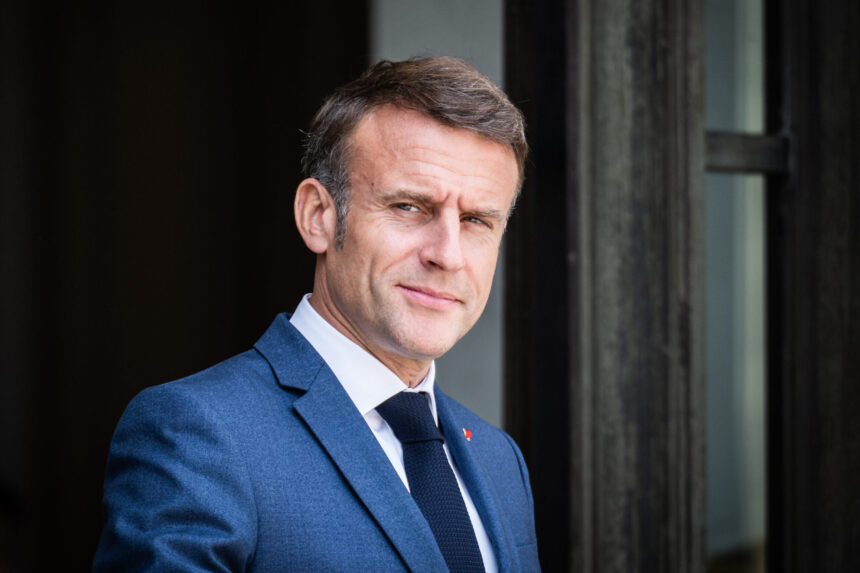
Will Macron be the undoing of European centrist politics?

Last updated: August 11, 2024 6:48 pm
By GEOPOLIST | Istanbul Center for Geopolitics Published July 4, 2024 818 Views 6 Min Read
Share
SHARE

Summary by Geopolist | Istanbul Center for Geopolitics:

The Atlantic Council article explores how French President Emmanuel Macron’s political gambles, particularly the snap elections, have backfired, risking the rise of Marine Le Pen’s National Rally. Macron’s miscalculations have led to significant political turmoil, which may undermine centrist politics in Europe. If the National Rally gains power, it could challenge the EU’s cohesion and policies from within, potentially leading to a “Frexit.” This situation reflects broader issues of voter discontent and the challenges of centrist politics in current economic and social climates.

For more details, read the full article here below.


Whatever French President Emmanuel Macron’s strategy was that led him to go all-in with calling snap elections, it looks like he lost. His high-risk gamble to contain and beat back the political extremes in France has backfired. It is not without irony that Macron, who entered the national and European stage as the prodigy of centrist politics, may be its undoing, as the person who paved the way to power for Marine Le Pen’s right-wing extremist National Rally. Macron’s underestimation of voter discontent, of the dynamism of the National Rally, of the likelihood of a united left, and of the willingness of the center-right Republicans to ally with Le Pen underlines how big the president’s miscalculations and isolation from the political realities really were.

Given the two-round run-off electoral system, much will depend on whether Macron and his challengers outside of Le Pen’s party can mobilize the traditional “republican front” and agree to tactical withdrawals of third-place candidates to boost the chances of non-National Rally candidates. The initial signs from Macron, Prime Minister Gabriel Attal, and the political left give some hope. As Raphaël Glucksmann, a left-wing member of the European Parliament, put it in calling for a united front: “We have seven days for France to avoid a catastrophe.” But the center-right Republicans seem less willing to stand down. An absolute majority for the National Rally is within reach but still looks unlikely.

Macron’s previously successful strategy to mobilize the center by scaring voters about the potential of the right and left fell flat this time.

For France and Europe, the two most likely outcomes are both a fundamental challenge. At best, Paris could be mired in political chaos, gridlock, and uncertainty if no clear majority—relative or absolute—emerges after the second round. That would also mean a paralyzed, absent France at the European level where—think what you like of his vision statements—Macron was one of the few leaders who sparked major European debates and challenged the European Union (EU) to act, even if his framing, wording, and timing often left much to be desired. Whatever the precise impact of a hung parliament might be, Macron’s freedom of action and his legitimacy in the eyes of other EU leaders will be seriously curtailed.

At worst, an absolute majority for the National Rally would give Macron little option but to allow the National Rally’s Jordan Bardella to form a government in what would be cohabitation in one of its most incompatible forms. Abroad, at the European level, a National Rally government might not only challenge the president’s “reserved domain” in foreign and defense policy but also use its budgetary powers to undercut France’s support for the single market, the EU budget, and key initiatives from support to Ukraine to enlargement and institutional reforms. The longer-term result could be a challenge to the EU as formidable as the United Kingdom’s Brexit vote in 2016—this time not as one big-bang Brexit-like withdrawal, but rather a creeping, piecemeal attempt at a partial “Frexit” and a Europe of nations from within.

For those trying to see some commonalities with the United States’ own leadership contest this fall, the lesson might be that it’s not good enough to be the perfect democrat. Macron’s previously successful strategy to mobilize the center by scaring voters about the potential of the right and left fell flat this time, despite a record turnout. As electorates are coping with cost-of-living crises, growth that has not benefited the many, and migration pressures, merely invoking the principles of the republic—American or French—to mobilize voters for centrist candidates might not be sufficient any longer.


By: Jörn Fleck – the senior director of the Atlantic Council’s Europe Center.

Source: atlanticcouncil.org

Source link

You Might Also Like

The Epstein Files and the Chomsky Reckoning on the Left

The Gülen Diaspora and the Return of a Calvinist Moment in Islam

Broad Buy-In, Rival Readings, Future Risks: SDF and Damascus Clash Over Integration Terms

İbrahim Kalın: Erdoğan’s Most Geopolitically Credible Successor

Jeffrey’s Autonomy Model for Syria Matches NAT’s Earlier Proposal

Share This Article
Facebook Twitter Email Print
Previous Article Chinese peace and its discontents
Next Article Biden’s mixed messages to Israel are coming home to roost
Leave a comment

Leave a Reply Cancel reply

Your email address will not be published. Required fields are marked *

Stay Connected

TwitterFollow
YoutubeSubscribe

Latest News

Strategic and Ideological Missteps of Syria’s SDF
Commentary Geopolitics Middle East & Africa
The Day After the SDF: Turkey’s Salafism Gamble—and Bilal Erdoğan’s Succession Pipeline
Commentary Geopolitics Middle East & Africa
Salafi Consolidation: Is Iraq—and the KRG—Next After Syria and Yemen?
Commentary Geopolitics Middle East & Africa
Great-Power Condominium or Great-Power Mirage?
Commentary Geopolitics

Find Us on Socials

© GeoPolist. All Rights Reserved.
  • Submit an Op-Ed + Risk Advisory
  • Jobs
  • Post Jobs & Ads for Free
Welcome Back!

Sign in to your account

Register Lost your password?