The first week of 2026 set a clear tone: force first, law later. A shock operation in Venezuela quickly spilled beyond politics into energy markets, maritime enforcement, and a bruising international argument about sovereignty and legitimacy. At the same time, Washington revived—openly and operationally—the agenda of acquiring Greenland, prompting unusually blunt European messaging about deterrence, alliance cohesion, and the limits of unilateralism within the Western camp. Elsewhere, unrest in Iran hardened into a security-state response, Ukraine’s winter energy war ran alongside renewed peace diplomacy, Yemen’s anti-Houthi coalition fractured further, and Aleppo returned to the headlines as the relationship between Damascus and the Kurdish-led forces deteriorated.
Venezuela dominated because it was not merely a headline—it was a precedent. The operation reflected months of preparation and a scale of force that sat uneasily beside claims that it amounted to “law enforcement with military support.” Maduro and Cilia Flores were pulled into the U.S. judicial system, and Maduro’s not-guilty plea in New York projected an image of finality rather than negotiation. Yet the global argument immediately shifted from outcome to process. The central question became whether unilateral military action can be repackaged as accountability without weakening the very legal norms it claims to defend. The episode also revealed how limited international mechanisms can be when a major power creates new facts on the ground and treats subsequent debate as secondary.
That legitimacy struggle mattered because the operation created an instant demonstration effect for other capitals. Several governments condemned Maduro’s record at home while still viewing cross-border seizure as a destabilizing template when applied to them. The uncomfortable implication is that Washington may have “won” the raid but still lose the narrative environment: many states can oppose a targeted leader and simultaneously fear the normalization of removal-by-force as a tool of statecraft.
The spillover was immediate in energy and maritime domains. U.S. pressure expanded offshore through a high-profile tanker seizure after a prolonged pursuit, folding sanctions enforcement into a direct friction point with Russia at sea. Moscow labeled the move illegal and framed it as piracy. The episode carried escalatory texture precisely because it demonstrated both capability and intent: pressure could now be operationalized not only on land but along Atlantic shipping routes, even under contested flags and competing legal claims. For markets and policy planners, the key takeaway was not the fate of a single vessel, but the blending of sanctions enforcement, energy leverage, and coercive signaling into one package—an approach that invites retaliation and counter-moves in other chokepoints.
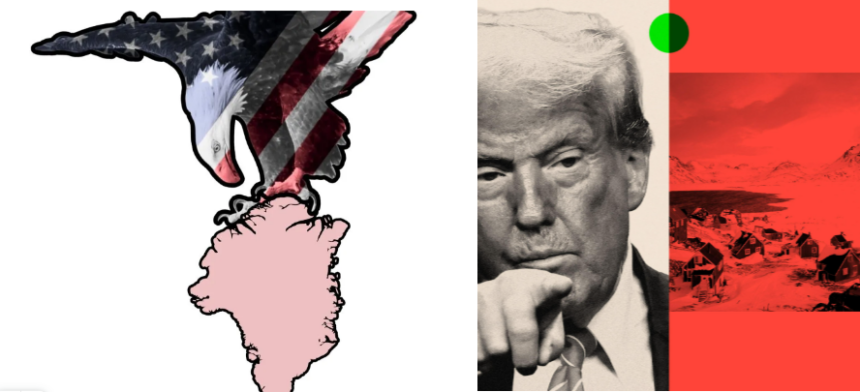
Greenland, in this sequence, looked like the allied-world corollary to Venezuela. If Washington is willing to act unilaterally in the Western Hemisphere, Europeans have to ask how far U.S. ambition might extend inside the alliance perimeter. The administration described acquisition as an active discussion justified by Arctic security and competition with Russia and China. The pushback from Europe was swift and unusually direct: Greenland’s status was framed as a matter of self-determination and sovereignty rather than a negotiable transaction, and some governments signaled they were thinking through contingencies in case the pressure escalated. Diplomatic outreach to Danish leaders did little to ease anxiety because the premise—acquisition as a standing objective—remained intact.
The deeper policy story is that Greenland compresses multiple anxieties into a single file: military basing and early-warning architecture, critical minerals and supply-chain sovereignty, and a shifting legal-political landscape if Greenland’s independence debate accelerates. The island’s strategic relevance is real; so is the political resistance to being treated as an object of purchase. That creates an alliance risk that is reputational and procedural: if the West claims a rules-based order, Greenland becomes a test of whether consent is meaningful when the asking party is the alliance’s dominant power.
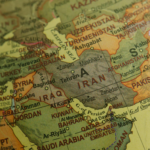
Iran’s protests moved rapidly from an economic spark to a full security-state posture. Demonstrations that began among traders in Tehran’s Grand Bazaar—driven by currency collapse and surging prices—spread across multiple cities and provinces, evolving into an openly political challenge. By January 6, clashes in and around the Grand Bazaar had become a defining image of the week, with confrontations between protesters and security forces and reports of at least 35 people killed and hundreds detained as the unrest intensified.
The state’s response hardened in parallel. Senior judicial and security officials warned there would be “no leniency,” drawing a sharp distinction between “legitimate protest” and what they labeled disorder or foreign-influenced agitation. This framing typically signals a shift away from accommodation and toward suppression, especially when unrest reaches symbolic economic and commercial centers like the bazaar.
The broader strategic risk is that the regime’s siege narrative—already reinforced by regional tensions and external rhetoric—locks both sides into escalation. Even if the original driver of the protests is economic legitimacy rather than regime overthrow, the securitized response reduces the space for de-escalation and raises the likelihood that a domestic crisis will be reframed as a national-security confrontation.
In Ukraine, diplomacy and destruction ran in parallel. A summit in Paris produced backing for security guarantees and a proposed ceasefire monitoring mechanism built around drones, sensors, and satellites—an attempt to make post-ceasefire deterrence more concrete without immediate deployment of foreign troops. At the same time, Russian strikes knocked out power across parts of southeastern Ukraine in harsh winter conditions, reaffirming that energy infrastructure remains a pressure point even as talks proceed. Ukrainian intelligence warnings about a possible mass-casualty provocation timed around Orthodox Christmas underscored how information operations are being designed to shape negotiating space, not merely battlefield morale.
Yemen’s southern theater sharpened its internal fragmentation. Disruptions at Aden’s airport and disputes over inspection rules and flight corridors exposed how administrative chokepoints can become proxies for the deeper Saudi–UAE rivalry shaping anti-Houthi governance. Rising pressure on southern leadership, including language of coercion and “treason,” hinted that a fragile power-sharing arrangement could slide into open intra-coalition confrontation.
Finally, Syria’s north signaled renewed volatility as clashes in Aleppo deepened the rift between Damascus and the Kurdish-led forces, displacing thousands and underscoring how “integration deals” can unravel when sovereignty, command structures, and external patrons remain unresolved. Any further deterioration in Aleppo also reactivates regional sensitivities—especially Turkey’s concerns over Kurdish autonomy—and raises the chance that Syria’s internal bargaining becomes entangled with wider bargaining among external powers.
Taken together, the week’s pattern was consistent: coercion is being normalized as a negotiating instrument, not a last resort, and major actors are preparing as much for the “precedent aftershock” as for the events themselves. Venezuela tested whether law can constrain power; Greenland tested whether alliance membership guarantees consent; and the rest of the map—from Iran’s streets to Ukraine’s substations—showed how quickly local crises can become global leverage points.