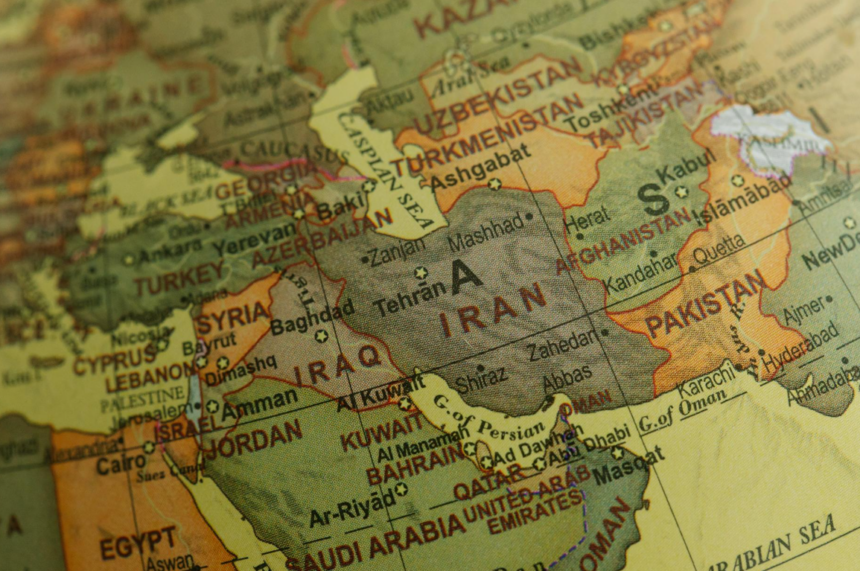
The widespread fear in some circles in Ankara—and among many analysts—is that a collapsing Iran would export chaos: refugee flows, militia competition, and Kurdish mobilization, much as the region experienced after the First Gulf War, after the 2003 invasion of Iraq, and during the Syrian civil war. That fear is not irrational. In 1991, the Iraqi Kurdish uprising and its suppression sent more than a million Kurdish refugees toward Iran and Turkey and triggered an emergency international response centered on Turkey, including Operation Provide Comfort and the northern no-fly zone. Over time, that same crisis also helped produce a new political reality in northern Iraq. Iraqi Kurds gained de facto autonomy after 1991, and the KRG’s semiautonomous status was later formalized after the 2003 U.S. invasion and the fall of Saddam. For Turkey, both wars created immediate security risks, but they also eventually opened new arenas for trade, bargaining, and regional influence.
The same pattern is visible in Syria. The civil war generated enormous refugee pressure and intensified Ankara’s threat perception around PKK-linked Kurdish formations on its southern border. Turkey ended up hosting roughly 3 million Syrians, while Ankara repeatedly stressed that neither ISIS nor the PKK/YPG should benefit from the post-Assad transition. Yet after Assad’s ouster in December 2024, Turkish officials also immediately moved to frame the moment as a new phase for reconstruction, return, and influence—showing how a security crisis can also become a geopolitical opening.
The strategic opportunity for Turkey in Syria is even larger. Turkey could gain more from a decentralized Syria in which Syrian Kurds govern themselves within a unified state. A negotiated, decentralized arrangement may ultimately serve Turkey’s interests better than a rigidly centralized Damascus closely aligned with the Saudis, because it would reduce zero-sum proxy competition and create more space for border stability, trade, and political influence
That is why Iran matters at a much higher strategic level. Turkey’s greatest long-term geopolitical gains in the modern era followed the collapse of the Soviet Union (USSR), which opened strategic space for Ankara in the Caucasus and Central Asia and encouraged a model of influence built on connectivity and institutions—including educational and business networks linked to the Gülen movement, TİKA, and later the institutionalization of the Turkic world. A serious weakening of Tehran could create a comparable opening—and potentially rival, or even surpass, the strategic gains Turkey realized after the Soviet collapse.
The Strategic Rivalry in Historical Context
Turkey and Iran have rarely been true allies, but they have often been effective rivals: competing for influence in Mesopotamia, the Levant, and the borderlands while avoiding direct war for long stretches of modern history. Scholars of the relationship often emphasize a pattern of managed competition—trade and energy links continuing even as the two states back opposing partners in places like Syria under Assad and Iraq. In that framing, Iran’s current regional posture has been strategically inconvenient for Turkey for three reasons.
First, Tehran has been able to shape Kurdish politics in multiple theatres—pressuring Kurdish actors at home while keeping channels open to some Kurdish factions abroad—and to use that flexibility as leverage against neighbours. Tehran has intermittently tolerated or instrumentalized elements linked to the PKK while cracking down on the Kurds inside its borders. In other words, Iran has pursued a pragmatic, multi-vector Kurdish policy to manage threats and retain bargaining power.
Second, Iran has acted as a spoiler against Turkey’s deepening penetration of the and the —partly by aligning its security relationships and partly by contesting corridor politics and regional alignments that could reduce Iran’s own relevance.
Third, Iran’s governance model has concentrated decision-making in security institutions—including the —that are structurally suspicious of pan-Turkic cultural linkages and cross-border identity politics. A post-collapse Iran that devolves power would not automatically become pro-Turkey, but it would likely become less capable of sustained, centralized regional obstruction—and that, for Ankara, is the strategic wedge.
Ankara’s current posture toward Iran is largely defensive. Turkey expends enormous strategic energy containing security risks and threats in the region, and Iranian influence networks that shape the region indirectly. If the regime in Tehran weakens or fragments politically, however, Turkey’s posture could shift from defense to shaping. That shift may matter more than any single tactical gain. It would allow Ankara to move from reacting to Iranian leverage to constructing its own architecture of influence through trade, transport, and political ties—especially in the Caucasus and the wider Turkic world.
Azerbaijani Turks in Iran: The “kingmakers”
The collapse of the regime in Iran would likely benefit Turkey in one form or another. Much of that benefit, however, would depend on the political agency, cohesion, and strategic role of Iran’s Azerbaijani Turks. As Iran’s largest non-Persian ethno-linguistic community, they are concentrated in the northwest (often referred to as Iranian Azerbaijan) and also maintain a significant urban presence in Tehran and other major cities. Some major policy analyses describe them as more than one-quarter of the population.
Iranian Azerbaijani identity has long contained dual attachments: local Turkic language and culture alongside strong participation in Iranian state, clerical, and commercial life. The fact that Iran’s current supreme leader, , is often described as having Azerbaijani heritage is frequently cited as evidence of integration, not irredentism. In a centralized authoritarian system, that salience is managed from above. In a federal or semi-federal transition, even in a democratic transition without a federal or decentralized structure, bargaining power becomes crucial. Bargaining power is exactly what creates kingmakers.
In any post-regime constitutional order, the decisive question will be who can deliver stability, votes, territory, and economic continuity. Azerbaijani-majority provinces would sit at the center of that equation. They are geographically strategic, economically relevant, and politically large enough to shape national coalitions. They may not need to pursue separatism to transform the regional balance. Simply becoming pivotal actors in a federalized or democratic Iran would already create a new strategic environment—one in which Turkey and Azerbaijan gain indirect influence through language, commerce, logistics, and elite networks.
The Kurdish theatre and Turkey’s leverage across four states
A post-regime Iran could let Turkey shift from Kurdish containment to Turkic connectivity, especially if Turkey can reduce the domestic Kurdish security burden. If Ankara achieves a credible domestic settlement, it gains strategic bandwidth—and deprives regional Kurdish militant ecosystems of their centre of gravity.
Iran has maintained a strategic relationship with the Kurds, particularly the Iraqi Kurds, since 1974. Following the enactment of the Kurdish autonomy law that year, Mustafa Barzani resumed his fight with significant support from Iran. However, when that support ceased in 1975, Kurdish forces were quickly overrun, prompting Barzani to seek refuge in Tehran.
On the Iran–PKK relationship, Iran has long been accused of harboring or supporting PKK-linked networks, and Turkey has repeatedly condemned Tehran over what it describes as support for PKK activities. Even Abdullah Öcalan, in recent remarks from prison, reportedly referred to Iran’s support and its ties with Qandil. On the other hand, Iranian media and officials have publicly denied specific allegations of cooperation, including claims such as drone transfers.
Bottom line: if Turkey can reduce the PKK security burden and make meaningful progress on resolving the Kurdish question at home, it would gain leverage not only domestically but across the region—especially in its dealings with the KRG, Iraqi Kurdish actors, and Baghdad. It would also have greater room to shape outcomes in Syria and Iran, while shifting its strategic focus toward corridor politics and Turkic-world integration.
Why the Turkic World Could Get Stronger
The biggest strategic gain Turkey has achieved in its near abroad in the modern era was the collapse of the Soviet Union (the USSR). That geopolitical rupture opened space for Ankara to expand its influence in the Caucasus and Central Asia. In that sense, Turkey’s long-term advantage in Eurasia is not coercion, but connectivity and institutions. The Organization of Turkic States (OTS) traces its institutional roots to the 2009 Nakhchivan Agreement, which formalized a framework for Turkic-state coordination. A federalized, decentralized, or democratized Iran may not become a member of the OTS, but that’s not the main issue. The key point is that a more devolved Iran could encourage its Turkic-facing provinces to be more willing and capable of engaging with broader political, economic, cultural, and logistical networks within the Turkic world.
Corridor politics is the concrete mechanism through which this strategy would operate. Turkish official policy frames the Middle Corridor as a faster, safer, and more efficient Europe–Asia route, and Ankara continues to invest heavily in transport infrastructure that reinforces this role. Recent financing for a major Bosphorus railway freight/passenger project fits that broader connectivity logic. At the same time, routes linked to Nakhchivan and the Syunik/Meghri zone remain intensely geopolitical: the 2025 U.S.-brokered Azerbaijan–Armenia deal and the proposed TRIPP corridor underlined both the corridor’s strategic value and Iran’s sensitivity to foreign-backed transit arrangements near its border.
Soft power may be the second lever, but it is the most important one.In the post-Soviet period, Turkey’s influence expanded not only through state diplomacy, but also through education, commerce, and transnational social networks. For example, the Gülen movement’s role in Central Asia has shown how its schools and business associations helped deepen Turkey’s economic and social footprint in the region. That channel was substantially weakened after the 2016 coup attempt and the sweeping crackdown that followed, as many Gülen-linked institutions were shut down or seized. Still, Turkey retains state-backed instruments with broad reach: TİKA operates in more than 170 countries, and the Yunus Emre Institute promotes Turkish language and culture through cultural centers and educational partnerships abroad. In a decentralized Iran, these tools could be deployed at the provincial level—provided Ankara avoids pan-Turkist triumphalism and frames its approach in practical terms: education, trade facilitation, technical cooperation, and reconstruction partnership.
This is why our title—“the biggest strategic gain since the collapse of the USSR”—is not an overstatement. The gain would not be a single event, but a chain reaction. First, Iran’s regime weakens or collapses. Second, internal power diffuses. Third, Azerbaijani Turkish actors gain greater weight in national bargaining. Fourth, Tehran’s traditional ability to shape Kurdish and militia theaters across the region declines. Fifth, Turkey—especially if it stabilizes its own Kurdish file—shifts from security consumption to strategic investment. Sixth, corridor politics and Turkic connectivity become easier to scale. None of these steps is guaranteed. But taken together, the pathway is coherent, and it aligns with the structural pressures already visible across the region.
By: GEOPOLIST – Istanbul Center for Geopolitics