By using this site, you agree to the Privacy Policy and Terms of Use.
Accept
Geopolist | Istanbul Center for GeopoliticsGeopolist | Istanbul Center for GeopoliticsGeopolist | Istanbul Center for Geopolitics
  • Home
  • Geopolitics
    Geopolitics
    Discover professional insights into international relations, regional conflicts, and global power dynamics by visiting Geopolist. Keep up on the ways in which these changes impact…
    Show More
    Top News
    Operation Spiderweb: The Death of Strategic Depth in the Drone Age
    August 6, 2025
    The End of Vertical War: Operation Spiderweb and the Rise of Horizontal War-Making
    August 6, 2025
    Financing the Transition in Germany and Italy Amid Market Instability
    April 13, 2025
    Latest News
    Jeffrey’s Autonomy Model for Syria Matches NAT’s Earlier Proposal
    January 26, 2026
    Strategic and Ideological Missteps of Syria’s SDF
    January 24, 2026
    The Day After the SDF: Turkey’s Salafism Gamble—and Bilal Erdoğan’s Succession Pipeline
    January 22, 2026
    Salafi Consolidation: Is Iraq—and the KRG—Next After Syria and Yemen?
    January 19, 2026
  • Security
    SecurityShow More
    Erdoğan’s Self-Inflicted Airpower Wounds: How Turkey Lost the Skies
    December 26, 2025
    Ahmed al-Ahmed: The Hero Islamophobes and Anti-Immigrant Voices Did Not Expect
    December 15, 2025
    Five Turkish defense firms enter SIPRI Top 100 with record $10.1 billion in 2024 sales
    December 1, 2025
    Turkey’s Kızılelma drone fires radar-guided missile in beyond-visual-range test
    December 1, 2025
    More Than Mischief: How a Weakened Moscow Seeks to Dismantle NATO from Within
    September 21, 2025
  • Commentary
    CommentaryShow More
    Jeffrey’s Autonomy Model for Syria Matches NAT’s Earlier Proposal
    January 26, 2026
    Strategic and Ideological Missteps of Syria’s SDF
    January 24, 2026
    The Day After the SDF: Turkey’s Salafism Gamble—and Bilal Erdoğan’s Succession Pipeline
    January 22, 2026
    Salafi Consolidation: Is Iraq—and the KRG—Next After Syria and Yemen?
    January 19, 2026
    Great-Power Condominium or Great-Power Mirage?
    January 12, 2026
  • Economy
    • Energy
  • Regions
    • Europe
    • Middle East & Africa
    • Eurasia
  • Risk Advisory
  • Jobs
    • Job Dashboard
    • Jobs
    • Post a Job
  • Register
  • My Bookmarks
Reading: China’s Military Unveiling: Genuine Leap or Strategic Bluff in Global Power Play?
Share
Notification Show More
Font ResizerAa
Geopolist | Istanbul Center for GeopoliticsGeopolist | Istanbul Center for Geopolitics
Font ResizerAa
  • Home
  • Geopolitics
  • Security
  • Commentary
  • Economy
  • Regions
  • Risk Advisory
  • Jobs
  • Register
  • My Bookmarks
  • Home
  • Geopolitics
  • Security
  • Commentary
  • Economy
    • Energy
  • Regions
    • Europe
    • Middle East & Africa
    • Eurasia
  • Risk Advisory
  • Jobs
    • Job Dashboard
    • Jobs
    • Post a Job
  • Register
  • My Bookmarks
Have an existing account? Sign In
Follow US
  • Advertise
© 2022 Foxiz News Network. Ruby Design Company. All Rights Reserved.
Geopolist | Istanbul Center for Geopolitics > Blog > Security > Defence Technology > China’s Military Unveiling: Genuine Leap or Strategic Bluff in Global Power Play?
CommentaryDefence TechnologyGeopolitics

China’s Military Unveiling: Genuine Leap or Strategic Bluff in Global Power Play?

Last updated: August 9, 2025 3:51 am
By GEOPOLIST | Istanbul Center for Geopolitics Published January 4, 2025 804 Views 3 Min Read
Share
SHARE

Summary by Geopolist | Istanbul Center for Geopolitics:

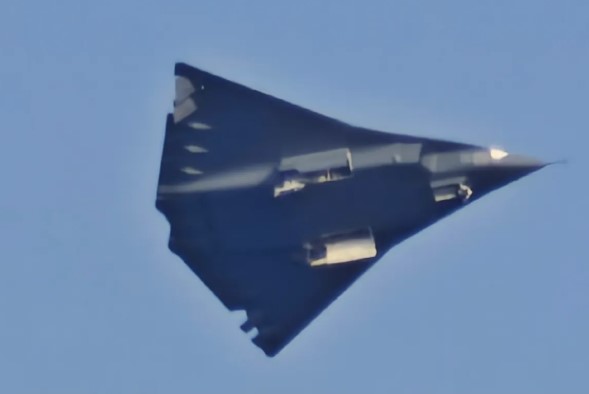
The article discusses China’s recent unveiling of what appears to be sixth-generation fighter aircraft, a significant event that coincided with Mao Zedong’s birthday, underscoring its symbolic importance. This display is part of a broader series of military advancements, including the introduction of the Type 076 amphibious assault ship and a high-tech reconnaissance drone, both designed to enhance China’s power projection capabilities and battlefield intelligence.

The timing and content of these unveilings suggest a deliberate geopolitical signal to the United States and its allies, reflecting the intensifying strategic competition in the Indo-Pacific region. This moment has been compared to the Soviet Union’s launch of Sputnik in 1957, which shocked the U.S. and spurred the space race, emphasizing the potential for technological surprises to reshape strategic calculations.

The article explores four potential scenarios through a 2×2 analytical matrix. These scenarios examine whether the unveiled warplanes represent real technological advancements or are part of a psychological bluff, and how effectively the U.S. might respond. If the aircraft are genuine breakthroughs, they could force the U.S. to escalate its own technological efforts to avoid falling behind. Alternatively, if they are mere prototypes or exaggerations, the U.S. risks wasting resources if it overreacts.

China’s strategy could also be seen as a form of psychological warfare, aiming to create uncertainty in U.S. defense planning circles. Even if the capabilities displayed are not yet operational, they could still influence perceptions and force adversaries to reevaluate their priorities.

For the U.S., the challenge lies in crafting an appropriate response that balances the risks of underestimating or overreacting to China’s actions. The implications extend beyond the immediate military arena, influencing alliances and strategic postures in the Indo-Pacific. As the U.S. and its partners assess these developments, the lessons of the Sputnik moment serve as a cautionary reminder of the dangers of complacency in the face of a rival’s technological advancements. This dynamic underscores the broader importance of innovation and strategic foresight in maintaining balance in an evolving geopolitical landscape.

Read more here.
You Might Also Like

Jeffrey’s Autonomy Model for Syria Matches NAT’s Earlier Proposal

Strategic and Ideological Missteps of Syria’s SDF

The Day After the SDF: Turkey’s Salafism Gamble—and Bilal Erdoğan’s Succession Pipeline

Salafi Consolidation: Is Iraq—and the KRG—Next After Syria and Yemen?

Great-Power Condominium or Great-Power Mirage?

Share This Article
Facebook Twitter Email Print
Previous Article Navigating Rivalry and Collaboration: The Economic Interdependence of India and China
Next Article Israel’s Calculated Push to Topple Assad: Strategic Imperatives Amid Shifting Geopolitical Realities
Leave a comment

Leave a Reply Cancel reply

Your email address will not be published. Required fields are marked *

Stay Connected

TwitterFollow
YoutubeSubscribe

Latest News

This Week’s Global Fault Lines: Venezuela, Greenland, and the New Coercion (Jan 01–07, 2026)
Geopolitics
Global Fault Lines: Weekly Developments Across Key Geopolitical Theaters (Dec 22–28, 2025)
Geopolitics
Gaza, Not Ankara: The Real Motive Behind Israel’s Somaliland Recognition
Commentary Geopolitics Human Rights Middle East & Africa
Erdoğan’s Self-Inflicted Airpower Wounds: How Turkey Lost the Skies
Commentary Defence Technology Geopolitics Middle East & Africa

Find Us on Socials

© GeoPolist. All Rights Reserved.
  • Submit an Op-Ed + Risk Advisory
  • Jobs
  • Post Jobs & Ads for Free
Welcome Back!

Sign in to your account

Register Lost your password?