
By using this site, you agree to the Privacy Policy and Terms of Use.
Accept
Geopolist | Istanbul Center for GeopoliticsGeopolist | Istanbul Center for GeopoliticsGeopolist | Istanbul Center for Geopolitics
  • Home
  • Geopolitics
    Geopolitics
    Discover professional insights into international relations, regional conflicts, and global power dynamics by visiting Geopolist. Keep up on the ways in which these changes impact…
    Show More
    Top News
    Operation Spiderweb: The Death of Strategic Depth in the Drone Age
    August 6, 2025
    The End of Vertical War: Operation Spiderweb and the Rise of Horizontal War-Making
    August 6, 2025
    Navigating a Dangerous World: Trump’s Strategy Amid Rising Global Threats
    November 13, 2024
    Latest News
    Salafi Consolidation: Is Iraq—and the KRG—Next After Syria and Yemen?
    January 19, 2026
    Great-Power Condominium or Great-Power Mirage?
    January 12, 2026
    This Week’s Global Fault Lines: Venezuela, Greenland, and the New Coercion (Jan 01–07, 2026)
    January 8, 2026
    Global Fault Lines: Weekly Developments Across Key Geopolitical Theaters (Dec 22–28, 2025)
    December 29, 2025
  • Security
    SecurityShow More
    Erdoğan’s Self-Inflicted Airpower Wounds: How Turkey Lost the Skies
    December 26, 2025
    Ahmed al-Ahmed: The Hero Islamophobes and Anti-Immigrant Voices Did Not Expect
    December 15, 2025
    Five Turkish defense firms enter SIPRI Top 100 with record $10.1 billion in 2024 sales
    December 1, 2025
    Turkey’s Kızılelma drone fires radar-guided missile in beyond-visual-range test
    December 1, 2025
    More Than Mischief: How a Weakened Moscow Seeks to Dismantle NATO from Within
    September 21, 2025
  • Commentary
    CommentaryShow More
    Salafi Consolidation: Is Iraq—and the KRG—Next After Syria and Yemen?
    January 19, 2026
    Great-Power Condominium or Great-Power Mirage?
    January 12, 2026
    Gaza, Not Ankara: The Real Motive Behind Israel’s Somaliland Recognition
    December 27, 2025
    Erdoğan’s Self-Inflicted Airpower Wounds: How Turkey Lost the Skies
    December 26, 2025
    Ahmed al-Ahmed: The Hero Islamophobes and Anti-Immigrant Voices Did Not Expect
    December 15, 2025
  • Economy
    • Energy
  • Regions
    • Europe
    • Middle East & Africa
    • Eurasia
  • Risk Advisory
  • Jobs
    • Job Dashboard
    • Jobs
    • Post a Job
  • Register
  • My Bookmarks
Reading: Black Myth: Wukong – A Milestone in China’s Gaming and Soft Power
Share
Notification Show More
Font ResizerAa
Geopolist | Istanbul Center for GeopoliticsGeopolist | Istanbul Center for Geopolitics
Font ResizerAa
  • Home
  • Geopolitics
  • Security
  • Commentary
  • Economy
  • Regions
  • Risk Advisory
  • Jobs
  • Register
  • My Bookmarks
  • Home
  • Geopolitics
  • Security
  • Commentary
  • Economy
    • Energy
  • Regions
    • Europe
    • Middle East & Africa
    • Eurasia
  • Risk Advisory
  • Jobs
    • Job Dashboard
    • Jobs
    • Post a Job
  • Register
  • My Bookmarks
Have an existing account? Sign In
Follow US
  • Advertise
© 2022 Foxiz News Network. Ruby Design Company. All Rights Reserved.
Geopolist | Istanbul Center for Geopolitics > Blog > Commentary > Black Myth: Wukong – A Milestone in China’s Gaming and Soft Power
CommentaryGeopolitics

Black Myth: Wukong – A Milestone in China’s Gaming and Soft Power

Last updated: August 24, 2024 4:57 pm
By GEOPOLIST | Istanbul Center for Geopolitics Published August 24, 2024 898 Views 7 Min Read
Share
SHARE
Summary by Geopolist | Istanbul Center for Geopolitics:

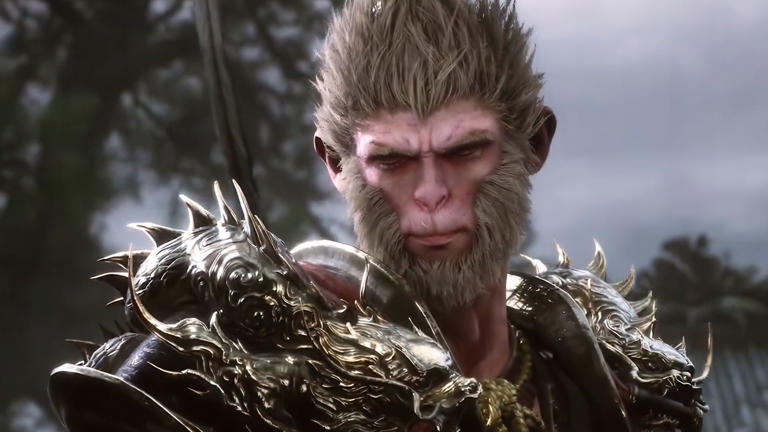
Black Myth: Wukong has served as a milestone for Chinese video games, as well as in the country’s cultural diplomacy. It is an adaptation of the classic novel Journey to the West and has been praised for its visuals, advanced technology, and cultural depths. It represents China’s first true AAA game: a high-budget production rivaled by Western and Japanese standards.

The over 2 million concurrent players in the game at launch in Steam signifies increased capability for China to launch globally competitive video games. Black Myth: Wukong is touted as a cultural bridge to help bring Chinese stories and aesthetics to the world. Full of technical glitches and at times incoherent in its narrative, the game has nevertheless been acclaimed as groundbreaking—possibly a game-changer for soft power in China, exercised through games.

Read the full article below.


Will Black Myth: Wukong gaming mania mark a turning point for China’s soft power fortunes?

Success of action game based on 16th century classic seen to highlight how China can pursue its often ‘heavily assailed soft power agenda’

Data shared by industry trackers VG Insights showed the game had sold 10 million units by Saturday evening in China, with 3 million concurrent players across all platforms.

Asked whether a gamified Wukong could be considered to be an “ambassador” for China, foreign ministry spokeswoman Mao Ning said on Wednesday that a game seemingly inspired by the Chinese classic spoke “to the appeal of Chinese culture”.

However, she did not address whether this indicated any potential “diplomatic gains”.

According to Gejun Huang, assistant professor of media and communications at the Xian Jiaotong-Liverpool University, the triple-A premium game was a good soft power vessel offering “immense potential”.

“A new face of Journey to the West indicates elevated levels of cultural creativity and innovation, [which are] often the heavily assailed aspects of China’s soft power agenda,” said Huang, whose specialities are the gaming industry, cultural policy and media entrepreneurship.

Huang said the explosive and positive reactions towards the game embodied China’s championing of techno-nationalism – or the use of technology to project global influence, and complemented its existing cultural endeavours.

However, creating a cultural export was not the core aim of Game Science, the low profile studio behind Wukong, according to its founding CEO Feng Ji, a former game designer at multimedia giant Tencent Holdings.

“I believe good cultural or content products should first naturally resonate with local cultural groups similar to the creators,” Feng told state news agency Xinhua. “If the quality is high enough and it endures for a sufficient period, it will naturally radiate to the overseas market we are talking about.”

“Ideally, this game’s contingent global popularity could attest to the enhanced persuasiveness of soft power discourses and legitimise a new way of delivering such discourses to broader global audiences,” Huang added.

In an interview with state-backed newspaper Global Times, Game Science’s artistic director Yang Qi said his team travelled across the country to research ancient architecture, including relics, temples, pagodas and stone carvings before reproducing them for the video game, which he described as a “digital archive” of the cultural heritage.

“Certainly, this game will direct public attention to these real-life monuments, especially for the younger generations who often align their cultural identities with guochao,” said Huang, referring to the “China chic” trend of embracing fashionable home-grown brands and cultures.

“On the other hand, there is a lack of evidence in China that featuring cultural heritage in games will boost players’ offline visits and related consumption.”

According to Sheng Zou, who teaches media at the Hong Kong Baptist University, discussions on the diplomatic potential of a cultural product needed to centre on a “more expansive notion of soft power”.

“Much of the discussion on soft power tends to focus on the nation-states as major actors, but in cases such as Wukong, corporate or non-state actors are the driving force,” Zou said.

According to Zou, China’s media and entertainment sector has seen many corporate-led globalisation efforts as Beijing seeks a more influential role in world media and culture.

Gamers in Shanghai immerse themselves in Black Myth: Wukong as it launched on Tuesday. Photo: AFP

“It fits in well with the state’s initiative in boosting its international communication, exemplified by the various ‘going out’ strategies in the media and cultural scene. Domestically, it also helps to shore up a sense of cultural confidence,” he said.

Beijing’s “going out” policy, introduced in 2000, encourages its enterprises to invest overseas and increase foreign direct investment.

“Non-state actors that operate on a market logic may have a better chance at winning people’s hearts and minds because their cultural influence is more subtle and appealing than things that are more overtly ideological or propagandistic,” Zou said.

Chinese web novels had attracted large global followings, he noted, with companies such as Dreame and iReader making a name for themselves within China and beyond.

Also, Singer 2024, the hit TV show with top-tier performers from China and abroad taking part in weekly sing-offs, has also made noise beyond the borders and been hailed by internet users as well as state-owned media as a global cultural platform.

According to Zou, although Black Myth: Wukong had the potential to inspire more positive impressions of China among a global audience, the change will be “subtle and gradual at best”.

Some users might just enjoy the game for reasons other than its Chinese cultural elements, he said, such as the gameplay, mechanics and player experience involved.

Source: South China Morning Post

You Might Also Like

Salafi Consolidation: Is Iraq—and the KRG—Next After Syria and Yemen?

Great-Power Condominium or Great-Power Mirage?

This Week’s Global Fault Lines: Venezuela, Greenland, and the New Coercion (Jan 01–07, 2026)

Global Fault Lines: Weekly Developments Across Key Geopolitical Theaters (Dec 22–28, 2025)

Gaza, Not Ankara: The Real Motive Behind Israel’s Somaliland Recognition

Share This Article
Facebook Twitter Email Print
Previous Article From Expansion to Uncertainty: The Evolution and Future of China’s Confucius Institutes
Next Article The Dangers of Undermining the US Dollar: Why Politicians Should Think Twice
Leave a comment

Leave a Reply Cancel reply

Your email address will not be published. Required fields are marked *

Stay Connected

TwitterFollow
YoutubeSubscribe

Latest News

Erdoğan’s Self-Inflicted Airpower Wounds: How Turkey Lost the Skies
Commentary Defence Technology Geopolitics Middle East & Africa
Ahmed al-Ahmed: The Hero Islamophobes and Anti-Immigrant Voices Did Not Expect
Commentary Geopolitics Human Rights Terrorism
Eight Muslim States Warn Israel Against ‘Exit-Only’ Rafah Plan
Geopolitics Human Rights Middle East & Africa
Five Turkish defense firms enter SIPRI Top 100 with record $10.1 billion in 2024 sales
Defence Technology Geopolitics

Find Us on Socials

© GeoPolist. All Rights Reserved.
  • Submit an Op-Ed + Risk Advisory
  • Jobs
  • Post Jobs & Ads for Free
Welcome Back!

Sign in to your account

Register Lost your password?