In the wake of terror, how we choose to tell the story can unite or divide us. This truth was on stark display after the Bondi Beach shooting in Sydney on December 14, 2025 – a terrorist attack on a Hanukkah celebration that left 15 people dead and dozens injured. Amid the chaos and carnage, one man’s extraordinary courage altered the narrative: Ahmed al-Ahmed, a 43-year-old Syrian-Australian Muslim, tackled and disarmed one of the gunmen at great personal risk. His selfless act not only saved Jewish lives on the beach that day; it also offered the world a powerful counterexample to the knee-jerk vilification of Muslims and immigrants that so often follows such attacks.
Heroism Amid Terror at Bondi Beach
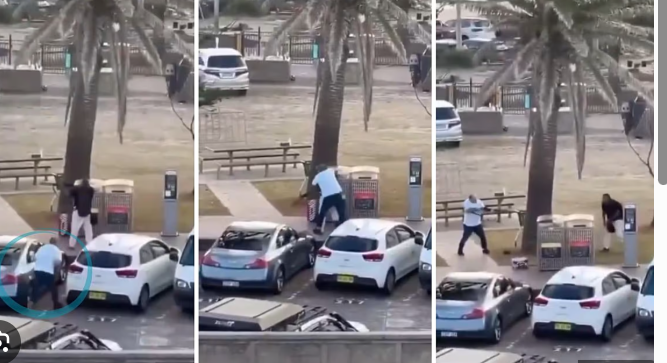
Flowers and tributes lie scattered at Bondi Beach after the deadly attack, as the community mourns the 15 lives lost in the Hanukkah celebration shooting. Ahmed al-Ahmed’s bravery stood out against this grim backdrop. Two gunmen – a father and son – had opened fire on a crowd of Jewish Australians gathered for the first night of Hanukkah. It was, according to authorities, an antisemitic terrorist assault aimed at the Jewish community, part of a troubling global surge in such hate-fueled violence. As bullets tore through the evening air, al-Ahmed sprang into action. With no weapon or training in firearms, he crept up behind one of the attackers when the shooter’s ammunition ran out, then “single-handedly disarm[ed] him, putting his own life at risk to save the lives of countless other people,” in the words of NSW Premier Chris Minns. In seizing the gunman’s rifle, al-Ahmed was shot four to five times by the second assailant, collapsing with serious wounds.
Eyewitness video of the scene captured the dramatic moment of intervention: al-Ahmed bear-hugging the armed man from behind and wrestling away his long-barreled weapon. Another brave bystander (himself a Middle Eastern refugee) then kicked the gun out of reach. Police moved in moments later. Thanks to these actions, what could have been an even greater massacre was halted. “There is no doubt that more lives would have been lost if not for [al-Ahmed’s] selfless courage,” Premier Minns wrote, praising the “incredible bravery” of this “real-life hero”. The final death toll, while devastating, would have almost certainly climbed higher had these civilians not intervened.
Al-Ahmed’s heroism quickly became the silver lining of an otherwise harrowing night. Footage of his act spread rapidly and was viewed millions of times around the world. Donations poured in for the wounded hero and his family, with a fundraiser amassing over a million Australian dollars within a day. More importantly, leaders across the globe hailed his courage. Australian Prime Minister Anthony Albanese held up al-Ahmed’s actions as an inspiring example of “Australians coming together” in a time of crisis. The Premier of New South Wales visited him in the hospital and publicly lauded his bravery. Even the President of the United States joined in honoring this man who had “saved countless lives” by stopping a terrorist. In that moment, Ahmed al-Ahmed became more than a local hero of Sydney – he became a symbol of our shared humanity standing up to hatred.
A Narrative Flipped: From Scapegoating to Solidarity
It is tragic but familiar: in the immediate aftermath of a terror attack, blame and fear often cast a wide, indiscriminate net. The hours after the Bondi Beach shooting were no exception. Before authorities confirmed who the perpetrators were – and before al-Ahmed’s heroism was widely known – social media swelled with toxic speculation, much of it targeting Muslims and migrants as a whole. Predictably, Islamophobic and anti-immigrant commentary surged, as some commentators rushed to pin the atrocity on an entire religion or community. This is part of a sadly recurring pattern: each new tragedy becomes fuel for those eager to fit events into a preconceived narrative of “us versus them,” even “before the facts have emerged,” as disinformation researchers note. In this case, lurid conjectures flew online in real time – posts and even some news segments labelling the incident an “Islamist terror” attack long before any evidence was available. Such “Islamophobic and anti-immigrant comments” were rife in the hours after the attack, revealing how reflexively some will stigmatize an entire group for the violent actions of individuals.
Then the facts caught up with the frenzy. Australian police soon identified the assailants: a 50-year-old man of Pakistani origin and his Australian-born son. And at the same time, the world learned that the man who had stopped one of them was also Muslim – a Syrian-born Australian who had run toward danger to save Jewish lives. This revelation did more than just complicate the simplistic narrative; it fundamentally challenged it. The presence of a Muslim hero at the center of the story upended the expected storyline of Muslims versus Jews or immigrants versus natives. Instead, it illustrated a much more truthful dichotomy: human decency versus violent extremism. Al-Ahmed, a devout Muslim by all accounts, put his life on the line to protect innocent people of another faith. In doing so, he made it glaringly obvious that the enemy at Bondi Beach was not Islam or immigration – it was hatred and fanaticism, which threaten people of all communities.
Crucially, al-Ahmed’s bravery helped prevent the vilification of Muslim and migrant communities not only in Australia but also across the globe in the wake of the attack. Once his story emerged, it became far harder to justify the blanket blame that some were eagerly assigning hours earlier. As one opinion writer observed, “while the predictable anti-Islam anger [was] already sloshing on social media and TV channels, [al-Ahmed’s] bravery…is a reminder that humanism exists across societies and transcends religion and ethnicity.” In other words, his actions spoke louder than the hateful words of demagogues. The public narrative in Australia swiftly shifted from fear-driven outrage to collective gratitude and unity. Leaders made a point of celebrating the diversity represented in the hero and the victims alike – all Australians who had been brought together by fate. Muslim organizations, for their part, joined in mourning the victims (as they always do) and unequivocally condemned the terrorist’s action. Jewish community leaders, while grieving, also appealed for people to resist blaming any entire group for the evil they had suffered. The usual cycle of scapegoating was short-circuited by a simple, undeniable fact: a Muslim immigrant had been pivotal in stopping the bloodshed.
One telling incident underscores how much narratives matter. In the chaos immediately after the shooting, the second bystander – a Middle Eastern refugee who helped disarm the attackers – was mistaken for a terrorist and assaulted by panicked onlookers before police intervened. Why did this happen? Because in that frantic moment, some saw a man who “looked” like the gunmen and assumed the worst. It was a small snapshot of how prejudice and fear can lead to further injustice, even against a hero. Once people realized he was helping, not harming, they thanked him; but the harm of that false suspicion was done. This is precisely why broad-brush vilification is so dangerous. It primes ordinary people to see enemies where there are none – to confuse those who share an identity with those who perpetrate violence. Ahmed al-Ahmed’s story provided an antidote to that poisoned mindset. It reminded everyone that villains and heroes come in all shades and creeds, and one cannot be judged by appearance or faith. For global leaders, the lesson is clear: when tragedy strikes, resist the easy route of collective blame. Instead, seek out and elevate the stories of shared courage and compassion that can bind society together rather than cleave it apart.
Historical Parallels: Shared Sacrifice Across Faiths
The drama at Bondi Beach is not the first time that a Muslim individual’s bravery has thwarted terror or illuminated our shared humanity. History is replete with unsung (and celebrated) Muslim heroes who stood against the very same violent extremism that often falsely claims to speak for Islam. Global leaders would do well to remember these parallels. They highlight that the fight against terrorism is not a clash between Islam and the West, or between immigrants and natives – it is a struggle within every society between the forces of hatred and those of tolerance and law.
One powerful parallel comes from Paris in January 2015, during the Charlie Hebdo terror attack. As two armed extremists murdered cartoonists in the name of a perverted ideology, a French Muslim police officer named Ahmed Merabet raced to the scene to protect his fellow citizens. Merabet confronted the gunmen and was cruelly shot dead in the street. He was murdered by the very terrorists who purported to act for “Islam,” even though he himself was Muslim. In the days after, many in France and around the world honored his sacrifice with the slogan “Je Suis Ahmed” – “I am Ahmed”. One widely shared message encapsulated the meaning of his death: “Charlie ridiculed my faith and I died defending his right to do so. #JeSuisAhmed.” Officer Merabet died a hero, upholding the law and the principles of free society, making the ultimate sacrifice to stop violence. His story punctured the simplistic narrative that terrorists represent all Muslims; in fact, Muslims themselves can be the first casualties and first defenders in the fight against terror.
Another example, also from Paris in 2015, underscores the point. Two days after the Charlie Hebdo attack, an ISIS-linked gunman attacked a Jewish kosher supermarket (Hyper Cacher), taking hostages with the intent to kill. Amid that horror, a young Muslim employee named Lassana Bathily saved the lives of several Jewish shoppers by hiding them in a freezer and quietly guiding police to their rescue. Bathily, an immigrant from Mali, risked his own life to protect his customers – people of a different faith – from a terrorist’s bullets. For his bravery, he was later granted French citizenship and celebrated as a national hero. “A true hero of the hostage crisis,” one headline called him. Bathily himself humbly said he was “no hero, just did what needed to be done,” emphasizing that he saw the hostages not as Jews or Christians or Muslims, but simply as fellow human beings in danger. His actions once again demonstrated that goodness and moral courage know no religion. In that Paris attack, as in Sydney’s Bondi Beach, a Muslim stood up to protect Jews from an extremist killer. These instances are not anomalies; they highlight a profound reality that terrorists and bigots alike want us to ignore: that Muslims and non-Muslims often stand together, and bleed together, when terror strikes.
Indeed, countless Muslim professionals serve on the frontlines against terrorism every day – as police officers, soldiers, security guards, intelligence analysts – protecting all citizens regardless of creed. And in many terrorist attacks globally, from New York to London to Mumbai, Muslims have been among the victims, first responders, and rescuers. We should recall that the majority of victims of groups like ISIS or Al-Qaeda have been Muslims in the Middle East, Asia, and Africa. This isn’t about a “clash of civilizations,” it’s about a common threat to all civilization. Remembering figures like Ahmed Merabet, Lassana Bathily, and now Ahmed al-Ahmed helps shatter the dangerous myth that whole communities are complicit in violence because of shared religion or ethnicity. Global leaders must lift up these narratives of shared sacrifice. By doing so, they honor the heroes and also remind the public that an entire religion must not be conflated with its most warped and violent fringe.
Media, Rhetoric, and the Power of Public Narrative
How an event is framed by leaders and the media in its aftermath can profoundly shape public perception. In the Bondi Beach case, we saw both the peril of irresponsible speculation and the promise of responsible storytelling. On one hand, the initial hours demonstrated the toxic role social media and sensationalist commentary can play. Each fresh tragedy has become an opening for certain actors – some political, some media personalities – to push inflammatory narratives and amplify unverified claims. In the Bondi attack, even verified accounts of journalists and far-right figures jumped in early with baseless assumptions about the perpetrator’s identity and motives. One British pundit confidently (and incorrectly) declared the attacker an “Islamist terrorist” on air. Others online circulated false rumors – at one point even wrongly naming an innocent person as the suspect – in their rush to pin blame. Such reckless behavior by media figures not only misleads the public, it also fans the flames of prejudice. It “promote[s] harmful narratives,” as experts warn, giving millions the impression (however false) that their Muslim neighbors might be enemies within. Once that idea is seeded, it is difficult to fully undo the damage.
By contrast, consider the constructive role media and leaders played once accurate information emerged. Australian news outlets, after initially just reporting the attack’s horror, soon prominently featured the story of Ahmed al-Ahmed’s heroism. The viral video of him tackling the gunman was aired across networks, not only informing the public of the facts but also providing a human context often lost in reports of atrocities. Rather than focusing solely on the terrorists’ identity or ideology, many headlines highlighted “Hero of Bondi Beach” and how an ordinary man’s bravery saved lives. This framing matters: it gave audiences a point of hope and unity to hold onto amid the fear. It also implicitly countered the divisive narratives by showing a Muslim immigrant as the protagonist on the side of innocent victims. We cannot underestimate how powerful that image is in rebutting hate – far more powerful, in fact, than any number of press releases. As one commentator noted, one individual’s brave act became a “reminder that humanism…transcends religion and ethnicity.” In highlighting it, the media helped reinforce a narrative of togetherness instead of one of mutual suspicion.
Political leadership is equally critical in these moments. The words of elected leaders set the tone for public discourse. In Sydney, leaders struck a unifying, compassionate tone. Prime Minister Albanese and others deliberately praised the diversity of those involved – the Muslim rescuer, the Jewish victims, the police and medics of all backgrounds – as emblematic of “Australians coming together” in adversity. This kind of rhetoric sends a clear signal: we will not be divided by terror. It invites people to see the situation not as Muslims versus Jews or foreigners versus natives, but as an attack on all of us, repelled by the courage of one of us. By singling out Ahmed al-Ahmed for honor, officials also acknowledged the Muslim community’s share in the collective pain and its contribution to the collective response. Such gestures go a long way toward preventing the alienation of minority communities after a terror event. They affirm that “we know you are not responsible – in fact, you too are among the heroes and the hurt.” This wisdom was similarly displayed in other instances: for example, after the 2019 Christchurch mosque massacre (an anti-Muslim terror attack in New Zealand), many world leaders made a point of differentiating a violent extremist from the broader community he ostensibly came from, and they embraced the Muslim community in solidarity. Conversely, we have seen the damage done when leaders react with broad-brush condemnation or policies that punish millions of innocents for the crimes of a few. Such approaches validate the terrorists’ narrative of an irreconcilable divide and can fuel further radicalization by breeding resentment.
Unfortunately, in today’s polarized climate, there are political actors who do exploit these tragedies to advance cynical agendas. Scapegoating refugees, immigrants, or followers of a certain faith can be an effective rallying cry for votes, and some seize on any incident to do so. As one analysis pointed out, “are all Muslims sympathetic to the jihadist ideology and by extension are all immigrants suspect? This kind of invalid broad-brush denunciation…needs to be denounced. But instead, [too often] it [has] become the winning combination for cynical electoral success” in diverse democracies. We see this in anti-migrant slogans after terror attacks in Europe, or calls for “Muslim bans” and refugee freezes after incidents in the U.S. and elsewhere. Such generalized blame is not only unjust – tarring millions of peaceful people with the brush of one killer – but it also undermines security. It risks pushing away the very communities whose trust and cooperation are essential to detecting and preventing extremist threats. It divides societies internally, which is precisely what terrorists seek to achieve. And on a human level, it inflicts fresh trauma on innocent members of minority communities who suddenly find themselves facing hostility and suspicion for something they utterly condemn and had nothing to do with.
Global leaders, therefore, carry a heavy responsibility. In their public narrative and policy responses, they must strive to separate the extremist from the community, rather than conflate them. They should amplify stories of interfaith solidarity and heroism – like that of Ahmed al-Ahmed – as a corrective to hateful generalizations. They must also ensure that counter-terrorism measures target criminal behavior and its causes, not entire demographics. In practical terms: condemn the perpetrators, not their religion; mourn the victims, not their identities. And always, always recall that for every terrorist, there are countless ordinary people of that same background horrified by the atrocity and, in some cases, even willing to lay down their lives to stop it.
By: GEOPLIST – Istanbul Center for Geopolitics