At the height of its power, the Syrian Democratic Forces (SDF) grew out of Kurdish militias like the YPG/YPJ (pictured in Kobani in 2015) allied with U.S. forces against ISIS. But that U.S. patronage proved unreliable in the long run, and SDF territorial control has since collapsed. In January 2026 the SDF signed a ceasefire that effectively dissolves its quasi-state of Rojava. This spectacular reversal reflects a series of strategic, political and ideological errors by Syrian Kurdish leaders. From the outset they tied their fate to the PKK’s ideology and external sponsors, misunderstood Washington’s intentions, mismanaged relations with Arab tribes and communities, and stifled internal pluralism. These mistakes left the SDF politically isolated and militarily exposed when the new Damascus government reasserted itself.
Overreliance on PKK Ties and Symbolism
The SDF’s leadership and ideology remained closely identified with the Kurdistan Workers’ Party (PKK) and its jailed leader Abdullah Öcalan. In practice the SDF often functioned as a Syrian branch of the PKK’s project. PKK cadres from the party’s Qandil base in Iraq ran key SDF institutions, and PKK symbols proliferated in Kurdish-held towns. One former SDF fighter bluntly summarized this dynamic: “The decision is not in the hands of Mazloum or Ilham… It is in the hands of the PKK,” he told Levant24. Critics charged that real authority lay with Qandil-based commanders, not the elected Kurdish Regional Assembly. This ideological rigidity limited the SDF’s flexibility.
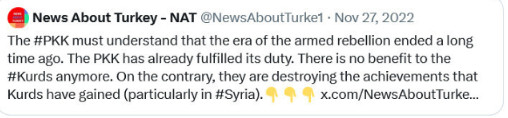
For example, Öcalan murals and statues were commonplace in Rojava – and when government forces advanced they were the first to be torn down or painted over, signaling Arab and regime hostility toward Kurdish nationalist symbolism. In cities like Raqqa and Aleppo, tribal fighters took down statues of Kurdish fighters and covered images of Öcalan as Syrian troops moved in. By embracing PKK‐style iconography and doctrine so closely, the SDF alienated Arab neighbors and gave both Damascus and Ankara justification to treat it as a hostile separatist force.
Moreover, this ideological alignment undermined internal legitimacy. The SDF’s governing model – inspired by PKK leader Öcalan’s “democratic confederalism” – was theoretically pluralistic, but in practice it was dominated by a narrow elite. Independent Kurdish parties or local councils had little say; critics likened the administration to an ideologically driven militia (even Hezbollah-style) that suppressed dissent. One Kurdish activist noted that if the SDF really were a “unified Kurdish front,” it wouldn’t have shut down rival parties: in practice the Kurdish National Council was repeatedly banned and its offices closed. The women’s and youth militias (YPJ, etc.) were frontline veterans of the ISIS war, but the civilian politics remained centered on the PYD/SDF leadership. Activists pointed out that life in oil-rich Rojava was “poor,” even “backward,” despite years of Kurdish rule.
Misreading Washington’s Intentions
From 2015 onward the SDF assumed U.S. military backing would guarantee its security. This proved to be a catastrophic miscalculation. The Kurds gained American airpower and training to win the war on ISIS, but they never secured a lasting strategic pledge from Washington. By late 2025, it was very clear that the U.S. was moving to strengthen Syria’s new interim government, not preserving a separate Kurdish enclave. Yet SDF leaders continued to take a hard stance in negotiations with Damascus under the assumption that Washington would intervene on their behalf if fighting broke out. This gambit failed. In January 2026, Syrian government forces advanced into Aleppo and northeast Syria, and the U.S. refrained from military intervention. Washington instead brokered ceasefires and shifted its support openly to President Sharaa’s government. U.S. envoy Tom Barrack bluntly declared that the SDF’s role as the anti-ISIS force “has largely expired,” since the new government “is both willing and positioned to take over security responsibilities”. In effect, the Kurds lost their American patron as soon as ISIS was defeated and new regional alignments took hold.
The SDF leadership repeatedly dragged its feet on implementation of the March 10, 2025, integration agreement with Damascus. They pursued a dual strategy: negotiating with the regime in name while publicly stalling for time, apparently betting that external events (e.g. Israeli–Syrian tensions, or Druze and Alawite unrest) would force Damascus or its backers to blink. The SDF failed to internalize this shift, continuing to behave as if its autonomous status east of the Euphrates were unshakeable. Warnings from U.S. officials were discounted as one-offs. Only once hostilities broke out in early January did the Kurds realize their mistake – but by then government troops, backed by popular uprisings, had overrun most of their Arab-majority territories.
Breakdown with Arab Tribes and Communities
Throughout the anti-ISIS campaign, the SDF relied heavily on Arab militias from tribes in Raqqa, Deir ez-Zor and Hasakah. But Kurdish commanders never fully incorporated these communities as equal partners. Arab recruits were often motivated by pay or the desire to escape other militia control, not ideological commitment to Kurdish autonomy. The YPG leadership generally kept Arab fighters under tight supervision, refusing to form powerful independent Arab units and even arresting young men to enforce conscription. In effect, many Arabs in the northeast served in SDF ranks grudgingly, awaiting a chance to switch sides if circumstances changed.
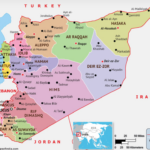
That opportunity came in January 2026. SDF-held areas in Aleppo fell after two days of fighting, and the signal of Kurdish defeat prompted long-simmering Arab discontent to boil over. The leadership of the Shammar – historically one of the SDF’s largest Arab allies – formally withdrew support and recognized the new Damascus government. Other tribes in Deir ez-Zor (e.g. Al-Mashahda) defected as well. Within hours, Arab-majority towns along the Euphrates staged uprisings, seizing control for the interim regime. In many areas the Kurds were essentially abandoned by their former recruits or peaceful locals; one tribal chief put it plainly, “No one here is happy except those who benefit from the [SDF] system”. The SDF had treated these communities as second‐class citizens or occupied territory rather than partners in a shared project, so when Damascus moved in the tribes quickly realigned. Losing the support (and even the manpower) of key Arab constituencies, the Kurds saw their lines crumble – especially after they also blew up bridges and retreated behind the Euphrates to defend Kurdish-majority Hasakah.
Governance Failings and Lack of Unity
Kurdish rulers in Rojava spoke constantly of “multi-ethnic” democracy and “the special character of Kurdish areas,” but their administration bore few hallmarks of genuine pluralism. In practice the PYD/SDF became the region’s unchallenged power. The Autonomous Administration never allowed any serious opposition party to operate. Kurdish National Council offices were shut, flags and symbols of rival Kurdish parties were banned, and dissenting media were suppressed. After years in control of oil-producing regions, living conditions in Rojava remained uneven; critics observed an ingrained corruption and underdevelopment that underscored the’ failure and backwardness’ of AANES (Autonomous Administration of North and East Syria). Instead of inclusive power‐sharing, the SDF leadership insisted on top-down control. For example, when al‑Sharaa and Kurdish leader Mazloum Abdi discussed integration in late 2025, SDF hardliners balked at any dilution of their military command: they demanded that the new Kurdish brigades report to SDF-chosen officers and that all non-SDF forces need SDF permission to operate locally. Damascus rejected these maximalist demands. The gap in visions was stark: Damascus envisioned a unitary Arab-dominated state, while the Kurds insisted on extensive autonomy with guaranteed minority rights. The SDF’s unwillingness to compromise on these points – even when out of strength – reflected an ideological rigidity that left no room for other Syrian actors or even competing Kurdish factions. It fractured intra-Kurdish unity as well: public statements alternated between pledging loyalty to Syria and insisting on “independence” from any central authority, undermining the Kurds’ credibility as partners.
The March 10 Deal and Missed Opportunities
In March 2025 the interim Syrian government and the SDF negotiated an eight-point framework for integration. This could have been a turning point if approached pragmatically. Both sides initially agreed that SDF fighters would join the Syrian army (even proposing 3 divisions and specialized battalions) and Damascus would assume control of border crossings, oil fields and prisons. But implementation dragged on for months.
Distrust between negotiators grew. Syrian officials later complained that SDF leader Abdi tentatively agreed to proposals only for hardline elements (notably Commander Sipan Hamo) to block them. By the eve of January 2026, only a few Kurdish-led districts in Aleppo remained on the table. When government troops finally struck those districts on January 6, Kurdish forces withdrew – but it was too late to press for concessions. The SDF’s approach to the integration talks combined engagement with delay. It ran past the agreement’s provision for implementation, and violence soon erupted. In effect, the Kurds had gambled that by waiting out the clock they might keep autonomy; instead, Syrian and Turkish pressure forced their hand.
The final ceasefire on January 18 formalized the SDF’s defeat. Under its terms the SDF would dissolve as an organization and all SDF members could only join the Syrian army individually. Key resources – oil fields, border posts and administrations – were ceded to Damascus. Even the coalition’s anti-ISIS mission was handed over; the Kurds’ fate as U.S. allies was essentially over once the government assumed those responsibilities. In two weeks the Kurds accepted a deal far worse than what had been on offer in October: from coequal partners they had been reduced to a token force confined to Hasakah province. This collapse of the March agreement reflected earlier missteps: by belatedly conceding and overplaying their hand, the SDF lost all leverage. The Damascus press win was sealed when SDF bases in Hasakah came under direct threat, forcing Abdi to agree to disengagement terms he previously refused.
Lessons and Comparisons
The SDF’s collapse illustrates how ideological isolation, dependence on outside backers, and failure to build domestic support can doom an autonomy project. Unlike the Iraqi Kurds – who leveraged Baghdad’s weakness into a durable semi‐autonomous region by negotiating with the central government – the Syrian Kurds placed all their bets on a revolutionary paradigm and a distant patron. Their strategic ambiguity (trying to keep options open with the U.S., Israel and others) left them trusted by none. Regional powers exploited this: Damascus courted Arab tribes, Turkey labeled the Kurds a terrorist threat, and the new U.S. administration quietly turned toward President Sharaa as a workable Syria policy. In the end the Syrian Kurds’ fate was sealed by these shifts: once the U.S. refused to prop up a stand-alone Kurdish zone, Kurdish fighters lacked anything but local rifles to hold territory.
In summary, the SDF’s downfall was shaped by self-inflicted errors. Its leaders clung to an insular PKK-based ideology (even as local needs diverged), insisted on autonomy when they had alternatives, and relied on foreign arms without cultivating enough local or international goodwill. This combination of ideological rigidity and misplaced strategic assumptions left the Kurdish administration vulnerable when the political winds changed. Rather than a savvy pivot or broad coalition, the SDF’s choices exposed Rojava’s fragility – and allowed Damascus to reassert control over northeast Syria with astonishing speed.
By: GEOPLIST- Istanbul Center for Geopolitics