The sectarian balance in the Middle East is undergoing a significant shift since the end of 2024. By 2025, Sunni forces throughout the region experienced a resurgence in influence, while Shiite factions linked to Iran were considerably weakened. This trend has been encouraged by the United States, which has aligned itself with a hardline Sunni axis led by Saudi Arabia. This alignment serves not only as a counterweight to Iran but also to Iran’s closest allies, Russia and China.
From Yemen to Syria, Washington and its partners have tolerated—and at times indirectly enabled—the empowerment of Sunni actors whose ideological currents overlap with Salafi or Salafi-adjacent networks, so long as these forces serve immediate containment goals. If that consolidation continues, Iraq becomes the obvious next pressure point: a state where sectarian governance, militia power, and security vacuums can be leveraged to reinsert hardline Sunni influence at the center, potentially reshaping Baghdad’s political balance at the expense of the Shia-led order.
Sunni Axis Strategy
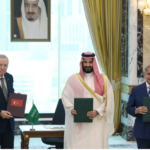
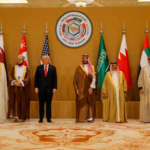
The Sunni axis strategy has developed across multiple fronts. It focuses on increasing cooperation among Sunni-majority states and factions, ranging from the Arab Gulf monarchies to Turkey’s “Turkic” sphere, in order to contain Iran’s influence in the short term and that of its closest allies, including Russia, in the long term. As Saudi Arabia improves relations and coordinates with other Sunni players—such as former rivals like Qatar and Turkey—it has effectively become the southern anchor of an American-backed containment strategy. This complements a Sunni “Turkic belt” to Iran’s north. The outcome is a coalition of Sunni powers aligned with Washington’s regional objectives. Importantly, this alignment not only aims to counter Iran but also seeks to limit the influence of other great powers in the region.
One clear arena where this strategy is playing out is Yemen, long a proxy battleground between Sunni powers and Iran. In late 2025, a serious rift erupted within the anti-Houthi coalition: the UAE-backed Southern Transitional Council (STC), a southern Yemeni separatist faction, seized control of key eastern governorates (Hadramout and al-Mahra), sidelining the Saudi-backed Yemeni government. This intra-Sunni split threatened to fracture the fight against the Iran-aligned Houthi rebels. Riyadh, tacitly backed by Washington, moved decisively to resolve the split in its favor – essentially forcing the STC to stand down in the interest of Sunni unity against the Houthis.
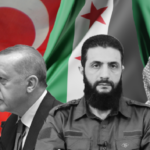
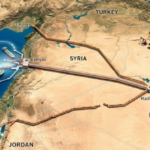
Syria has become another key arena for this hardline Sunni axis – arguably the most striking example of Salafi consolidation. In a whirlwind turn of events, the regime of Bashar al-Assad (an Alawite allied with Iran) collapsed in late 2024, largely due to the strain of war and the withdrawal of Russian support. In its place, Sunni Islamist forces swept into Damascus. Notably, the rebel coalition Hayat Tahrir al-Sham (HTS) – a group with Salafi-jihadist roots – led a lightning offensive that toppled the Assad dynasty in December 2024. HTS commander Ahmed al-Sharaa (a former al-Qaeda figure) assumed the Syrian presidency, immediately shifting Syria’s alignment toward the Sunni camp. Turkey and Saudi Arabia swiftly backed this new interim government in Damascus, despite its hardline Islamist character, seeing in it a Sunni partner against Iran.
The new leadership’s agenda, strongly supported by Turkey, prioritized eliminating any autonomous Kurdish armed presence (viewed as a wedge that Israel or others could exploit, and as anathema to Turkey). A nominal U.S.-brokered track to integrate the Kurdish-led Syrian Democratic Forces (SDF) into the national army existed on paper, but when implementation stalled, force prevailed. In late 2025 and early 2026, Syrian government troops – a mix of Syrian Arab Army units and allied Islamist fighters – moved to crush the SDF’s self-rule zones in the north.
From Washington’s perspective, Syria’s post-war order now aligns more neatly with the Sunni axis strategy. The outcome is essentially a unitary, highly-centralized Syrian state under Sunni Islamist dominance – one that is Saudi-aligned in foreign policy and intolerant of sub-state autonomies. The Sunni axis convergence in Syria – bringing together Turkey’s neo-Ottoman aspirations and Saudi Arabia’s influence over Islamist factions – thus eliminated a major Iranian stronghold and further tilted the regional sectarian balance. It also demonstrated how far the U.S. is willing to go: Washington did caution Damascus against overreach at moments, but notably did not intervene to save the SDF when push came to shove, signaling that preserving the integrity of a Sunni-aligned Syrian state outweighed loyalty to the Kurdish-led force that had been America’s partner against ISIS.
It’s important to understand that the hardline Sunni axis strategy is not solely focused on Middle Eastern sectarian dynamics; it also encompasses global geopolitics. By strengthening a friendly Sunni bloc, the United States aims to cement its influence in the region and counter rival powers. American officials recognize that, for the time being, China cannot replace the U.S. as the primary security guarantor in the Gulf. While Beijing may sell drones or conduct naval exercises, it does not provide a serious defense umbrella or deployment of intervention forces. Similarly, Russia’s influence in the Middle East has diminished. Moscow was unable to support Assad effectively, and its power through oil diplomacy is limited by Saudi Arabia’s increasing alignment with Washington. Essentially, the U.S.-backed Sunni axis functions as a barrier not only against Iran but also against broader encroachments of Chinese or Russian influence. Gulf states continue to rely heavily on American military support and security commitments, a reality that the U.S. is reinforcing in this new regional order.
Iraq: The Next Battleground for a Sunni Resurgence?
These developments in Yemen and Syria raise a pivotal question: Will Iraq be next? Iraq today is governed by Shia Islamist parties and militias closely tied to Iran – the political order that emerged after the 2003 U.S. invasion toppled Saddam Hussein’s Sunni-dominated regime. For Iran, maintaining a Shiite-led Iraq is still critical for regional depth. However, after the blows dealt to Tehran’s allies elsewhere, Baghdad now stands out as the lone major capital in the Arab world under Shia dominance. With Yemen’s Houthis under pressure and partially blockaded, Iraq is arguably Iran’s last strong pillar – and thus an obvious next target for the Sunni axis to flip.
There are increasing indications that Iraqi Sunnis are becoming more aligned with the United States and their Sunni neighbors in an effort to regain influence. Over the past two decades, Iraq’s Sunni Arab minority has transitioned from being the ruling class under Saddam Hussein to facing significant marginalization and mistrust from the new Shia-led government. Initially, many Sunnis resisted the U.S. occupation; however, in a notable shift, prominent Sunni tribal and political leaders are now actively seeking U.S. support as a protection against Iran and its Shia militia proxies.
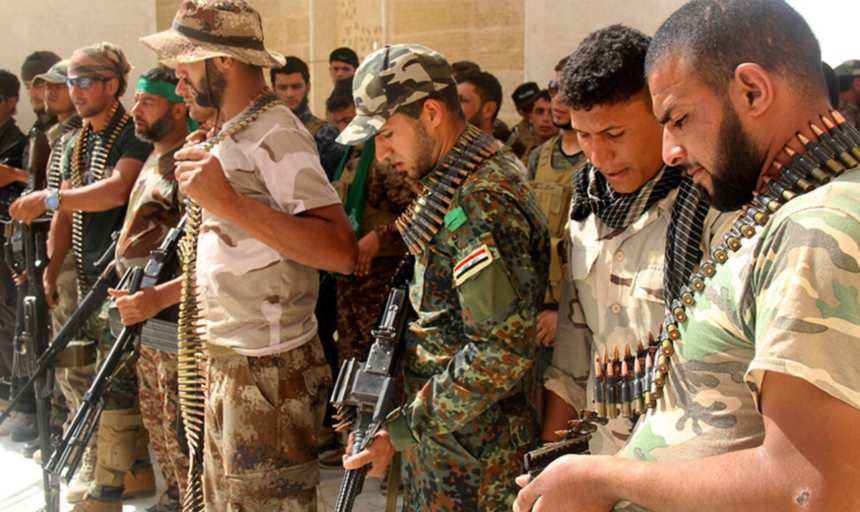
On the ground, conditions are growing more favorable to a Sunni resurgence. Over the past year, Shia Islamist militias in Iraq – the backbone of Iranian influence – have been significantly weakened. In tandem with Israel, the U.S. reportedly carried out repeated airstrikes in 2025 targeting Iraqi Kata’ib Hezbollah, Asa’ib Ahl al-Haq, and other “Islamic Resistance” factions supplying drones and missiles to Iran’s regional fights. These strikes inflicted unprecedented losseson the militias; while they survive politically, they appear unlikely to regroup, rearm, or win back control of territory militarily anytime soon. In other words, Iran’s armed proxies in Iraq have been chastened and checked, potentially creating an opening for alternative forces to rise. Indeed, the Iraqi government itself (led by Prime Minister Mohammed Shia al-Sudani of a pro-Iran coalition) has struggled with internal divisions and public discontent. Mass protests in recent years showed many Shia Iraqis are fed up with corruption and Iranian meddling – a dynamic that could be quietly leveraged by Sunni leaders seeking broader national appeal.
One avenue for change could be the electoral process. Iraq held parliamentary elections in late 2025, and early indications hinted at shifts in sectarian participation that favor Sunni representation. The Shia voter turnout, especially in Baghdad, was relatively low, whereas Sunni turnout jumped compared to previous cycles. As a result, Shia Islamist blocs were expected to lose several seats in Baghdad to Sunni and independent candidates. While the Shia parties still won the largest share overall (given demographics), the trend points to Sunni communities re-engaging in politics – possibly emboldened by the changing regional winds. If Sunni factions can form a united front in parliament (for example, around figures like Speaker Mohammed al-Halbousi or others), they could increase their leverage in selecting the next government or even demand a greater share of power in Baghdad. It is not inconceivable that, under heavy regional influence, a Sunni-led coalition could align with Kurds and dissident Shia to unseat the Iran-aligned bloc in a future government formation.
Iraq’s caretaker prime minister, Mohammed Shia al-Sudani, has reportedly withdrawn from the post-election contest to form the next government, stepping aside in favor of former prime minister Nouri al-Maliki, according to two Iraqi officials. Over the course of his tenure, however, his governing style and political choices shifted markedly. Power became concentrated around the prime minister’s office, security institutions were politicized, and Sunni political rivals were sidelined or prosecuted. Key moments—such as the marginalization of Sunni protest movements after 2011 and the consolidation of Shiʿa-dominated security forces—deepened sectarian polarization. These policies deepened Sunni alienation and helped create the conditions that enabled the rise of ISIS in 2013–2014, when the group overran large parts of northern and western Iraq, including Mosul—one of the country’s largest cities—along with Fallujah, Tikrit, and much of Anbar province, briefly dismantling state authority and exposing the fragility of Iraq’s post-2003 political order.
However, many observers doubt that ballots alone could return “hardline Sunnis” to power in Baghdad, simply because Shiites remain the demographic majority. The more foreboding scenario is a violent one: a coup, an armed insurrection, or a security rupture that changes the political equation by force rather than votes. The risk is sharpened by what is unfolding across the border in Syria, where the transfer of ISIS detention sites from SDF management to Damascus’s control has coincided with reports of detainees escaping or being released amid fighting and abrupt shifts in local authority. Those reports are precisely why Iraqi leaders have framed Syria not only as a foreign-policy problem but as an immediate domestic-security threat: Muqtada al-Sadr publicly urged urgent reinforcement of the Syrian border to deter an ISIS resurgence, and Iraqi forces—including federal units, the PMF, and Kurdish Peshmerga in coordination—have moved to tighten the frontier and expand surveillance and defensive measures. In an extreme case, a crisis atmosphere produced by prison breaks, cross-border attacks, or spectacular ISIS violence could become the catalytic pretext that hardline Sunni networks—or Sunni officers and tribal forces, potentially backed by external patrons—exploit to challenge the Shia-led order, presenting themselves as the “security alternative” to a state portrayed as captive to Iranian-aligned factions and unable to shield Iraq from the post-Assad shockwaves.
With Syria’s Kurds chastened and displaced, Iraq’s Kurds also fear they could be the next chess piece sacrificed in a grand regional game. The Kurdistan Regional Government (KRG) has enjoyed de facto autonomy in northern Iraq since the 1990s – a hard-won haven for the Kurdish people. But the rise of a hardline Sunni axis raises the specter of Baghdad coming under the sway of Sunni Arab rule once again, backed by Turkey and the Gulf. Such a shift could put Iraq’s Kurds in an extremely precarious position, politically and territorially.
For one, a Sunni-dominated leadership in Baghdad – buoyed by Saudi and Turkish support – might be far less accommodating of Kurdish autonomy than the current fragile Shiite-led government. The post-2003 Shiite–Kurdish alliance that enshrined the KRG’s status was born of mutual opposition to Saddam Hussein’s Sunni Arab regime. But if hardline Sunnis regain the driver’s seat in Iraq’s capital, old nationalist instincts could resurface: the urge to recentralize power and reclaim control over “lost” territories and resources. We have a glimpse of this in the aftermath of the Kurdish independence referendum of 2017, when Iraqi forces (then under a Shiite-led government aligned with Iran) swiftly seized back Kirkuk and other disputed areas from Kurdish control. A future Sunni-led government – especially one aligned with Ankara – could act even more decisively to curb Kurdish aspirations. Ankara has long opposed Kurdish independence and would likely encourage Baghdad to keep Erbil on a tight leash. In the name of Iraq’s unity, a Sunni regime could press to roll back the KRG’s oil sector independence, impose federal authority in disputed regions like Sinjar and Kirkuk, and demand the integration or dissolution of the Peshmerga as a separate armed force. All of this would directly challenge the semi-sovereign freedoms the KRG currently enjoys.
By: GEOPOLIST – Istanbul Center for Geopolitics