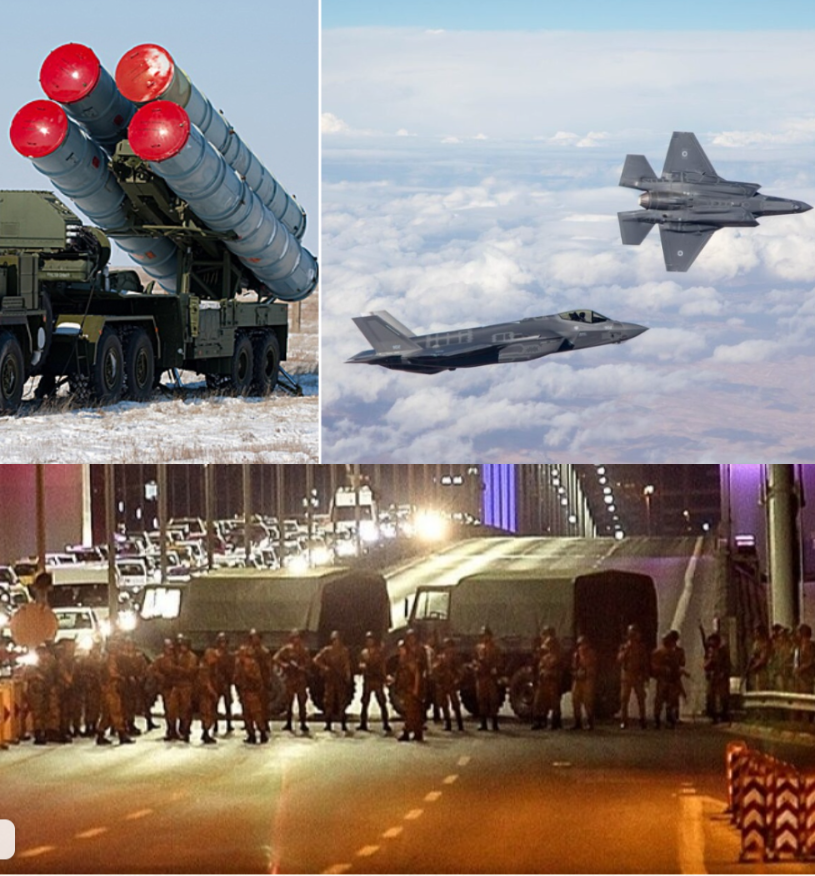
Erdoğan’s response to the staged July 2016 coup attempt devastated the Turkish Air Force from within. In the coup’s aftermath, hundreds of fighter pilots were summarily purged, stripping the service of years of hard-earned experience. Over 300 F-16 pilots – more than half the fighter pilot cadre – were dismissed almost overnight. This draconian purge sent Turkey’s pilot-to-cockpit ratio plummeting from a healthy 1.25 per aircraft to a paltry 0.8. In practical terms, Turkey suddenly had fewer combat pilots than fighter jets, a crisis of readiness and morale. Warplanes sat idle for lack of airmen to fly them.
The loss of so many seasoned aviators created a training vacuum. Upgrading a rookie wingman to flight lead requires pairing with veteran instructors, but Turkey had gutted its pool of instructors and flight lead. The pipeline for new pilots faltered as inexperienced graduates could not be absorbed into operational squadrons fast enough. Ankara made frantic attempts to patch the gap – even threatening 330 retired pilots with civilian license revocation unless they returned to service. This effectively amounted to forced conscription of former pilots, an unprecedented measure born of desperation. The move raised concerns that compelling reluctant pilots back into cockpits would further undermine morale and unit cohesion. Indeed, by shuttering its Air Force Academy and ejecting an entire generation of cadets in 2016, Erdoğan also disrupted the long-term pilot training pipeline. Nearly a decade later, Turkey still struggles with a shortage of qualified F-16 pilots, a self-inflicted wound that has taxed its air crews and exhausted its remaining pilots. The 2016 purge was the first turning point in Turkey’s airpower decline – a “coup” for Erdoğan’s consolidation of power but a calamity for Turkish air readiness.
The S-400 Gamble and F-35 Fallout
If the pilot purge clipped Turkey’s wings, the decision to import Russia’s S-400 air defense system broke them entirely. Defying repeated NATO warnings, Erdoğan in 2017 sealed a deal to buy the S-400, a move ostensibly to bolster air defenses but geopolitically tone-deaf. In July 2019, the first S-400 units arrived – and with them came swift consequences. Washington formally expelled Turkey from the F-35 Joint Strike Fighter program, ending Ankara’s plans to acquire 100 next-generation stealth jetsdefensenews.com. “Turkey’s decision to purchase Russian S-400 systems renders its continued involvement with the F-35 impossible,” the White House stated bluntly. The S-400’s powerful radar is considered a Russian intelligence collection platform that could snoop on the F-35’s stealth characteristics, a risk the U.S. and NATO could not tolerate.
This was a strategic boomerang. Turkey lost access not only to the premier fifth-generation fighter but also to the lucrative co-production work it had in the F-35 program. By March 2020, all Turkish firms were dropped from the F-35 supply chain – a blow estimated at $9 billion in lost economic opportunity for Turkey. American partners took over making some 900 F-35 parts Turkey had built. The U.S. also imposed sanctions under CAATSA (Countering America’s Adversaries Through Sanctions Act) on Turkey’s defense procurement agency, a rare punishment of a NATO ally. Ankara’s insistence on fielding the S-400 – which cannot be integrated into NATO’s air defense network and largely sits unused – thus sacrificed Turkey’s future air force. Long-term, Turkey has no stealth fighters on the horizon, while rivals are leaping ahead. The S-400 saga was a second major turning point: in choosing a Russian system “to satisfy an urgent need” as Ankara claimed, Erdoğan alienated Turkey from Western technology and set its airpower back by a generation.
Stopgaps and Setbacks: F-16s and Eurofighter Typhoons
In the wake of the F-35 fiasco, Turkey scrambled for stopgap solutions to avoid a nosedive in capabilities. Its aging fleet of nearly 240 F-16s – once the pride of the Turkish Air Force – was in dire need of upgrades and replacements. Ankara appealed to Washington for 40 new F-16 Block 70 jets and modernization kits for dozens more, a request bogged down by U.S. congressional distrust after the S-400 purchase. Frustrated by “political appetite low” in Washington, Turkey began courting alternatives. Erdoğan’s government turned to an erstwhile rival platform: the Eurofighter Typhoon.
After two years of negotiation, in October 2025 Turkey inked a deal with the UK to buy 20 Eurofighter Typhoons – its first major fighter acquisition from a non-U.S. source. Valued around $10 billion, the deal was hailed by Erdoğan as “a milestone” in modernizing Turkey’s Air Force. These advanced 4.5-generation jets are intended to “bridge the gap” until Turkey can field a fifth-generation fighter of its own. Britain’s BAE Systems will lead production of the Typhoons for Turkey, with deliveries of brand-new Tranche-4 variants stretched out to 2030. Recognizing the urgent “capability gap” of the late 2020s, Ankara has also negotiating to procure second-hand Typhoons (around 24) from Qatar’s modern fleet (and possibly Oman’s) to get planes in service sooner. If successful, this creative approach could see Turkish pilots flying used Eurofighters within a few years – an attempt to regain operational air squadrons before the decade’s end.
Yet integrating the Eurofighter is no simple task. Unlike the familiar F-16, the Typhoon is a twin-engine, European-designed jet with its own maintenance ecosystem. Operating a mixed F-16 and Typhoon fleet will be costly and complex, requiring new training for ground crews and infrastructure investments. The Typhoon also comes with predominantly European munitions. To maximize autonomy, Turkey will push to certify its indigenous weapons (guided bombs, missiles) on the Typhoon, so it isn’t entirely dependent on European-supplied Meteor air-to-air missiles or Brimstone strike munitions. The UK has signaled willingness to integrate Turkish weapon systems on the jets, a boost for Turkey’s defense industry. Still, the Typhoon is not a stealth aircraft – it lacks low-observable features of the F-35. Turkish Typhoons used in any high-threat environment (for example, against modern SAMs) will need careful mission planning, electronic warfare support, and possibly allied help to survive. It fills a gap, but at higher operating cost and lower capability than the fifth-generation jets Turkey once aimed for.
Indigenous Ambitions Stalled: The KAAN Fighter’s Hurdles
Parallel to shopping abroad, Ankara doubled down on developing an indigenous stealth fighter – a bold bid to regain airpower independence. The TAI “TF-X” project, recently christened “KAAN,” is envisioned as a fifth-generation multirole jet to replace Turkey’s F-16s. Unveiled with fanfare, the KAAN prototype even taxied under its own power in 2023. But technical reality has quickly set in: Turkey lacks a domestically made engine powerful enough for the jet. For now, the prototypes rely on General Electric F110 turbofan engines, built under license in Turkey but requiring U.S. export approval for each unit. Congress, still smarting from the S-400 fallout, has stalled export licenses for additional F110 engines, effectively putting a leash on the KAAN’s progress. Erdoğan’s own foreign minister publicly ‘accused’ Washington of using export delays to hinder the project. Until Turkey can either import engines freely or develop its own, KAAN remains aspirational – a sleek airframe without a guaranteed powerplant.
Recently, in a written reply to parliament, Defense Minister Yaşar Güler confirmed that KAAN currently relies on the U.S.-made F110-GE-129E, produced through subcontracts involving TUSAŞ and GE Aerospace: 10 engines have been delivered, while export licensing for 80 more is still being negotiated with Washington. The minister also provided an update on Turkey’s efforts to develop a domestic engine for the aircraft. He said Tusaş Engine Industries (TEI) selected its TF35000 engine concept in March 2024 for use in KAAN Block 30 and Block 40 variants. A preliminary design phase contract was signed in August 2024, with completion targeted for early 2026.
Attempts to collaborate with allies on engine development have made limited headway. A partnership offer from Britain’s Rolls-Royce in 2016 fell apart over technology transfer disputes. Only in 2022 did Turkey launch a local engine development contest, but any homegrown turbofan is likely a decade away from fruition.
The KAAN saga illustrates Turkey’s quandary: determined to chart an independent path after being ousted from the F-35 program, yet still dependent on Western technology to realize it. Erdoğan touts the project as Turkey’s ticket to the elite club of stealth-aircraft producers. But for now, the Eurofighter deal is Ankara’s insurance policy – buying time and capability until (or unless) the KAAN can take wing.
Rivals on the Rise: Israel’s Unchallenged Air Dominance
While Turkey’s airpower stagnated, Israel ascended to unrivaled air dominance in the Eastern Mediterranean and Middle East. Long distrustful of Ankara’s ‘Islamist tilt’ and ‘regional ambitions’, Israel capitalized on Turkey’s estrangement from the West. It became the first country outside the U.S. to receive the F-35 and today operates two squadrons of F-35I “Adir” fighters with a third on order. In mid-2024, Israel signed a deal for 25 more F-35s – expanding its stealth fleet to 75 jets by the end of the decade. These state-of-the-art aircraft, heavily customized with Israeli sensors and electronic warfare systems, give the Israeli Air Force a technological edge that no regional rival can match. Israel has even been allowed to integrate its own weaponry and modifications into the F-35, a privilege no other U.S. ally enjoys. The result is an air armada that can penetrate advanced air defenses and project power anywhere from the Levant to the Persian Gulf.
Israeli leaders have been unabashed about preserving this qualitative military edge. For decades, Washington has heeded Israel’s insistence that top-tier U.S. platforms not be sold to hostile neighbors. In recent days, Prime Minister Benjamin Netanyahu bluntly stated that Israel would block any country in the region from acquiring F-35s .
With Turkey sidelined, Israel enjoys a stealth monopoly in the Middle East. This airpower superiority has practical outcomes: Israel can strike targets in the Middle East at will, confident that neither Arab nor Turkish air defenses (including Turkey’s still-unactivated S-400) can seriously threaten its F-35s. It also emboldens Israel to conduct long-range missions – for instance, reportedly rehearsing strikes against Iranian targets – under a protective F-35 umbrella.
Importantly, Israel has forged new regional partnerships that reinforce its dominant position. The once-strong Turkey-Israel military alliance (which included air exercises and intelligence sharing) collapsed after 2010, amid diplomatic rifts. In its place, Israel tightened bonds with Greece and Cyprus. Joint exercises between the Hellenic and Israeli air forces are now routine, and notably, Greece has allowed Israel to practice against the Russian-made S-300 air defense system (deployed in Crete) to simulate Turkey’s S-400. Israeli pilots gained valuable experience learning to “blind or bluff” systems similar to what Turkey operates.
Athens Ascendant: Greece Bolsters its Air Force
Nowhere is Turkey’s waning airpower felt more acutely than just across the Aegean. Greece, long the junior player in the Greek-Turkish balance, has seized the moment to upgrade and expand its air force in lockstep with Western allies. Athens embarked on an ambitious modernization, much of it explicitly aimed at “outpacing Turkey”. In 2020, Greece stunned observers by ordering 24 Dassault Rafale fighters from France – making it the first European state to buy the advanced French jet. By 2023, Greek pilots were flying Rafales armed with Meteor long-range missiles, outmatching anything in Turkey’s current arsenal. Even more significant is Greece’s comprehensive upgrade of its American-made F-16 fleet. Under a $1.5 billion program with Lockheed Martin, 84 Hellenic Air Force F-16s are being upgraded to the F-16V “Viper” configuration by 2027. These Vipers boast state-of-the-art AESA radars, new cockpit avionics, and networking capabilities that make them among the most advanced F-16s in Europe.
Crucially, Athens has one eye on the fifth-generation horizon as well. In July 2024, Greece formally signed a letter of request to join the F-35 program, seeking an initial 20 F-35A fighters. U.S. officials have green-lit the idea, and although deliveries would be years away, Greece could well receive stealth jets before Turkey’s indigenous ones ever materialize. Greek defense planners are even contemplating doubling the F-35 order down the line. This would have been unthinkable a decade ago, but today it is Greece – backed by the U.S. and France – that is on track to field a high-low mix of Rafales, F-16Vs, and F-35s. Greece has also deepened defense ties with Israel, holding large joint air exercises and hosting an Israeli-run International Flight Training Center in Kalamata. That 20-year, $1.65 billion project led by Israel’s Elbit Systems provides advanced trainer jets and simulators to the Hellenic Air Force.. In other words, Greece is integrating itself into the Western defense architecture – U.S. F-16 upgrades, French Rafales, Israeli training – to ensure it never again falls behind Turkey in the air.
The strategic tables have thus turned in the Aegean. Once, Turkey’s air force significantly outnumbered and outclassed Greece’s. Now, Greece is not only catching up but arguably taking the lead in quality. By the late 2020s, Greece will field frontline fighters with capabilities (stealth, AESA sensors, Meteor missiles) that Turkey can’t easily match. In a regional crisis – say a skirmish over the Eastern Med’s energy resources or a sovereignty dispute in the Aegean – this overmatch could prove decisive. Greek pilots, alongside French or Israeli partners, would enter a potential conflict with high confidence in their platforms. Turkey, by contrast, would be leaning on aging F-16s short on pilots and stopgap Typhoons not yet fully integrated. It’s a stark reversal of fortunes brought on by Ankara’s own choices.
Drones, Tensions, and the New Regional Airscape
As Turkey’s manned fighter edge eroded, it poured energy into drone warfare – a field where it initially excelled. Turkish Bayraktar TB2 drones earned fame in conflicts from Syria to the Black Sea, showcasing Turkey’s defense industry prowess. But drone warfare is a double-edged sword that has begun to spill over into Turkey’s own backyard. In recent weeks, Turkey faced unwelcome reminders of the Ukraine war next door: stray drones from the Black Sea theater violating its airspace. In December 2025, Turkish F-16s shot down an unidentified UAV that flew in from the Black Sea region, and authorities found wreckage of what appeared to be a Russian-made Orlan-10 drone crashed near Istanbul. Ankara had to warn Moscow and Kyiv that their aerial jousting over the Black Sea was now spilling into Turkish skies. These incidents highlight how an era of proliferating drones and regional wars poses new air defense challenges. A well-trained, well-equipped air force is essential not only for high-intensity fighter combat but also for policing the skies against smaller unmanned threats. Turkey’s aerial shortcomings – fewer pilots and modern jets – risk leaving it vulnerable to such asymmetric incursions. Its vaunted S-400, again, played no visible role in these drone shootdowns, underscoring the system’s dubious practical value.
At the same time, Ankara’s airpower crisis is unfolding against a regional backdrop that is hardening into an anti-Turkey security geometry. The Dec. 22, 2025 Israel–Greece–Cyprus summit in Jerusalem was framed not just as political coordination but as a defense-and-security alignment linked to critical infrastructure, offshore energy, and even discussion—reported by Greek media—of a joint rapid-response concept to protect strategic assets. In other words, while Erdoğan’s decisions hollowed out Turkey’s pilot corps and derailed its fifth-generation pathway, Turkey’s rivals and near-rivals have been institutionalizing cooperation, turning the Eastern Mediterranean into a theater where deterrence is increasingly collective—and where Ankara’s leverage shrinks as others integrate.
Turkey vehemently opposes the burgeoning Greece-Cyprus-Israel partnership that has emerged, casting it as an anti-Turkey axis. Foreign Minister Hakan Fidan warned in October that Turkey is being “encircled” by alliances of Greece, Cyprus, Israel, and the U.S., and cautioned that unresolved disputes “could be handed to the military”. It was a telling statement: Ankara openly sees Jerusalem and Athens cooperating to contain Turkish influence – and hints at military friction. Should that worst-case scenario ever materialize, Turkey would be pitting its declining air force against Israel’s and Greece’s ascending ones. It is a conflict scenario NATO dreads, but one not impossible if miscalculations occur over Cyprus or offshore gas fields. Israel, for its part, has not forgotten past Turkish threats (such as Erdoğan’s volatile rhetoric on Jerusalem). It will ensure it stays one step ahead – whether by acquiring more F-35s or leveraging its world-leading drone and missile technology – to neutralize any Turkish challenge. In a region where air dominance translates to strategic dominance, Israel and Greece have built a formidable edge through cooperation and alignment with Western defense frameworks. Turkey, largely by its own hand, has isolated itself from that framework and now faces the consequences.
NATO and the Cost of Undermining Airpower
Turkey’s air force troubles carry implications far beyond its borders. As a NATO member on the alliance’s strategic southern flank, Turkey was once a linchpin of regional airpower, fielding one of NATO’s largest fighter fleets. Today, its squadrons are a shadow of their former strength. The pilot purge and F-35 eviction reduced Turkey’s ability to contribute to NATO missions and joint air policing. Allied air forces quietly wonder if Turkey could reliably fulfill its role in a high-end conflict. The U.S., for one, has repositioned some of its assets in the region – relying more on bases in Greece, Italy, and elsewhere after uncertainties with Incirlik Air Base during past disputes. Within NATO, trust in Turkey has eroded, not only due to hardware issues but also Erdoğan’s political choices (such as initially blocking Nordic NATO expansions and maintaining ties with Moscow). Turkey’s current position is awkward: it is in NATO but often out of sync with it. The alliance benefits from Turkey’s geographic location and sizable military, but cannot ignore that Erdoğan’s policies have diluted Turkish military effectiveness. As one example, Turkey’s purchase of the S-400 meant it has a major air defense battery that cannot be plugged into NATO’s integrated system, effectively leaving a hole in the alliance network. NATO’s collective air security in the eastern Med now increasingly leans on Greece and Italy – and informally on partner Israel – to pick up slack.
In short, for Erdoğan’s Turkey, the stark strategic consequence is a loss of influence. Airpower equals leverage, and by undermining his own air force, Erdoğan ceded leverage to neighbors. Where Turkish fighter jets once routinely buzzed the Aegean and kept regional rivals anxious, now it is Israel’s F-35s and Greece’s Rafales that command respect in the skies. Turkey finds itself having to defer or rely on diplomatic means in disputes where it might earlier have shown force.
By: GEOPLIST – Istanbul Center for Geopolitics