By: Dimitra Staikou
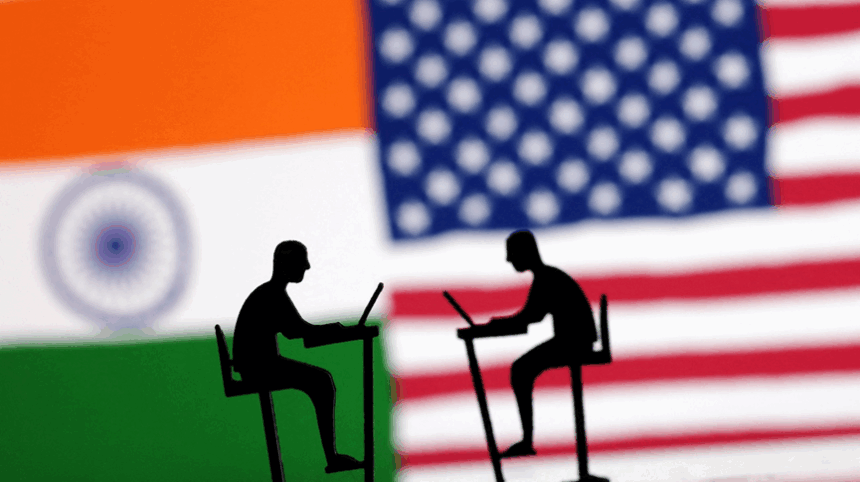
A team of Indian government officials traveled to the United States on July 11 to engage in trade talks as both countries attempt to resolve disputes over tariffs on various goods, including auto parts, steel, and agricultural products.
The Indian delegation, which had made an extended visit to the U.S. to promote a comprehensive Bilateral Trade Agreement (BTA) in hopes of finalizing it before July 9, was unable to secure a deal due to unresolved key issues. India has resisted opening its agriculture and dairy markets, while also pushing for more favorable tariff rates for its exports to the U.S. in comparison to countries such as Vietnam and China.
“We are in the middle—hopefully beyond the middle—of a very complex trade negotiation. Naturally, I hope we can reach a successful conclusion, but I cannot guarantee it, as the outcome also depends on the other side,” Indian Foreign Minister Subrahmanyam Jaishankar stated at an event in New York on Monday, July 7.
India remains one of the few countries still negotiating a trade agreement with Washington, even as President Donald Trump escalates his trade war with the looming threat of significantly higher global tariffs beginning August 1.
Last week, Commerce Minister Piyush Goyal affirmed that India would sign trade agreements only if they serve the nation’s interest. This approach reflects India’s foreign policy slogan “India First,” under which Prime Minister Narendra Modi has emphasized that the country not only takes part in the global order but also seeks to shape and secure its future.
“We are actively engaging with the U.S. team through both virtual and in-person meetings,” an Indian official said, noting that India is still aiming to finalize the first phase of the agreement by autumn.
“The U.S. and India are nearing an agreement to reduce tariffs on American imports into India, potentially helping India avoid the sharp tariff hikes planned by the Trump administration next week,” an official indicated.
“We are very close with India,” Treasury Secretary Scott Besent told Fox News in response to a question about the progress of the trade talks. Besent added that different countries bring different agendas to trade negotiations, citing Japan as an example—whom President Trump had criticized earlier that week.
However, he noted that seasoned trade negotiators are impressed with the kinds of offers the U.S. has been receiving. He acknowledged that both sides will need to compromise in order to reach common ground. “Veterans at the Treasury, Commerce Department, and USTR say these are unprecedented deals,” Besent concluded.
Analysts at Arihant Capital Markets Ltd suggest that, if an agreement is reached, the U.S. may impose comparatively lower tariffs on Indian goods than on other Asian nations. Investors are largely unfazed by Trump’s threat of extremely high (up to 200%) tariffs on the pharmaceutical sector, viewing it more as political posturing than an immediate actionable measure.
Indian officials extended their stay in Washington through Monday in an effort to finalize a trade deal with the Trump administration and resolve lingering concerns, according to Indian government sources cited by Reuters. India is among over a dozen countries negotiating with the Trump administration ahead of a planned spike in tariffs following the expiration of a 90-day tariff freeze on July 9.
India may face a hike in its reciprocal tariff rate from 10% to 27%, and negotiators on both sides are working to prevent this outcome. To date, only the United Kingdom has finalized a limited trade deal with the Trump administration, agreeing to 10% U.S. tariffs on a range of goods, including automobiles, in exchange for enhanced access for aircraft engines and British beef.
What benefits could a U.S.-India trade agreement bring? First, it would help reduce India’s economic reliance on China—a long-standing strategic goal. A deal with the U.S. would support India’s “China+1” strategy by expanding its role in global industrial supply chains. The U.S., too, seeks to diversify its supply chains—positioning India as a key strategic partner.
Second, Indian exports—such as pharmaceuticals, textiles, machinery, and software—could benefit from reduced tariffs and streamlined regulations, creating expanded opportunities for small and medium-sized enterprises (SMEs). The agreement could also attract increased U.S. investment in India, further strengthening its supply chain resilience and industrial development.
Finally, closer economic ties with the U.S. would elevate India’s geopolitical standing and reinforce its role within the QUAD alliance (India, U.S., Japan, Australia).
In the current climate, finding a credible counterweight to Trump’s expansionist trade policies is difficult—but India appears well-positioned to fill that role, offering a model that places greater emphasis on human rights and ethical standards compared to China. If India succeeds in finalizing a trade deal with the U.S., the global e-commerce landscape could shift, with ethical Indian companies like FabIndia—known for sustainable materials and fair labor practices—potentially replacing controversial Chinese firms such as Shein, which face criticism for environmental damage and poor working conditions.
Dimitra Staikou is a Greek lawyer and human rights advocate who also works as a journalist, focusing on human rights violations in South Asia. She frequently travels to India to stay informed about the political landscape and the evolving geopolitical dynamics between India, China, Pakistan, and Bangladesh. Her reporting appears in Greece’s leading news outlets, including Skai.gr and HuffPost Greece, as well as on internationally recognized platforms such as Modern Diplomacy and Global Research.
***GEOPOLIST – Istanbul Center for Geopolitics offers diverse viewpoints. The opinions expressed in this text are not necessarily shared by GEOPOLIST.***