By using this site, you agree to the Privacy Policy and Terms of Use.
Accept
Geopolist | Istanbul Center for GeopoliticsGeopolist | Istanbul Center for GeopoliticsGeopolist | Istanbul Center for Geopolitics
  • Home
  • Geopolitics
    Geopolitics
    Discover professional insights into international relations, regional conflicts, and global power dynamics by visiting Geopolist. Keep up on the ways in which these changes impact…
    Show More
    Top News
    Operation Spiderweb: The Death of Strategic Depth in the Drone Age
    August 6, 2025
    The End of Vertical War: Operation Spiderweb and the Rise of Horizontal War-Making
    August 6, 2025
    Congress: Allow Ukraine to strike more targets within Russia using US-supplied weapons.
    April 13, 2025
    Latest News
    Three Missiles, One Question: Is Turkey Along With NATO Being Dragged Into War With Iran?
    March 14, 2026
    Mojtaba Khamenei May Save the Regime Today—and Doom It Tomorrow
    March 11, 2026
    Wilayat al-Faqih Is Entering Its Final Chapter
    March 6, 2026
    Hakan Fidan’s Two-Week U-Turn on Iran
    March 4, 2026
  • Security
    SecurityShow More
    Erdoğan’s Self-Inflicted Airpower Wounds: How Turkey Lost the Skies
    December 26, 2025
    Ahmed al-Ahmed: The Hero Islamophobes and Anti-Immigrant Voices Did Not Expect
    December 15, 2025
    Five Turkish defense firms enter SIPRI Top 100 with record $10.1 billion in 2024 sales
    December 1, 2025
    Turkey’s Kızılelma drone fires radar-guided missile in beyond-visual-range test
    December 1, 2025
    More Than Mischief: How a Weakened Moscow Seeks to Dismantle NATO from Within
    September 21, 2025
  • Commentary
    CommentaryShow More
    Three Missiles, One Question: Is Turkey Along With NATO Being Dragged Into War With Iran?
    March 14, 2026
    Mojtaba Khamenei May Save the Regime Today—and Doom It Tomorrow
    March 11, 2026
    Wilayat al-Faqih Is Entering Its Final Chapter
    March 6, 2026
    Hakan Fidan’s Two-Week U-Turn on Iran
    March 4, 2026
    Full Compartmentalization? Assessing the Future Trajectory of Indo–Bangladeshi Relations
    March 1, 2026
  • Economy
    • Energy
  • Regions
    • Europe
    • Middle East & Africa
    • Eurasia
  • Risk Advisory
  • Jobs
    • Job Dashboard
    • Jobs
    • Post a Job
  • Register
  • My Bookmarks
Reading: From Ally to Afterthought: Netanyahu Faces Trump’s Cold Shoulder
Share
Notification Show More
Font ResizerAa
Geopolist | Istanbul Center for GeopoliticsGeopolist | Istanbul Center for Geopolitics
Font ResizerAa
  • Home
  • Geopolitics
  • Security
  • Commentary
  • Economy
  • Regions
  • Risk Advisory
  • Jobs
  • Register
  • My Bookmarks
  • Home
  • Geopolitics
  • Security
  • Commentary
  • Economy
    • Energy
  • Regions
    • Europe
    • Middle East & Africa
    • Eurasia
  • Risk Advisory
  • Jobs
    • Job Dashboard
    • Jobs
    • Post a Job
  • Register
  • My Bookmarks
Have an existing account? Sign In
Follow US
  • Advertise
© 2022 Foxiz News Network. Ruby Design Company. All Rights Reserved.
Geopolist | Istanbul Center for Geopolitics > Blog > Regions > Middle East & Africa > From Ally to Afterthought: Netanyahu Faces Trump’s Cold Shoulder
CommentaryGeopoliticsMiddle East & Africa

From Ally to Afterthought: Netanyahu Faces Trump’s Cold Shoulder

Last updated: August 6, 2025 2:33 pm
By GEOPOLIST | Istanbul Center for Geopolitics Published May 21, 2025 808 Views 5 Min Read
Share
SHARE

Summary & Additional Remarks by Geopolist | Istanbul Center for Geopolitics:

Contents
1. From Personal Alliance to Political Divorce2. Trump’s “Freedom Zone” for Gaza: Strategic or Fantastical?3. A Shift from Values to Transactions4. Implications for Israel and the RegionKey Quote:Conclusion:

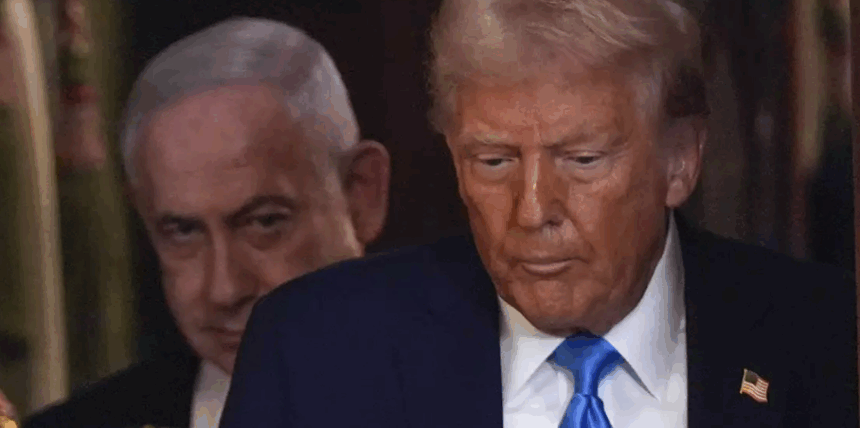
Shlomo Ben-Ami, a former Israeli foreign minister and a seasoned commentator on Middle East affairs, writes that Donald Trump’s second-term foreign policy marks a decisive break from his earlier unwavering support for Israeli Prime Minister Benjamin Netanyahu. This shift, Ben-Ami argues, is not just symbolic—it reflects a broader realignment in U.S. strategy that could leave Israel increasingly marginalized in the new regional order.

1. From Personal Alliance to Political Divorce

Ben-Ami outlines how Trump and Netanyahu, once portrayed as ideological twins and strategic partners, are now growing apart. In Trump’s first term, the U.S. administration made a series of pro-Israel moves—recognizing Jerusalem as Israel’s capital, endorsing Israeli sovereignty over the Golan Heights, and launching the Abraham Accords. Netanyahu was a central beneficiary and participant in this vision.

But in Trump’s second term, Israel is no longer at the center of the agenda. Trump’s recent Middle East tour conspicuously excluded Israel, focusing instead on deepening ties with the Gulf states and promoting what he calls a “Middle East Riviera”—a bold reimagining of Gaza as a “freedom zone” modeled on free-market enclaves like Singapore or Dubai, but under U.S. control.

2. Trump’s “Freedom Zone” for Gaza: Strategic or Fantastical?

A key flashpoint in this divergence is Trump’s Gaza initiative. Rather than consulting Israel—or even involving it—Trump proposed turning Gaza into a depoliticized zone of economic experimentation. Backed by Gulf funding and possibly administered with U.S. security oversight, the plan envisions rebuilding Gaza as a technocratic, non-nationalistic space.

Ben-Ami notes the strategic gamble: Trump sees Gaza as a gateway for U.S. economic and diplomatic engagement in the region, independent of Israel’s political entanglements. In contrast, Netanyahu views Gaza as an irredeemably hostile territory that must be managed through force and deterrence. The two visions are fundamentally incompatible.

3. A Shift from Values to Transactions

According to Ben-Ami, Trump’s evolving doctrine abandons traditional alliances in favor of transactional diplomacy. For Trump, Israel is no longer a unique ally, but one state among many in a competitive marketplace of strategic value. His pivot toward Saudi Arabia, the UAE, and even tacit coordination with Egypt and Jordan on Gaza, reflects this realpolitik logic.

This marks a radical departure from the historical bipartisan U.S. consensus of prioritizing Israel’s security and regional dominance. Ben-Ami suggests that Netanyahu, who built his legacy on the strength of the U.S.-Israel alliance, now finds himself diplomatically isolated, with few levers of influence in Washington.

4. Implications for Israel and the Region

Ben-Ami warns that this estrangement has major consequences:

  • For Israel, it signals that its traditional monopoly over U.S. Middle East policy is eroding.
  • For the Palestinians, it may open a new chapter—however flawed—where Gaza is reimagined outside the logic of permanent occupation.
  • For the Arab Gulf states, it reflects their emergence as Trump’s preferred regional interlocutors, replacing Israel as Washington’s main partner.

More broadly, Ben-Ami sees this as the beginning of a post-Netanyahu era in U.S.-Israeli relations. If Trump continues to ignore Israel’s concerns and bypass its leadership, Israeli policymakers will have to recalibrate their assumptions about unconditional U.S. support.

Key Quote:

“Trump’s new Gaza plan reflects not just a policy shift—it is a conceptual one. It treats Israel as a regional actor to be balanced, not privileged.”


Conclusion:

Shlomo Ben-Ami’s article frames Trump’s second-term strategy as a cold, transactional pivot away from Israel, one that leaves Netanyahu sidelined and exposed. This realignment could redefine not only the Israeli-American relationship, but the entire strategic architecture of the Middle East. As Trump reimagines the region through the lens of Gulf capital and U.S. oversight, Israel may find itself watching from the sidelines—a sharp fall from the privileged perch it held during Trump’s first term.

Read more here.
You Might Also Like

Three Missiles, One Question: Is Turkey Along With NATO Being Dragged Into War With Iran?

Mojtaba Khamenei May Save the Regime Today—and Doom It Tomorrow

Wilayat al-Faqih Is Entering Its Final Chapter

Hakan Fidan’s Two-Week U-Turn on Iran

Full Compartmentalization? Assessing the Future Trajectory of Indo–Bangladeshi Relations

Share This Article
Facebook Twitter Email Print
Previous Article Caught in the Middle: Why Middle Powers Still Struggle to Act Together
Next Article From Bibi to Business Zones: Trump’s Soft Power Mirage

Stay Connected

TwitterFollow
YoutubeSubscribe

Latest News

The Collapse of the Regime in Iran Could Be Ankara’s Biggest Strategic Gain Since the Collapse of the USSR
Commentary Eurasia Geopolitics Middle East & Africa
A New Order Without a Vision: The Arab World’s Missing Strategy
Commentary Geopolitics Middle East & Africa
Good Cop, Bad Cop: How Trump’s Team Pressures NATO Allies
Commentary Europe Geopolitics
Vance in the Caucasus: The Maturation of America’s Eurasian Strategy
Commentary Eurasia Geopolitics

Find Us on Socials

© GeoPolist. All Rights Reserved.
  • Submit an Op-Ed + Risk Advisory
  • Jobs
  • Post Jobs & Ads for Free
Welcome Back!

Sign in to your account

Register Lost your password?