By using this site, you agree to the Privacy Policy and Terms of Use.
Accept
Geopolist | Istanbul Center for GeopoliticsGeopolist | Istanbul Center for GeopoliticsGeopolist | Istanbul Center for Geopolitics
  • Home
  • Geopolitics
    Geopolitics
    Discover professional insights into international relations, regional conflicts, and global power dynamics by visiting Geopolist. Keep up on the ways in which these changes impact…
    Show More
    Top News
    Operation Spiderweb: The Death of Strategic Depth in the Drone Age
    August 6, 2025
    The End of Vertical War: Operation Spiderweb and the Rise of Horizontal War-Making
    August 6, 2025
    A map of Israel and Lebanon showing large numbers of strikes by Israel and Hezbollah near the border since October 7, 2023
    Understanding the Impact of Growing Hezbollah-Israel Tensions and the Gaza Conflict on Lebanon
    April 13, 2025
    Latest News
    The Epstein Files and the Chomsky Reckoning on the Left
    February 6, 2026
    The Gülen Diaspora and the Return of a Calvinist Moment in Islam
    February 3, 2026
    Broad Buy-In, Rival Readings, Future Risks: SDF and Damascus Clash Over Integration Terms
    January 31, 2026
    İbrahim Kalın: Erdoğan’s Most Geopolitically Credible Successor
    January 30, 2026
  • Security
    SecurityShow More
    Erdoğan’s Self-Inflicted Airpower Wounds: How Turkey Lost the Skies
    December 26, 2025
    Ahmed al-Ahmed: The Hero Islamophobes and Anti-Immigrant Voices Did Not Expect
    December 15, 2025
    Five Turkish defense firms enter SIPRI Top 100 with record $10.1 billion in 2024 sales
    December 1, 2025
    Turkey’s Kızılelma drone fires radar-guided missile in beyond-visual-range test
    December 1, 2025
    More Than Mischief: How a Weakened Moscow Seeks to Dismantle NATO from Within
    September 21, 2025
  • Commentary
    CommentaryShow More
    The Epstein Files and the Chomsky Reckoning on the Left
    February 6, 2026
    The Gülen Diaspora and the Return of a Calvinist Moment in Islam
    February 3, 2026
    Broad Buy-In, Rival Readings, Future Risks: SDF and Damascus Clash Over Integration Terms
    January 31, 2026
    İbrahim Kalın: Erdoğan’s Most Geopolitically Credible Successor
    January 30, 2026
    Jeffrey’s Autonomy Model for Syria Matches NAT’s Earlier Proposal
    January 26, 2026
  • Economy
    • Energy
  • Regions
    • Europe
    • Middle East & Africa
    • Eurasia
  • Risk Advisory
  • Jobs
    • Job Dashboard
    • Jobs
    • Post a Job
  • Register
  • My Bookmarks
Reading: U.S.-China Trade Tensions: Risks of Losing MFN Status for China
Share
Notification Show More
Font ResizerAa
Geopolist | Istanbul Center for GeopoliticsGeopolist | Istanbul Center for Geopolitics
Font ResizerAa
  • Home
  • Geopolitics
  • Security
  • Commentary
  • Economy
  • Regions
  • Risk Advisory
  • Jobs
  • Register
  • My Bookmarks
  • Home
  • Geopolitics
  • Security
  • Commentary
  • Economy
    • Energy
  • Regions
    • Europe
    • Middle East & Africa
    • Eurasia
  • Risk Advisory
  • Jobs
    • Job Dashboard
    • Jobs
    • Post a Job
  • Register
  • My Bookmarks
Have an existing account? Sign In
Follow US
  • Advertise
© 2022 Foxiz News Network. Ruby Design Company. All Rights Reserved.
Geopolist | Istanbul Center for Geopolitics > Blog > Commentary > U.S.-China Trade Tensions: Risks of Losing MFN Status for China
CommentaryEconomyGeopolitics

U.S.-China Trade Tensions: Risks of Losing MFN Status for China

Last updated: November 19, 2024 6:53 pm
By GEOPOLIST | Istanbul Center for Geopolitics Published November 19, 2024 1.2k Views 3 Min Read
Share
SHARE

Summary by Geopolist | Istanbul Center for Geopolitics:

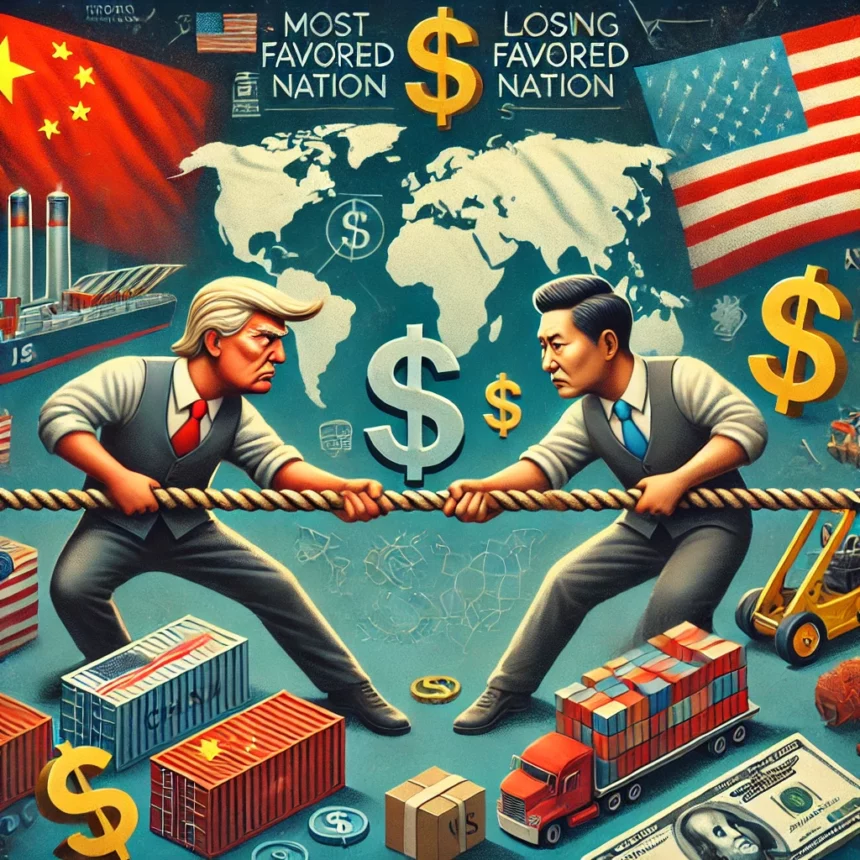
The article investigates the potential consequences for China in the event that the United States revokes its Most Favoured Nation (MFN) status. This revocation follows Donald Trump’s election victory and his pledge to increase tariffs on Chinese products to 60%. The loss of MFN status has the potential to result in substantial economic strain, including 3.4% deflationary pressure, and could have a detrimental impact on global supply chains. The article presents three scenarios, each of which would cause a reduction in economic development in both countries as a result of increased tariffs. Nevertheless, China has the potential to adjust by emphasizing domestic markets and knowledge-based industries.

The article also highlights the political dynamics behind the push to end China’s MFN status, with key figures like John Moolenaar and Marco Rubio leading legislative efforts to revoke it, arguing that China has exploited its trade privileges to the detriment of American workers and manufacturing. The move comes amidst a shift in U.S. political attitudes towards China, with a focus on countering perceived economic and strategic threats.

The economic forecasts of Shenwan Hongyuan Securities depict scenarios that would result in substantial tariff increases that would be detrimental to both countries. The analysis suggests that the United States would experience reduced domestic consumption and GDP losses that are more severe than those in China, particularly in more aggressive scenarios, despite the potential reduction in its trade deficit. The tariff increases are expected to disrupt Sino-U.S. trade relations, potentially resulting in bankruptcies and a negative impact on Chinese exporters and small businesses.

Nevertheless, China may address these obstacles by concentrating on domestic markets and utilizing its Belt and Road Initiative partnerships. The emphasis could also shift toward enhancing the added value of Chinese products, transitioning from labor-intensive to more advanced knowledge-based production. The columnist posits that, despite the fact that both parties would be affected, China could capitalize on the opportunity to restructure its economy, while U.S. companies may incur increased costs as a result of disrupted supply chains.

The article concludes with remarks from Chinese officials, including the Chinese ambassador to the United States, who advocate for the mutual advantages of trade between the two countries. They emphasize that cooperation has allowed U.S. companies to generate profits in China and has provided American consumers with affordable goods, thereby refuting the narrative of a wholly adversarial trade relationship.

Read more here.
You Might Also Like

The Epstein Files and the Chomsky Reckoning on the Left

The Gülen Diaspora and the Return of a Calvinist Moment in Islam

Broad Buy-In, Rival Readings, Future Risks: SDF and Damascus Clash Over Integration Terms

İbrahim Kalın: Erdoğan’s Most Geopolitically Credible Successor

Jeffrey’s Autonomy Model for Syria Matches NAT’s Earlier Proposal

Share This Article
Facebook Twitter Email Print
Previous Article Taiwan Strait Conflict: Trump’s Transactional Policy and the Rising Threat of Militarization
Next Article Ukraine’s Drone Strategy Halts Russian Advances Near Pokrovsk
Leave a comment

Leave a Reply Cancel reply

Your email address will not be published. Required fields are marked *

Stay Connected

TwitterFollow
YoutubeSubscribe

Latest News

Strategic and Ideological Missteps of Syria’s SDF
Commentary Geopolitics Middle East & Africa
The Day After the SDF: Turkey’s Salafism Gamble—and Bilal Erdoğan’s Succession Pipeline
Commentary Geopolitics Middle East & Africa
Salafi Consolidation: Is Iraq—and the KRG—Next After Syria and Yemen?
Commentary Geopolitics Middle East & Africa
Great-Power Condominium or Great-Power Mirage?
Commentary Geopolitics

Find Us on Socials

© GeoPolist. All Rights Reserved.
  • Submit an Op-Ed + Risk Advisory
  • Jobs
  • Post Jobs & Ads for Free
Welcome Back!

Sign in to your account

Register Lost your password?