Trump’s latest statements should be understood not merely as diplomacy, but as battlefield politics by other means. His talk of “productive” contacts with Tehran, coming just after he postponed threatened strikes on Iranian power infrastructure, had an immediate market effect: oil prices fell sharply and investors rallied around the prospect of a pause. Thus, those remarks looked less like a settled peace formula than an effort to cool energy prices, steady political nerves, and buy time for the next phase of military planning. But that tactical pause only sharpens the larger strategic problem. If Washington now searches for a freeze, a pause, or an ambiguous off-ramp while leaving the regime in Tehran politically intact, it will not look like prudence. It will look like a superpower stepping back from the consequences of the war it has already chosen to wage.
That is why the United States cannot afford to leave Iran’s regime standing. The issue is not that regime change is simple, clean, or morally uncomplicated. It is that, once Washington has entered a war of this scale, disrupted energy markets, unsettled allies, and defined the Islamic Republic as a central strategic danger, an inconclusive outcome becomes more costly than many in Washington may want to admit. A surviving regime in Tehran would not emerge humbled. It would emerge vindicated by survival itself. And in world politics, survival after punishment is often read as victory. America’s adversaries would conclude that the United States can still inflict enormous damage, but may no longer be able to impose a decisive political end state. That is the kind of perception from which hegemonic decline accelerates.
The first place where this failure would be felt most sharply is the Gulf. For years, Gulf monarchies effectively paid Washington for protection—through massive arms purchases, military basing arrangements, energy coordination, and strategic loyalty—on the assumption that the United States would shield them from exactly this kind of Iranian threat. Yet this war has exposed the limits of that bargain in the most humiliating way possible. Iran has still been able to strike, disrupt shipping lanes, threaten energy infrastructure, and impose major costs on Gulf states despite the fact that those same states long invested in the American security umbrella. The conflict has already forced Gulf producers to reroute exports through alternative pipelines and ports as the Strait of Hormuz became unusable at scale, while regional energy infrastructure has suffered deep and costly damage. Gulf capitals are angry not only because they are paying for a war they neither started nor wanted, but because they are now confronting a harsher truth: even after all they spent for U.S. protection, Washington has not been able to fully protect them from Iranian retaliation. If the United States now stops short and leaves the regime in Tehran standing, Gulf leaders will draw an unforgiving conclusion: America can punish, but it cannot necessarily protect—and it cannot necessarily finish the job.
That would create something more dangerous than a public break with Washington. It would create a strategic search for alternatives. Gulf states would begin asking why they should remain so heavily dependent on a superpower that proved unable to shield them from Iran and unwilling or unable to remove the source of the threat. Under those conditions, hedging would accelerate into something much more serious. China would be the clearest beneficiary, offering markets, technology, investment, diplomatic cover, and the image of a power less interested in dragging the region into open-ended confrontation. Russia, too, could gain room as a security and political alternative for regimes looking to reduce total reliance on Washington. Great-power influence does not shift only through aircraft carriers and military bases. It shifts when ruling elites conclude that one patron is expensive, erratic, and strategically unreliable, while rival powers—however flawed—offer additional room for maneuver.
The damage would not stop in the Middle East. In important ways, it had already begun spreading through the wider Western alliance system even before the Iran war reached its current phase. Trump had started weakening the political glue that held America’s partners together not only through tariffs, but through pressure directed at allies themselves. In Canada, his rhetoric repeatedly crossed into annexation-style language. In Europe, his renewed push over Greenland forced Denmark and its allies to rally publicly around Danish and Greenlandic sovereignty, turning the territory of a U.S. ally into a test of transatlantic trust.
Canada’s response has been revealing. Prime Minister Mark Carney has been trying to build a less U.S.-dependent trading posture, including resetting ties with China in January and widening Canada’s diplomatic and economic room for maneuver. Europe has been following a similar path. The European Union has begun the final stages of trade negotiations with Australia after reaching recent agreements with India and Indonesia. This move is partly a response to U.S. tariffs and broader strategic uncertainties, prompting Brussels to seek diversification. This situation exemplifies the erosion of alliances: not through outright defection, but by the gradual and intentional development of alternatives.
The Iran war has now added another layer to that process. At first, Trump’s call for allied backing received a cold response. Germany said it would not participate in the war. Kaja Kallas made clear that Europe did not see this as its war. Macron rejected military involvement in reopening Hormuz while fighting was still underway. Yet later Britain, France, Germany, Canada, and others backed a joint statement supporting efforts to secure maritime passage once hostilities had ceased. That still was not a full endorsement of Trump’s war. But politically, it suggested that these countries were beginning to see the same hard reality: if the United States was determined to press toward a decisive outcome in Iran, there was no easy alternative but to adjust to that fact. At the same time, they likely did not want to be remembered afterward as the allies who kept their distance during the most difficult phase, only to expect the strategic and economic benefits of an American victory once the balance had shifted. That shift did not mean they had become enthusiastic supporters of the war. It meant they were beginning to position themselves for the possibility that Washington would finish the job — and that they did not want to be seen, after the fact, as bystanders or quiet betrayers.
If Washington fails to bring the Iran war to a politically decisive close, the recent repositioning of these countries could rapidly swing back with even greater force. Canada, Europe, Gulf partners, and Asian allies would all reach the same conclusion from different directions: reliance on the United States is becoming more costly, more politically risky, and less strategically rewarding.
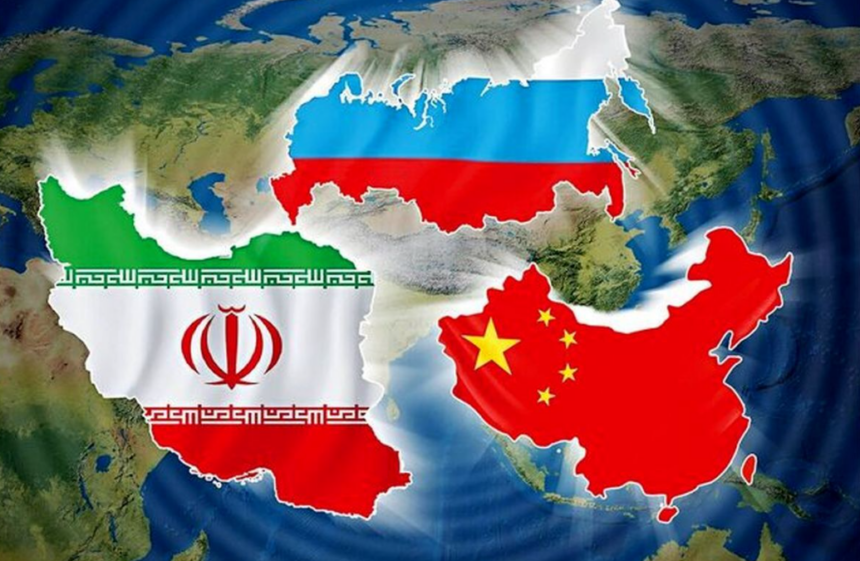
Russia and China would read an unfinished Iran war as an invitation, not a warning. Moscow would see greater room to press harder in Ukraine, potentially seize more territory, and demand broader concessions while America’s global hegemonic image is visibly damaged. Beijing, for its part, would not need to invade Taiwan tomorrow to profit from the moment. It would only need to see that the United States still possesses overwhelming military force, yet increasingly struggles to convert that force into durable strategic order. The U.S. intelligence community’s 2025 Annual Threat Assessment warned that China, Russia, Iran, and North Korea are deepening adversarial cooperation in ways that can reinforce pressure across multiple theaters. Even if neither Moscow nor Beijing makes an immediate maximal move, both would benefit from the same conclusion: the United States can still strike hard, but it no longer necessarily decides the outcome.
Israel would suffer alongside the United States. This is not merely America’s war with Israeli implications. Israel is the other principal allied party in the conflict, and it remains directly exposed to Iranian retaliation. For Israel, that matters not only materially but psychologically. A regime in Tehran that survives a U.S.-Israeli war will portray survival as vindication. It will rebuild what it can, learn from what it has lost, and resume the conflict under a more hardened logic of revenge and endurance. A wounded but surviving Iranian regime is not a neutral outcome for Israel. It is a more embittered and potentially more dangerous one.
There is also a monetary dimension that many strategists still underestimate. An unfinished war in Iran would not replace the dollar with the yuan overnight. The dollar remains dominant, accounting for about 57% of global foreign-exchange reserves, and the renminbi is still far from challenging it head-on in global payments. But reserve orders do not collapse in a single dramatic event. They weaken when states begin asking whether the system anchored by the dominant currency still offers enough order, predictability, and strategic cover to justify dependence. If U.S. power starts to look disruptive but inconclusive, more states will look for ways to reduce exposure to U.S. pressure—especially in energy and cross-border settlement.
That is where the petrodollar-versus-petroyuan argument becomes relevant. The strongest case is not that the world is about to abandon the dollar in one sweeping gesture. It is that war, sanctions, and mistrust are expanding the incentive to build parallel channels. China has already allowed more banks to handle the digital yuan as part of a broader push to internationalize the renminbi and expand cross-border settlement outside the West’s dollar-dominated financial architecture.In January, the cross-border digital currency infrastructure led by China experienced significant growth and is becoming increasingly recognized as an alternative method for trade settlement. This trend could have serious implications: if the U.S. ends the conflict without a clear political solution, arrangements that bypass the dollar may start to seem less ideological and more like a form of insurance.
Even inside Washington, the logic of the war may now be trapping institutions that originally opposed or questioned it. But once a conflict reaches this scale, institutional calculations can reverse. Officials who disliked the war at the outset may still conclude that stopping halfway would be even worse than entering badly. Why? Because an inconclusive end would leave Iran’s regime alive, expose Israel to renewed danger, deepen allied hedging, widen openings for China and Russia, and reinforce the impression that American force is no longer decisive. In that sense, even many of those who opposed the war initially may end up backing the argument that, once begun, it must be finished.
Hegemonies rarely end in one spectacular moment. More often, they erode through repeated demonstrations that the hegemon can still strike, but can no longer reliably settle. That is why Iran matters so much. If Washington pauses, recalibrates, and ultimately leaves the regime standing, the result will not simply be an unresolved Middle Eastern conflict. It will be a wider acceleration of the belief—from the Gulf to Brussels, from Ottawa to Moscow and Beijing—that American power is still immense, but no longer conclusive. And once that belief hardens, the erosion of U.S. hegemony stops being a theory. It becomes the operating assumption of the emerging world order.
By: GEOPOLIST – Istanbul Center for Geopolitics