By using this site, you agree to the Privacy Policy and Terms of Use.
Accept
Geopolist | Istanbul Center for GeopoliticsGeopolist | Istanbul Center for GeopoliticsGeopolist | Istanbul Center for Geopolitics
  • Home
  • Geopolitics
    Geopolitics
    Discover professional insights into international relations, regional conflicts, and global power dynamics by visiting Geopolist. Keep up on the ways in which these changes impact…
    Show More
    Top News
    Operation Spiderweb: The Death of Strategic Depth in the Drone Age
    August 6, 2025
    The End of Vertical War: Operation Spiderweb and the Rise of Horizontal War-Making
    August 6, 2025
    China’s GJ-11 Stealth Drone: Advancing Combat Strategy with Fighter Jet Wingmen
    September 15, 2024
    Latest News
    Vance in the Caucasus: The Maturation of America’s Eurasian Strategy
    February 14, 2026
    The Epstein Files and the Chomsky Reckoning on the Left
    February 6, 2026
    The Gülen Diaspora and the Return of a Calvinist Moment in Islam
    February 3, 2026
    Broad Buy-In, Rival Readings, Future Risks: SDF and Damascus Clash Over Integration Terms
    January 31, 2026
  • Security
    SecurityShow More
    Erdoğan’s Self-Inflicted Airpower Wounds: How Turkey Lost the Skies
    December 26, 2025
    Ahmed al-Ahmed: The Hero Islamophobes and Anti-Immigrant Voices Did Not Expect
    December 15, 2025
    Five Turkish defense firms enter SIPRI Top 100 with record $10.1 billion in 2024 sales
    December 1, 2025
    Turkey’s Kızılelma drone fires radar-guided missile in beyond-visual-range test
    December 1, 2025
    More Than Mischief: How a Weakened Moscow Seeks to Dismantle NATO from Within
    September 21, 2025
  • Commentary
    CommentaryShow More
    Vance in the Caucasus: The Maturation of America’s Eurasian Strategy
    February 14, 2026
    The Epstein Files and the Chomsky Reckoning on the Left
    February 6, 2026
    The Gülen Diaspora and the Return of a Calvinist Moment in Islam
    February 3, 2026
    Broad Buy-In, Rival Readings, Future Risks: SDF and Damascus Clash Over Integration Terms
    January 31, 2026
    İbrahim Kalın: Erdoğan’s Most Geopolitically Credible Successor
    January 30, 2026
  • Economy
    • Energy
  • Regions
    • Europe
    • Middle East & Africa
    • Eurasia
  • Risk Advisory
  • Jobs
    • Job Dashboard
    • Jobs
    • Post a Job
  • Register
  • My Bookmarks
Reading: Why Finlandization is a Flawed Solution for Ukraine’s Future
Share
Notification Show More
Font ResizerAa
Geopolist | Istanbul Center for GeopoliticsGeopolist | Istanbul Center for Geopolitics
Font ResizerAa
  • Home
  • Geopolitics
  • Security
  • Commentary
  • Economy
  • Regions
  • Risk Advisory
  • Jobs
  • Register
  • My Bookmarks
  • Home
  • Geopolitics
  • Security
  • Commentary
  • Economy
    • Energy
  • Regions
    • Europe
    • Middle East & Africa
    • Eurasia
  • Risk Advisory
  • Jobs
    • Job Dashboard
    • Jobs
    • Post a Job
  • Register
  • My Bookmarks
Have an existing account? Sign In
Follow US
  • Advertise
© 2022 Foxiz News Network. Ruby Design Company. All Rights Reserved.
Geopolist | Istanbul Center for Geopolitics > Blog > Regions > Eurasia > Why Finlandization is a Flawed Solution for Ukraine’s Future
CommentaryEurasiaGeopolitics

Why Finlandization is a Flawed Solution for Ukraine’s Future

Last updated: December 15, 2024 6:07 pm
By GEOPOLIST | Istanbul Center for Geopolitics Published December 15, 2024 795 Views 4 Min Read
Share
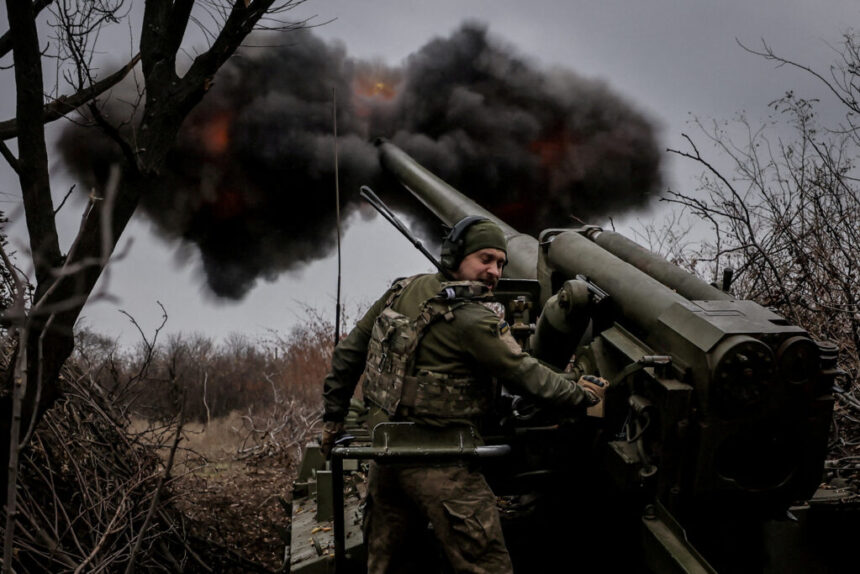
FILE PHOTO: A serviceman of 24th Mechanized brigade named after King Danylo of the Ukrainian Armed Forces fires a 2s5 "Hyacinth-s" self-propelled howitzer towards Russian troops at a front line, amid Russia's attack on Ukraine, near the town of Chasiv Yar in Donetsk region, Ukraine November 18, 2024. Oleg Petrasiuk/Press Service of the 24th King Danylo Separate Mechanized Brigade of the Ukrainian Armed Forces/Handout via REUTERS ATTENTION EDITORS - THIS IMAGE HAS BEEN SUPPLIED BY A THIRD PARTY./File Photo
SHARE


Summary by Geopolist | Istanbul Center for Geopolitics:

The idea of “Finlandization” has reemerged in discussions about potential peace solutions for Ukraine, but Finnish officials have firmly rejected this concept, warning that enforced neutrality would not lead to peace with Russia. While Finlandization worked as a survival strategy for Finland during the Cold War, the circumstances and costs associated with it make it unsuitable for Ukraine.

Finlandization emerged from Finland’s post-World War II reality, where the country successfully defended its sovereignty but had to navigate a precarious relationship with the Soviet Union. The 1948 Friendship Treaty between Finland and the USSR set the framework for Finlandization, which required Finland to prioritize Soviet interests in both foreign and domestic policies. While this strategy spared Finland from Soviet invasions like those experienced by Hungary in 1956 and Czechoslovakia in 1968, it came at a heavy cost.

Domestically, Finlandization imposed significant compromises on democratic freedoms. Finnish media engaged in self-censorship to avoid criticism of the USSR, and the same leadership remained in power for decades to maintain stability in relations with Moscow. These compromises restricted Finland’s ability to pursue political and economic ties with the West, delayed its integration into European institutions, and forced it to align its defense policies against an unlikely Western threat while downplaying the more realistic danger from the Soviet Union.

Applying this model to Ukraine would not yield the same results. Finland’s neutrality during the Cold War was supported by unique regional dynamics, including Sweden’s neutrality and Norway’s restrictions on NATO deployments, which together created a geopolitical balance that deterred Soviet aggression. Ukraine, by contrast, faces an immediate and ongoing threat from Russia, making enforced neutrality a recipe for vulnerability, not security.

Moreover, Finlandization is incompatible with Ukraine’s aspirations for Euro-Atlantic integration and democratic development. Ukraine’s pursuit of NATO and EU membership reflects its determination to safeguard its sovereignty and align with Western institutions. Imposing restrictions similar to Finlandization would undermine Ukraine’s democracy and leave it exposed to continued Russian aggression. Any attempt to replicate the domestic compromises of the Finnish model, such as self-censorship or limited political pluralism, would contradict Ukraine’s democratic aspirations.

Instead of looking to Cold War-era Finlandization, Ukraine’s supporters should draw inspiration from Finland’s post-1991 experience. Since the end of the Cold War, Finland has integrated into the Western world, joining both NATO and the European Union, and firmly establishing itself within the Euro-Atlantic community. This transformation demonstrates that geography does not have to dictate a country’s fate. Ukraine can pursue a similar path of integration into Western institutions to ensure its long-term security and prosperity.

While Finlandization worked for Finland in a specific historical and geopolitical context, Ukraine’s situation, aspirations for Western integration, and the threat of Russian aggression make it an inappropriate and ineffective solution. Neutrality would likely fail to address Ukraine’s security concerns and its desire for sovereignty and self-determination.

Read more here.
You Might Also Like

Vance in the Caucasus: The Maturation of America’s Eurasian Strategy

The Epstein Files and the Chomsky Reckoning on the Left

The Gülen Diaspora and the Return of a Calvinist Moment in Islam

Broad Buy-In, Rival Readings, Future Risks: SDF and Damascus Clash Over Integration Terms

İbrahim Kalın: Erdoğan’s Most Geopolitically Credible Successor

Share This Article
Facebook Twitter Email Print
Previous Article Centralizing Control: Russia’s Ambitious but Risky Overhaul of Drone Operations in Ukraine
Next Article Shifting Power Dynamics: Russia’s Strategic Repositioning and Geopolitical Challenges in Africa and Syria
Leave a comment

Leave a Reply Cancel reply

Your email address will not be published. Required fields are marked *

Stay Connected

TwitterFollow
YoutubeSubscribe

Latest News

Jeffrey’s Autonomy Model for Syria Matches NAT’s Earlier Proposal
Commentary Geopolitics Middle East & Africa
Strategic and Ideological Missteps of Syria’s SDF
Commentary Geopolitics Middle East & Africa
The Day After the SDF: Turkey’s Salafism Gamble—and Bilal Erdoğan’s Succession Pipeline
Commentary Geopolitics Middle East & Africa
Salafi Consolidation: Is Iraq—and the KRG—Next After Syria and Yemen?
Commentary Geopolitics Middle East & Africa

Find Us on Socials

© GeoPolist. All Rights Reserved.
  • Submit an Op-Ed + Risk Advisory
  • Jobs
  • Post Jobs & Ads for Free
Welcome Back!

Sign in to your account

Register Lost your password?