For years, Turkey’s relationship with NATO has been described in contradictory terms: indispensable yet difficult, central yet mistrustful, formally aligned yet politically ambivalent. Under the AKP, Ankara has repeatedly spoken the language of strategic autonomy while, at decisive moments, remaining deeply woven into the alliance’s military and geopolitical architecture. That so-called strategic ambiguity is now entering a new phase. . The planned, and in some cases already established, multinational corps (MNC) in Adana and the planned naval component command near the Bosphorus are not minor administrative adjustments. Taken together, they suggest that Turkey is being repositioned more firmly within NATO’s emerging southern and Black Sea security map at a moment of intensifying regional and global confrontation.
The government’s presentation of these initiatives is notably restrained. The Ministry of National Defense has confirmed that work on a corps headquarters began in 2023 under NATO’s regional planning framework, that Ankara informed allies in 2024 of its intention to proceed, and that the 6th Corps Command in Adana has been assigned to support the project under Turkish leadership while alliance procedures continue. In parallel, the ministry publicized a visit by French and British commanders associated with the multinational Ukraine framework to a planned naval component command at Anadolukavağı in Beykoz. Officially, these are practical steps designed to strengthen deterrence, support regional defense plans, and contribute to the security of the Black Sea after the war in Ukraine.
That official rationale is not frivolous. Turkey does sit at the intersection of Europe, the Black Sea, the Caucasus, the Eastern Mediterranean, and the Middle East. Supporters of the initiatives therefore, frame them as overdue recognition of Turkey’s centrality rather than evidence of dependence.
Yet the unease surrounding these plans has grown because the official explanation addresses only part of the story. The deeper concern is not whether Turkey faces threats. It plainly does. The concern is whether Ankara is quietly accepting a more exposed and operationally central role in a wider confrontation stretching from Ukraine to the Middle East, while presenting that shift to the public as a technical matter of alliance coordination.
The first reason for concern is transparency. The public did not learn about these developments through official channels. The discussion emerged through a piecemeal sequence of reporting, partial official responses, later confirmations, and increasingly polarized commentary.
A second reason for concern lies in the nature of a multinational corps itself. A corps headquarters is not a symbolic office. It is a command-and-control structure designed to integrate forces assigned to it in crisis or conflict. That language has become one of the most sensitive parts of the debate. If MNC-TUR remains primarily a headquarters arrangement, its political implications may remain limited. If, however, it evolves into a framework involving foreign support elements, regular multinational exercises, logistical integration, prepositioning, or eventual rotational deployments, then the issue changes entirely.
Some critics are asking whether a project that may eventually involve the presence or forward integration of foreign military units should proceed without far clearer political scrutiny. Even if officials insist that current steps remain within alliance procedure and do not yet imply foreign deployments.
Geography intensifies all of these concerns. Adana is not simply a convenient location with military infrastructure. It lies within a strategic environment defined by Syria, Israel in particular, the Eastern Mediterranean, and the wider southern security belt stretching toward North Africa and the Caucasus. It also exists in the shadow of Incirlik, one of the most politically and militarily sensitive sites in Turkey’s relationship with the United States and NATO. Critics see this geography differently. To them, Adana’s location suggests not reassurance but exposure — evidence that Turkey is being positioned ever more deeply inside a southern crisis architecture whose escalation logic may not be of its own making.
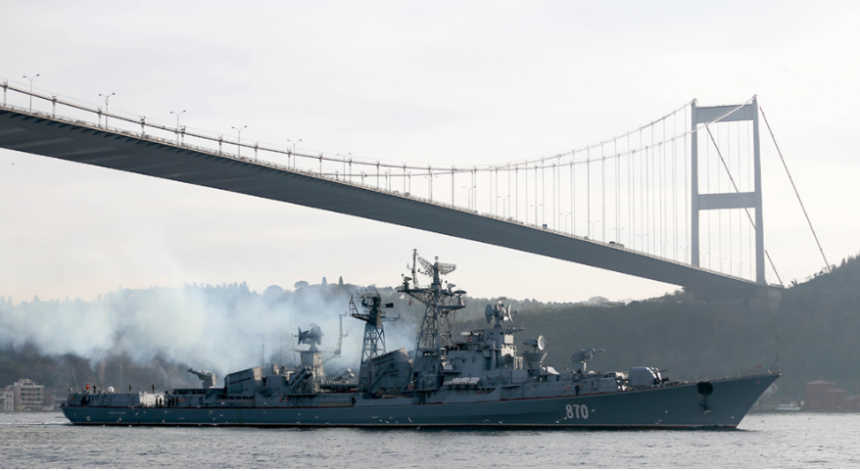
The argument becomes more sensitive still when it shifts from Adana to the Bosphorus. A naval component command in Anadolukavağı cannot be politically neutral. The Straits are not an ordinary maritime corridor. They sit at the center of the Black Sea balance, the Montreux regime, and Turkey’s long-standing role as both custodian and balancer between major powers. Even if the government insists that a shore-based multinational command does not violate Montreux, that answer addresses only the narrow legal point. The political issue is broader. Any NATO-linked command presence at the entrance to the Black Sea will be read not simply as maritime coordination but as a signal about Turkey’s place in the emerging postwar order around Ukraine and in the wider confrontation between Russia and the West.
That is why the Beykoz initiative has triggered such a strong reaction across very different ideological camps. Nationalist critics, in particular Eurasianists, see it as a sovereignty issue. They also question whether Turkey is being inserted into a model designed for smaller, more vulnerable eastern-flank states, despite possessing one of NATO’s strongest land armies. Broader geopolitical critics go further and argue that Ankara, despite its rhetoric of independent foreign policy, repeatedly ends up serving the strategic priorities of the West and Israel in particular, in surrounding theatres.
There is also an external signaling dimension that Ankara appears reluctant to confront publicly. States do not interpret military infrastructure through official language alone. They interpret it through geography, capability, and potential use. A multinational corps in southern Turkey and a Ukraine-linked naval command near the Straits will inevitably be read by Russia, Iran, and others through the logic of access, escalation, and contingency planning. That sensitivity is heightened by the visible cooling in top-level Turkish-Russian contact: some Turkish media now report that Erdoğan and Putin have not spoken directly for roughly four months, although their last publicly reported in-person meeting was on December 12, 2025, and Turkey and Russia have continued contacts at the foreign-minister level, including a March 17 call between Hakan Fidan and Sergey Lavrov. In other words, even without an open rupture, Moscow is likely to interpret these new NATO-linked structures less as neutral technical arrangements than as signs that Turkey is drifting away from its old balancing posture and toward a more operational place inside Western planning. Once command nodes begin to take shape in Adana and at the Black Sea gateway, outside powers start factoring Turkey into future crisis scenarios not just as a mediator or swing state, but as a potential platform, corridor, and frontline theater in a larger confrontation
This is where the debate becomes larger than NATO procedure. The real issue is not only whether the alliance needs another command node in Turkey. It is whether Turkey is being prepared to serve as the connective geography of multiple conflict theaters at once. Adana points toward the southern arc: Israel – Iran related escalation, the Eastern Mediterranean, and regional force projection. The Bosphorus points toward the northern arc: the Black Sea, Ukraine, maritime security, and Russia-West confrontation. Seen together, these initiatives suggest that Turkey is no longer being treated merely as a member of the alliance, but increasingly as one of the main corridors through which a future regional and/or global crisis would be organized and managed.
None of this proves that a regional or global war is imminent. Nor does it mean that every official involved is consciously preparing Turkey for a future global conflict. But major wars are often preceded by the quiet construction of enabling geography: command structures, logistics networks, alliance routines, crisis procedures, political alignments, and internal bargains. On that level, the significance of Adana and the Straits is difficult to exaggerate. One anchors the south. The other anchors the Black Sea gateway. Together they form the outline of a country being positioned not at the margins of regional confrontation, but increasingly at its center.
This is the paradox Ankara has not yet explained convincingly. The government likely believes these steps will make Turkey more influential, more indispensable, and better protected. In some respects, that may be true. But strategic importance comes at a price. A state can gain weight inside an alliance while losing flexibility in a crisis. It can increase deterrent value while also increasing the likelihood that surrounding powers will see it as part of the forward architecture of an opposing bloc. It can become central without remaining autonomous. The more Turkey is described as indispensable to the management of Black Sea and southern crises, the more it risks becoming exposed to the very escalation those crises may produce.
The question now is no longer simply whether NATO needs a corps in Adana or a command near the Bosphorus. The question is whether Turkey is being repositioned as the hinge of a new war geography stretching from the Black Sea to the Middle East. A country long described as a bridge between regions may now be becoming the terrain through which those regions are strategically fused.
By: GEOPOLIST – Istanbul Center for Geopolitics