The Islamic Republic of Iran has made a choice that may preserve immediate command and control while weakening its long-term chances of survival. Mojtaba Khamenei’s rise appears to have been engineered with decisive support from the Revolutionary Guards, which brushed aside clerical and political objections in the name of wartime urgency, continuity, and loyalty. That may steady the system at the top and avert a visible power struggle in the middle of war. But it also signals something more troubling: a succession managed less by broad legitimacy than by the coercive core of the state. Such a choice may keep the regime intact in the short term, yet leave it more rigid, more militarized, and less capable of adapting to the deeper political and social pressures that threaten its future.
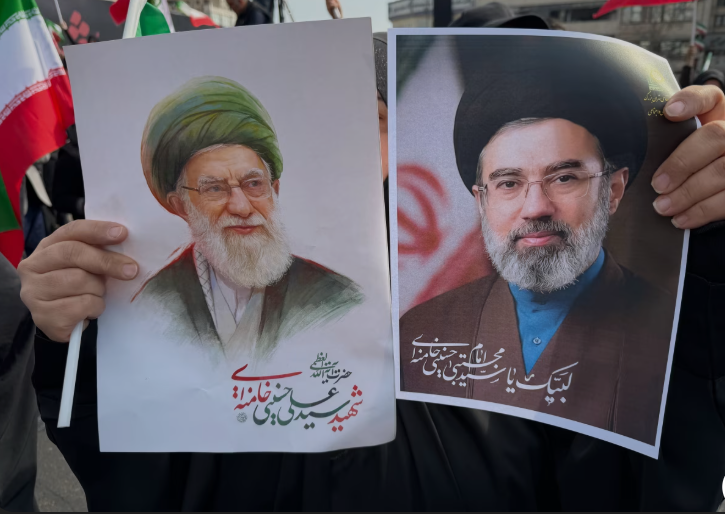
The first problem is dynastic symbolism, and in the Islamic Republic that is not a cosmetic issue but a deeply subversive one. The regime was founded in explicit opposition to hereditary monarchy. However centralized and coercive it later became, it still claimed that supreme authority flowed from revolutionary legitimacy, clerical merit, and constitutional procedure, not from family lineage. Mojtaba Khamenei’s elevation weakens that claim at its core. According to some reports, clerical and political unease centered on the hereditary appearance of Mojtaba Khamenei’s selection, the opacity of the process, and the fear that it would make the Islamic Republic look less like a revolutionary republic than a repackaged dynasty. That anxiety is especially damaging because it cuts against the regime’s founding self-image. Ayatollah Khomeini explicitly denounced monarchy and hereditary succession as illegitimate in Islam, making anti-dynasticism part of the ideological foundation of the Islamic Republic. Recent reporting has also suggested that Ali Khamenei himself did not want his son to succeed him, precisely because such an outcome would reinforce the image of hereditary rule. If so, Mojtaba’s elevation does not merely raise procedural concerns; it strikes at the symbolic core of a system that defined itself by overthrowing monarchy, only to risk reproducing it in clerical form.
The second problem is religious legitimacy, and this may be even more serious than the dynastic issue. The office of supreme leader is supposed to be more than political. It is supposed to carry juristic and theological weight. Mojtaba holds the title of Hojjatoleslam, which is one rank below Ayatollah. His relatively low clerical rank has long been a major objection to his candidacy. In a system that purports to be based on clerical authority, promoting a figure whose religious standing is openly disputed undermines the credibility of the office itself. This situation makes the office appear weaker, more improvised, and more reliant on political power than on recognized scholarly merit.
That weakness is amplified by history. Iran’s original constitutional framework required the supreme leader to be a marjaʿ-e taqlid, but that requirement was removed in 1989 so Ali Khamenei could assume the post despite his own relatively low clerical standing. In other words, the regime had already lowered the religious threshold once for political expediency. Mojtaba’s rise reopens that wound in an even more damaging way. The problem is no longer merely that the office was adjusted to fit politics. It is that it now appears to be adjusted to fit both politics and bloodline. That makes the Islamic Republic look less like a confident order of juristic rule and more like a besieged system improvising succession under pressure.
A further issue is that Mojtaba Khamenei’s elevation appears to have reflected the growing weight of the Revolutionary Guards within Iran’s power structure. The succession moved ahead under wartime pressure despite objections from some clerical and political quarters, while the Assembly of Experts nonetheless maintained the formal requirement of an in-person session. According to public statements by Assembly member Mohsen Heidari, more than two-thirds of the body’s 88 members attended and Mojtaba won nearly 85% of the votes cast. That points to a solid majority among those present, though the authorities have not publicly released a full vote tally or a verified figure for how many absent members could not be reached. In that sense, the process combined constitutional form with a visible consolidation of security influence, reinforcing the impression that clerical institutions continue to ratify decisions shaped increasingly by the coercive core of the state.
The fourth problem is capability. Mojtaba Khamenei has never held a formal senior government office and, despite years of influence inside his father’s office, remained largely unfamiliar to many ordinary Iranians before his elevation. That is not the same as statecraft. He did, however, acquire early revolutionary credentials by joining the Iran-Iraq War effort while still very young, an experience that appears to have helped him cultivate long-standing ties with the Revolutionary Guards and the wider security establishment. Over time, those early connections seem to have deepened through his role inside the Office of the Supreme Leader. But proximity to coercive institutions is not the same as governing experience. Running access, managing networks, and navigating elite intrigue are fundamentally different from leading a country through war, sanctions, economic crisis, factional tension, and social exhaustion. His father’s path was markedly different. Before becoming supreme leader in 1989, Ali Khamenei had already served in visible state roles, including on the Revolutionary Council and as president for two terms, giving him a far broader record in public office and institutional bargaining. That distinction also matters for Iran’s current civilian leadership. Masoud Pezeshkian publicly presented Ali Khamenei as the regime’s “guiding light” and later described him as the “pillar” of national unity, suggesting a level of deference rooted not only in office but in Ali Khamenei’s long revolutionary and institutional stature. Whether that same authority can be transferred automatically to Mojtaba is far less certain. Pezeshkian has formally pledged unity under the new leader, but Mojtaba lacks his father’s public experience, historical weight, and accumulated legitimacy. In a moment of existential strain, the regime did not choose a nationally seasoned political figure; it chose an insider whose chief strength appears to lie in his long-standing proximity to the security apparatus and the ruling family.
There is also a more personal and more dangerous dimension. The strikes on the first day of the war killed Mojtaba’s father, mother, sister, and wife, while he himself was lightly injured. This may strengthen his standing among hardliners by creating a narrative of martyrdom. But for the regime’s survival, it creates another risk: that his decisions become more subjective than strategic. That is an inference, not a medical or psychological diagnosis. Still, it is a reasonable political concern. A leader who comes to power through severe personal trauma, backed by the most hardline security actors, may be more vulnerable to anger, vengeance, and symbolic escalation than to cold strategic calculation. At a moment when the regime needs prudence, flexibility, and disciplined judgment, that is a dangerous combination.
The sixth problem is public legitimacy in a society already under acute economic pressure.Iran entered 2026 facing severe distress, with official inflation at around 42 percent in December 2025 and basic groceries increasing by roughly 72 percent year over year. This economic hardship triggered mass demonstrations and heightened social anger.. In that context, survival requires either reform, broader legitimacy, or at least a leader who can persuade the public that something meaningful is changing. Mojtaba signals the opposite. He represents continuity of the same closed order, under tighter security management, at a time when many Iranians are exhausted by war, repression, corruption, and shrinking purchasing power.
That is where the overseas property issue becomes politically devastating. A Bloomberg investigation reported that Mojtaba was linked through intermediaries and shell structures to a substantial overseas real-estate network, including more than $138 million in London property, a villa in Dubai, and upscale hotels in Frankfurt and Mallorca. The report said no assets appeared directly in his own name, and the intermediary central to many of the transactions, banker Ali Ansari, denied any connection to Mojtaba and said he would challenge sanctions. In a country battered by inflation and hardship, reports of luxury assets abroad make the new leader look less like the guardian of resistance than a symbol of elite privilege.
That perception is worsened by the fact that the UK sanctioned Ali Ansari in October 2025 for financially supporting the IRGC, imposing an asset freeze, a travel ban, and director disqualification. The British government’s move did not prove Mojtaba’s ownership of those properties, but it did give official weight to concerns about the financial networks surrounding the Iranian security establishment. For many Iranians struggling to buy food, pay rent, or survive inflation, the optics are disastrous: a leadership class preaching sacrifice at home while allegedly parking wealth in London, Dubai, and Europe.
Against this backdrop, Mojtaba Khamenei was a bad choice for the regime’s survival. He combines the system’s most dangerous vulnerabilities in one figure: hereditary symbolism in an anti-monarchical republic, disputed clerical standing in a system that claims religious legitimacy, heavy dependence on the Revolutionary Guards in a state already sliding toward militarization, the possibility of trauma-shaped decision-making at a moment requiring strategic restraint, and the stigma of reported overseas luxury wealth in a society sinking under inflation and hardship. He may preserve order at the apex for now. But by making the Islamic Republic look more dynastic, less juristically credible, more security-driven, more emotionally volatile, and more hypocritical, he may shorten the life of the very regime he was chosen to save.
By: GEOPOLIST – Istanbul Center for Geopolitics