Drone swarms over Kyiv, diplomatic breakthroughs in Yemen, and a surprise recognition in the Horn of Africa marked a volatile final week of 2025. With military flashpoints hardening and new alliances forming, the global map showed clear signs of both confrontation and recalibration.
Ukraine–Russia War
Late December saw intense Russian strikes on Ukraine and high-level diplomacy. On Dec 26–27, Russia launched large-scale missile and drone barrages on Kyiv and other regions, reportedly deploying ~500 Shahed drones and 40 cruise/balistic missiles. The attacks killed at least 2–3 people and wounded dozens, and cut power and heating to large parts of Kyiv. President Zelensky condemned the strikes as a response to US-brokered peace talks. Russia claimed to target energy and military infrastructure, though Western analysts note much of the damage hit civilian areas. Prior raids on Dec 23 had also killed several and caused blackouts across 13 regions. Notably, Ukraine reported pulling its troops out of the embattled town of Siversk in Donetsk on Dec 23, conceding the city to Russian forces to save lives after heavy fighting. Russia has boasted of advances (naming Siversk, Vovchansk, parts of Lyman, etc.), but most such claims are unverified or marginal (with Siversk the one confirmed gain).
Diplomatically, Ukraine pressed for a negotiated end. Zelensky revealed a US-mediated 20-point peace framework on Dec 24 (covering security guarantees and ceasefires) and flew to Florida on Dec 28 to meet US President Trump. Both leaders spoke optimistically of a nearing deal (Trump calling talks in “final stages”). Zelensky indicated Ukraine might forgo its NATO membership bid if given NATO-like security assurances. Western allies (Canada, EU, etc.) publicly reiterated support and aid for Ukraine’s defense. In contrast, Moscow signaled hardline intentions. Deputy Foreign Minister Ryabkov said Russia will not sign any deal “right now” without major changes, effectively delaying an accord. President Putin meanwhile touted his military “gains” and warned Ukraine that refusal to concede territory would only ensure Russia achieves its objectives by force. Russia also continued military exercises (including large naval drills and missile tests in the Gulf) to demonstrate readiness.
Horn of Africa (Somaliland–Somalia)
On Dec 26, Israel became the first country to formally recognize the self-declared Republic of Somaliland. Somalia’s government immediately denounced the move as a “blunt aggression” against its sovereignty and warned it threatens regional stability. The Somali president called the recognition “tantamount to a deliberate attack” on Somalia’s unity. The African Union likewise “firmly rejected” any acknowledgment of Somaliland’s independence, cautioning that the breakaway status is a dangerous precedent. Key regional powers joined in condemnation: Turkey branded Israel’s act “overt interference”, Egypt coordinated talks with Turkish, Somalian and Djiboutian leaders and expressed “full support” for Somalia’s territorial integrity. The Gulf states’ Saudi-based OIC also denounced the recognition. The EU reiterated it still recognizes Somalia’s internationally‑recognized borders. In contrast, Taiwan’s foreign ministry welcomed Israel’s decision, hailing shared democratic values among “like-minded partners” (Israel, Somaliland, Taiwan).
Somaliland’s leaders celebrated the breakthrough. President Muse Bihi Abdi called recognition “historic” and said it would enable “strategic partnership” and integration into the Abraham Accords framewor. He thanked Jerusalem and invited further economic cooperation. Domestic crowds in Hargeisa waved flags in joy after the announcement.
The fallout was immediate: Somalia’s government requested an emergency UN Security Council session (scheduled Dec 28) on Israel’s move. International media outlets and Western capitals urged diplomacy, but no country (besides Israel) swiftly followed suit. For now, the situation intensifies diplomatic rifts: Somalia and its allies will likely deepen security ties with Turkey, Qatar or African partners, while Israel and Somaliland explore closer military and economic links. The dispute also risks destabilizing the fragile Horn region, as Mogadishu may open new fronts of diplomatic pressure (legal or UN action) and raise military alertness along its borders.
Yemen
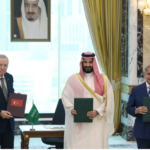
The war in Yemen remains frozen in large part, but tensions flared anew between Riyadh and Abu Dhabi over the Southern Transitional Council (STC). On Dec 23, Yemen’s internationally recognized government and Iran-aligned Houthi rebels signed a landmark prisoner exchange in Muscat, Oman. The UN mediator announced a deal to swap 1,700 Houthi-held detainees for 1,200 government prisoners (including several Saudi military personnel). UN envoy Hans Grundberg hailed it as a “positive step” to ease civilian suffering, and ICRC teams will oversee the releases. Saudi Arabia (under whose oversight the talks occurred) praised both delegations for addressing this humanitarian issue. This deal complements the fragile ceasefire (Aug 2022) and has broad support from international donors as a confidence-building move.
Yet conflict dynamics are shifting in the south. In mid-December, forces of the UAE-backed Southern Transitional Council seized wide areas of Hadramawt and al-Mahra provinces from the Saudi-backed government. Saudi media on Dec 26–27 publicly demanded the STC withdraw “peacefully” from the seized territory and warned any military moves would be “dealt with directly”. The day before, the STC had accused Saudi jets of bombing its positions in Hadramout, reporting strikes on Friday without claiming casualties. Saudi authorities have neither confirmed nor denied involvement, but an STC statement called the raids “surprising aerial bombardment” and insisted its forces were securing the south from threats.
These events have strained the once-united Saudi-UAE coalition: Riyadh’s leader declared readiness to back Yemen’s government against secessionist actions, while Abu Dhabi urged de-escalation. After some initial silence, the UAE foreign ministry on Dec 27 publicly welcomed Saudi efforts “to support security and stability in Yemen”. Despite both Gulf powers publicly trying to show unity, differences are evident – the STC is a traditional UAE proxy, and Emiratis worry about reprisals and disruption to anti-Houthi strategy. The US has urged restraint and diplomacy, and Oman (a mediator with border ties) likewise appealed to avoid escalation. UN Secretary-General Guterres warned the STC advance risked broader war (“serious ramifications on regional peace”).
Africa (Nigeria, Sudan spillover)
A US military action drew attention in West Africa: On Dec 25, Nigeria reported US-launched strikes on ISIS-affiliated camps in northwest Sokoto State. Washington confirmed that at Nigeria’s request, US drones fired 16 precision munitions from the Gulf of Guinea at two ISIS training sites in the Bauni forest. The Nigerian government said this “neutralized” foreign fighters who had been planning large-scale attacks on Nigerian targets. No civilian casualties were reported (debris fell on nearby villages, but no injuries). President Trump touted the strikes on social media as “perfect strikes” against “ISIS terrorist scum” targeting Christians. Officials called this a rare US–Nigeria counterterrorism collaboration, underscoring rising concern as militants move south from the Sahel. Lagos authorities urged calm, reiterating commitment to protect citizens and pursue jihadist cells.
Across the Sahel, the Sudan civil war continues to destabilize neighbours. UNHCR head Filippo Grandi warned in early Dec that Rapid Support Forces (RSF) advances (e.g. capture of Darfur’s al-Fashir) risked triggering fresh refugee flows into Chad, South Sudan and beyond. To date, nearly 12 million Sudanese have been displaced, of whom about 4.3 million have become refugees in neighbouring countries. Chad alone hosts over 880,000 Sudanese refugees (out of 1.3 million displaced in Chad and CAR). The swift RSF push eastward revived fears of a new exodus if major cities fall. Aid agencies say they are “barely responding” due to funding shortfalls. UN reports note that Chad’s camps, already strained by conflict and drought, have admitted tens of thousands more in 2025, with 41,000 new arrivals this year.
Meanwhile, regional leaders are on alert for cross-border tensions. In Khartoum in March, a Sudanese general threatened Chad and South Sudan (calling their airports “legitimate targets”), prompting both capitals to formally condemn the remarks as “declarations of war”. In Dec 2025, while no new attacks across the frontier were reported, governments in N’Djamena and Juba continue to bolster defenses at the border. South Sudan’s President and Chad’s government have repeatedly pledged to defend their sovereignty and reject any Sudanese incursions. The top concern is that prolonged Sudanese conflict could spill fighters or insurgent arms into neighbouring states, destabilizing the Sahel and Central Africa. For now, the main impact is humanitarian: Chad and South Sudan join Ethiopia and CAR among countries straining to host millions of Sudanese refugees and maintain local security.
Gaza Aid and Iran’s Missile Drills
Gaza humanitarian access: Aid agencies warned that relief efforts in Gaza face critical constraints. On Dec 17 the UN and over 200 NGOs issued a joint appeal noting that dozens of international organizations are at risk of deregistration by Dec 31 under new Israeli rules. They said this would force closures of field hospitals, clinics, water/sanitation projects, food distribution and other services. Many shipments of food, medicine, and other essentials have been held up by Israel’s “vague, arbitrary” registration system, leaving millions of dollars’ worth of aid outside Gaza. Aid agencies and Palestinians say far fewer aid trucks are entering Gaza than agreed in the ceasefire, with some supplies being blocked, though Israel denies this and says it is complying with the peace accord. The aid groups stressed that “humanitarian access is not optional” and accused Israel of politicizing relief. Overall, while a partial truce since Oct 2025 has reopened some borders, international relief officials say the bottlenecks jeopardize Gaza’s fragile ceasefire and risk a humanitarian collapse.
Iran’s message: In parallel, Tehran flexed its missile capability. On Dec 5–6 Iran’s Revolutionary Guards Navy conducted large drills in the Gulf of Oman. IRGC Navy units fired hundreds of ballistic and cruise missiles (including models dubbed Qadr-110/360/380) at naval targets, and launched drones against simulated bases. State outlets framed the exercise as a warning that any “miscalculation” by adversaries would get a “decisive response”. These launches followed an earlier SCO anti-terror drill in northwest Iran with regional partners, likewise described as “signaling peace and friendship” but cautioning enemies. Separately, Iran’s navy chief announced on Dec 6 that a new missile tested in these drills has a range “beyond” the Persian Gulf (over 1,375 km). Iranian officials boast their missiles (de jure up to ~2,000 km range) can strike any foe across the Middle East. Western allies have repeatedly urged Tehran to cap missile range at 500 km, but Iran rejects this. These exercises and statements are meant to underscore Iran’s deterrence posture amid ongoing tensions with Israel, Gulf states and the US – especially as Tehran’s proxies (e.g. in Yemen and Iraq) remain on high alert.
Syria
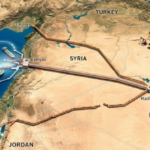
A year after Assad’s ouster, Syria is grappling with the legacy of war and transitional justice. Interim President Ahmed al-Sharaa in January 2025 vowed to uphold unity and hold “remnants of the former regime” accountable for civilian bloodshed. He established independent committees to probe the March 2025 coastal bloodshed (Tartus/Latakia), after nearly a thousand were killed in clashes involving pro-Assad gunmen and government forces. The UN Commission of Inquiry (Pinheiro) reported in August that the coastal violence involved widespread, systematic atrocities: sectarian killings of Alawite civilians, torture, and unmarked mass burials. The Commission noted that bodies were often dumped in the streets or buried in undocumented graves, hindering families’ ability to conduct proper rites. It urged Syria’s interim authorities to remove suspected perpetrators from security forces and pursue justice for war crimes on all sides. To that end, Al-Sharaa’s government claims dozens of suspects have been detained for investigation.
More recently, unrest has flared in minority regions. On Dec 24, state media reported clashes in Latakia countryside between security forces and armed “fugitives” linked to Assad’s regime. Three gunmen were killed and several policemen wounded. Then on Dec 28, thousands of Alawites held protests in Latakia and other coastal towns, demanding “political federalism” after a jihadist bombing of a Homs mosque. Security forces moved to disperse demonstrators, killing two protesters according to monitors. The interim government accused “remnants” of the old regime of instigating attacks on security personnel during the rallies. These incidents show that Latakia’s postwar protests are still tinged with violence and that Assad loyalists may be exploiting social unrest. The authorities say their goal is to reestablish order and prevent any return to civil war, reflecting a tense mix of political demand (federalism) and security operations.
In tandem, international justice efforts continue. Aside from the UN Commission report, foreign courts and rights groups are gathering evidence. The US imposed sanctions in Nov 2025 on three Syrians (including an ex-ISIS jihadist turned Baathist gunman) for war crimes, and the EU has extended travel bans on regime figures. NGOs such as the International Commission on Missing Persons (ICMP) report that mass grave exhumations are underway in Latakia and elsewhere, and families of the disappeared are pushing for access to death records. Overall, Syria’s new government publicly commits to “restor(ing) security nationwide and punish(ing) remnants of the regime”, but the true pace of transitional justice will depend on stability. The Dec 2025 Latakia shootings illustrate how fragile security remains: authorities must balance local demands (some for autonomy) against the need to firmly exclude armed holdouts from Assad’s era.
Eastern Mediterranean (Israel–Greece–Cyprus)
On Dec 22 the leaders of Israel (Netanyahu), Greece (Mitsotakis), and Cyprus (Christodoulides) held their 10th trilateral summit in Jerusalem. In a joint declaration, they underscored commitment to strengthen regional stability from the Middle East through the Eastern Med. The three governments agreed to hold annual leaders’ summits and intensify ministerial and working-level meetings in a “3+1” format (including the US). Notably, the declaration pledged to “reinforce our ongoing trilateral cooperation on security, defense and military matters”. They also highlighted joint counterterrorism efforts and maritime security (e.g. the opening next year of a new Maritime Cybersecurity Center of Excellence in Cyprus). The summit reaffirmed Israel’s right to defend itself in Gaza and welcomed Greek/Cypriot aid to Gaza via the Amalthea sea corridor, while calling for Hamas’s disarmament under the US-backed Gaza plan. (On energy and economy, the leaders renewed support for Eastern Mediterranean gas projects and connectivity, including electricity and IMEC trade corridor initiatives, reflecting broader strategic ties.)
A key follow-up came on Dec 28: Israeli, Greek and Cypriot military officials in Nicosia signed the 2026 Tripartite Military Cooperation Work Plan. The plan, part of the annual defense chiefs’ talks, formalizes expanded joint activities. It calls for coordinated exercises (air, sea, and land drills), training programs, working groups on logistics/medical/cyber issues, and a strategic defense dialogue. According to the IDF, this new agreement “constitutes an additional layer in deepening military cooperation” and will “strengthen stability, security and peace in the Eastern Mediterranean”. In practice, Israel will rehearse multi-domain ops with Cypriot and Greek forces (building on recent trilateral naval drills), while sharing intelligence and defense planning. These steps cement a growing alliance that aims to balance regional threats (from Iran, Turkey’s assertiveness, etc.) and manage common challenges like maritime security.