By using this site, you agree to the Privacy Policy and Terms of Use.
Accept
Geopolist | Istanbul Center for GeopoliticsGeopolist | Istanbul Center for GeopoliticsGeopolist | Istanbul Center for Geopolitics
  • Home
  • Geopolitics
    Geopolitics
    Discover professional insights into international relations, regional conflicts, and global power dynamics by visiting Geopolist. Keep up on the ways in which these changes impact…
    Show More
    Top News
    Operation Spiderweb: The Death of Strategic Depth in the Drone Age
    August 6, 2025
    The End of Vertical War: Operation Spiderweb and the Rise of Horizontal War-Making
    August 6, 2025
    Training, Reskilling, Upskilling: How to Create Jobs through the Green Transition
    April 13, 2025
    Latest News
    The Gülen Diaspora and the Return of a Calvinist Moment in Islam
    February 3, 2026
    Broad Buy-In, Rival Readings, Future Risks: SDF and Damascus Clash Over Integration Terms
    January 31, 2026
    İbrahim Kalın: Erdoğan’s Most Geopolitically Credible Successor
    January 30, 2026
    Jeffrey’s Autonomy Model for Syria Matches NAT’s Earlier Proposal
    January 26, 2026
  • Security
    SecurityShow More
    Erdoğan’s Self-Inflicted Airpower Wounds: How Turkey Lost the Skies
    December 26, 2025
    Ahmed al-Ahmed: The Hero Islamophobes and Anti-Immigrant Voices Did Not Expect
    December 15, 2025
    Five Turkish defense firms enter SIPRI Top 100 with record $10.1 billion in 2024 sales
    December 1, 2025
    Turkey’s Kızılelma drone fires radar-guided missile in beyond-visual-range test
    December 1, 2025
    More Than Mischief: How a Weakened Moscow Seeks to Dismantle NATO from Within
    September 21, 2025
  • Commentary
    CommentaryShow More
    The Gülen Diaspora and the Return of a Calvinist Moment in Islam
    February 3, 2026
    Broad Buy-In, Rival Readings, Future Risks: SDF and Damascus Clash Over Integration Terms
    January 31, 2026
    İbrahim Kalın: Erdoğan’s Most Geopolitically Credible Successor
    January 30, 2026
    Jeffrey’s Autonomy Model for Syria Matches NAT’s Earlier Proposal
    January 26, 2026
    Strategic and Ideological Missteps of Syria’s SDF
    January 24, 2026
  • Economy
    • Energy
  • Regions
    • Europe
    • Middle East & Africa
    • Eurasia
  • Risk Advisory
  • Jobs
    • Job Dashboard
    • Jobs
    • Post a Job
  • Register
  • My Bookmarks
Reading: Taiwan Strait Conflict: Trump’s Transactional Policy and the Rising Threat of Militarization
Share
Notification Show More
Font ResizerAa
Geopolist | Istanbul Center for GeopoliticsGeopolist | Istanbul Center for Geopolitics
Font ResizerAa
  • Home
  • Geopolitics
  • Security
  • Commentary
  • Economy
  • Regions
  • Risk Advisory
  • Jobs
  • Register
  • My Bookmarks
  • Home
  • Geopolitics
  • Security
  • Commentary
  • Economy
    • Energy
  • Regions
    • Europe
    • Middle East & Africa
    • Eurasia
  • Risk Advisory
  • Jobs
    • Job Dashboard
    • Jobs
    • Post a Job
  • Register
  • My Bookmarks
Have an existing account? Sign In
Follow US
  • Advertise
© 2022 Foxiz News Network. Ruby Design Company. All Rights Reserved.
Geopolist | Istanbul Center for Geopolitics > Blog > Regions > Southeast Asia > Taiwan Strait Conflict: Trump’s Transactional Policy and the Rising Threat of Militarization
CommentaryGeopoliticsSoutheast Asia

Taiwan Strait Conflict: Trump’s Transactional Policy and the Rising Threat of Militarization

Last updated: November 19, 2024 6:39 pm
By GEOPOLIST | Istanbul Center for Geopolitics Published November 19, 2024 848 Views 3 Min Read
Share
SHARE

Summary by Geopolist | Istanbul Center for Geopolitics:

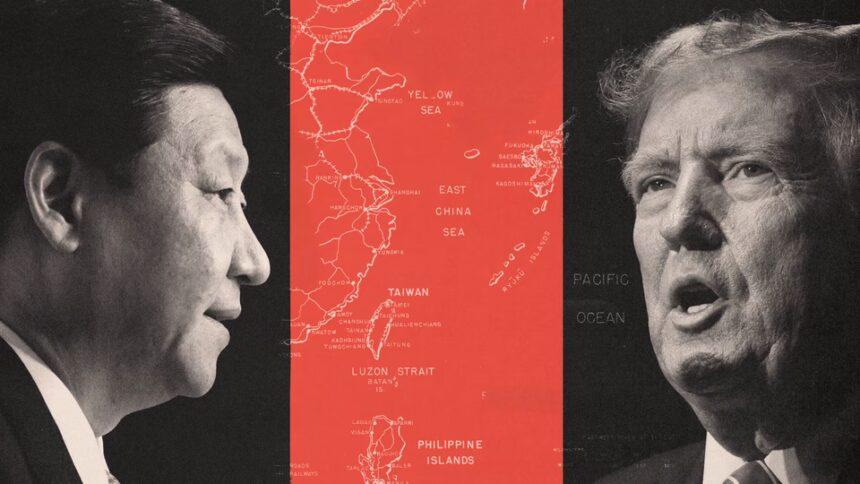
The article explores how Donald Trump’s potential second term could lead to increased tensions in the Taiwan Strait and reshape U.S.-China dynamics. Unlike the values-driven approach of the Biden administration, Trump’s stance on Taiwan would be more transactional, emphasizing strategic and economic benefits. This shift could lead to a rise in militarization, with advisers pushing for a hardline policy toward China. Beijing would likely respond by accelerating its military preparations, heightening the risk of a major confrontation. The article warns that such developments could destabilize the region and jeopardize Taiwan’s security.

Trump’s advisers, including prominent China hawks, would likely advocate for increased U.S. military presence and alliances in the Indo-Pacific, such as further bolstering the Quad and AUKUS, to counter Chinese influence. This faction’s influence may lead to initiatives like arming Taiwan more aggressively and even pushing for a proxy conflict in the Taiwan Strait to weaken China. By focusing on strategic dominance over China, this approach risks provoking an escalation that Beijing cannot ignore.

Beijing, deeply suspicious of U.S. intentions, has already been preparing for a possible confrontation. China’s leadership views the decoupling efforts from both the U.S. and Taiwan as signs that a conflict could become inevitable. Trump’s policies, coupled with the rhetoric of his advisers, could further provoke China into accelerating its military buildup and its efforts to counter perceived encirclement by the U.S. and its allies. The article suggests that Beijing’s leaders believe that time is on their side, but an overt challenge to the status quo—such as the formal recognition of Taiwan as a sovereign state by a MAGA-led U.S.—could force a military response from China.

The biggest risk of Trump’s return, according to the analysis, is the possibility of triggering a proxy war between Taiwan and China. Trump’s team might see such a conflict as a strategic opportunity to contain China’s rise, regardless of the devastating consequences for Taiwan itself. The scenario of a militarized Taiwan Strait would be particularly precarious given the stakes involved for both the United States and China, and could lead to broader regional instability.

Overall, it highlights that Trump’s re-emergence as president might undermine years of strategic ambiguity and diplomacy that have so far kept tensions from escalating into outright conflict. With both Beijing and Washington taking increasingly hardline stances, Taiwan may find itself caught in the middle of an intensifying great-power rivalry, with its future uncertain.

Read more here.
You Might Also Like

The Gülen Diaspora and the Return of a Calvinist Moment in Islam

Broad Buy-In, Rival Readings, Future Risks: SDF and Damascus Clash Over Integration Terms

İbrahim Kalın: Erdoğan’s Most Geopolitically Credible Successor

Jeffrey’s Autonomy Model for Syria Matches NAT’s Earlier Proposal

Strategic and Ideological Missteps of Syria’s SDF

Share This Article
Facebook Twitter Email Print
Previous Article Russia’s Evolving Nuclear Doctrine: Lowered Thresholds and Strategic Ambiguity
Next Article U.S.-China Trade Tensions: Risks of Losing MFN Status for China
Leave a comment

Leave a Reply Cancel reply

Your email address will not be published. Required fields are marked *

Stay Connected

TwitterFollow
YoutubeSubscribe

Latest News

The Day After the SDF: Turkey’s Salafism Gamble—and Bilal Erdoğan’s Succession Pipeline
Commentary Geopolitics Middle East & Africa
Salafi Consolidation: Is Iraq—and the KRG—Next After Syria and Yemen?
Commentary Geopolitics Middle East & Africa
Great-Power Condominium or Great-Power Mirage?
Commentary Geopolitics
This Week’s Global Fault Lines: Venezuela, Greenland, and the New Coercion (Jan 01–07, 2026)
Geopolitics

Find Us on Socials

© GeoPolist. All Rights Reserved.
  • Submit an Op-Ed + Risk Advisory
  • Jobs
  • Post Jobs & Ads for Free
Welcome Back!

Sign in to your account

Register Lost your password?