By using this site, you agree to the Privacy Policy and Terms of Use.
Accept
Geopolist | Istanbul Center for GeopoliticsGeopolist | Istanbul Center for GeopoliticsGeopolist | Istanbul Center for Geopolitics
  • Home
  • Geopolitics
    Geopolitics
    Discover professional insights into international relations, regional conflicts, and global power dynamics by visiting Geopolist. Keep up on the ways in which these changes impact…
    Show More
    Top News
    Operation Spiderweb: The Death of Strategic Depth in the Drone Age
    August 6, 2025
    The End of Vertical War: Operation Spiderweb and the Rise of Horizontal War-Making
    August 6, 2025
    Minister for Development Cooperation and Metropolitan Policy Caroline Gennez (L) visits a solar power project during a visit to the packaging unit
    How Is China’s Economic Transition Affecting Its Relations With Africa?
    April 13, 2025
    Latest News
    A New Order Without a Vision: The Arab World’s Missing Strategy
    February 19, 2026
    Good Cop, Bad Cop: How Trump’s Team Pressures NATO Allies
    February 19, 2026
    Vance in the Caucasus: The Maturation of America’s Eurasian Strategy
    February 14, 2026
    The Epstein Files and the Chomsky Reckoning on the Left
    February 6, 2026
  • Security
    SecurityShow More
    Erdoğan’s Self-Inflicted Airpower Wounds: How Turkey Lost the Skies
    December 26, 2025
    Ahmed al-Ahmed: The Hero Islamophobes and Anti-Immigrant Voices Did Not Expect
    December 15, 2025
    Five Turkish defense firms enter SIPRI Top 100 with record $10.1 billion in 2024 sales
    December 1, 2025
    Turkey’s Kızılelma drone fires radar-guided missile in beyond-visual-range test
    December 1, 2025
    More Than Mischief: How a Weakened Moscow Seeks to Dismantle NATO from Within
    September 21, 2025
  • Commentary
    CommentaryShow More
    A New Order Without a Vision: The Arab World’s Missing Strategy
    February 19, 2026
    Good Cop, Bad Cop: How Trump’s Team Pressures NATO Allies
    February 19, 2026
    Vance in the Caucasus: The Maturation of America’s Eurasian Strategy
    February 14, 2026
    The Epstein Files and the Chomsky Reckoning on the Left
    February 6, 2026
    The Gülen Diaspora and the Return of a Calvinist Moment in Islam
    February 3, 2026
  • Economy
    • Energy
  • Regions
    • Europe
    • Middle East & Africa
    • Eurasia
  • Risk Advisory
  • Jobs
    • Job Dashboard
    • Jobs
    • Post a Job
  • Register
  • My Bookmarks
Reading: Good Cop, Bad Cop: How Trump’s Team Pressures NATO Allies
Share
Notification Show More
Font ResizerAa
Geopolist | Istanbul Center for GeopoliticsGeopolist | Istanbul Center for Geopolitics
Font ResizerAa
  • Home
  • Geopolitics
  • Security
  • Commentary
  • Economy
  • Regions
  • Risk Advisory
  • Jobs
  • Register
  • My Bookmarks
  • Home
  • Geopolitics
  • Security
  • Commentary
  • Economy
    • Energy
  • Regions
    • Europe
    • Middle East & Africa
    • Eurasia
  • Risk Advisory
  • Jobs
    • Job Dashboard
    • Jobs
    • Post a Job
  • Register
  • My Bookmarks
Have an existing account? Sign In
Follow US
  • Advertise
© 2022 Foxiz News Network. Ruby Design Company. All Rights Reserved.
Geopolist | Istanbul Center for Geopolitics > Blog > Regions > Europe > Good Cop, Bad Cop: How Trump’s Team Pressures NATO Allies
CommentaryEuropeGeopolitics

Good Cop, Bad Cop: How Trump’s Team Pressures NATO Allies

Last updated: February 19, 2026 1:15 am
By GEOPOLIST | Istanbul Center for Geopolitics Published February 19, 2026 86 Views 5 Min Read
Share
SHARE

Summary by Geopolist | Istanbul Center for Geopolitics: 

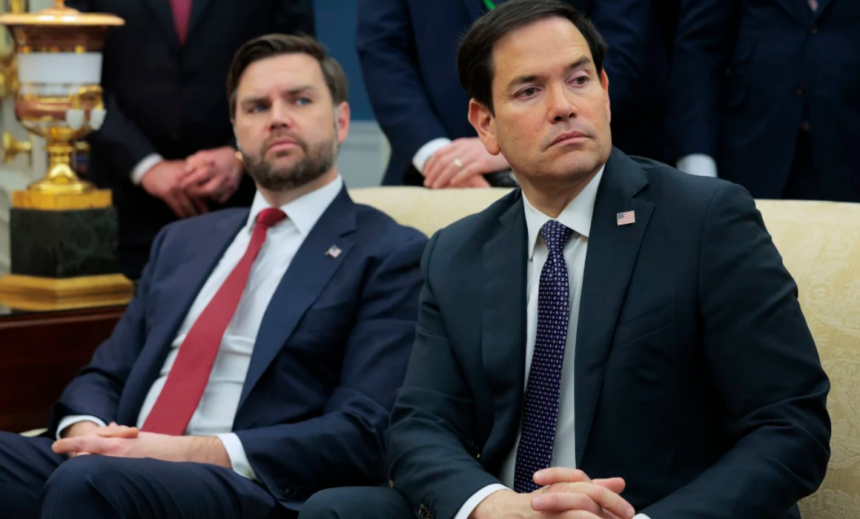
Stephen Walt frames the Trump administration’s handling of U.S. allies—especially NATO—through the familiar “good cop/bad cop” interrogation analogy. In his telling, Washington’s overall posture has become more predatory and coercive, using threats, economic pressure, and deliberate political provocation to extract concessions from partners that the United States has traditionally described as friends. The “bad cop” side of the act, as he describes it, is performed by figures who deliver the harshest messages and create maximum anxiety: sharp public rebukes, tariff threats and trade escalation, insinuations that alliance commitments are conditional, and rhetoric that treats long-standing allies with visible contempt. This approach, he argues, is designed to keep European governments unsettled and reactive—never fully sure what the United States will do next, and therefore more likely to pay a price to reduce uncertainty.

Against that backdrop, Walt says a second group plays the “good cop” role. These officials offer a more polished and conciliatory tone, emphasize civilizational or strategic partnership, and present themselves as responsible stewards who want to stabilize the relationship. But the point, Walt argues, is not to reverse the underlying pressure campaign. Rather, the “good cops” help convert fear and confusion into compliance by encouraging Europeans to believe that accommodation and flattery can restore normal ties, or at least buy time until political conditions change in Washington. Even when they avoid openly contradicting the “bad cops,” they still signal that the path back to calmer relations runs through Europeans doing more of what the U.S. demands—more spending, more alignment, fewer red lines, and fewer attempts to resist.

Walt is careful to say he cannot prove this is a centrally coordinated strategy, but he thinks it looks that way in practice and aligns with Donald Trump’s long-standing belief that unpredictability is a bargaining weapon. The pattern also serves a larger objective he attributes to Trump: preferring to negotiate with European countries individually, where U.S. power is maximized and coalition discipline is weakest. From this perspective, a cohesive European Union is an obstacle, while political currents that fragment Europe or weaken EU institutions make it easier for Washington to play capitals against one another. Walt argues that this logic helps explain why the administration is comfortable intervening rhetorically in European politics in ways that empower forces hostile to the EU; it is not only ideological affinity, in his view, but also the practical advantage of dealing with a more divided continent.

The warning running through his piece is that this may feel like leverage in the short term, but it could damage U.S. interests in the long term. A weaker, more internally divided Europe is not automatically a win for Washington in a world of major-power competition; it can become a less reliable strategic partner, less willing to coordinate on intelligence or technology controls, and more motivated to diversify economic ties and security relationships away from the United States. He also suggests that sustained pressure from both the United States and Russia could, paradoxically, push Europe to overcome collective-action problems and move further toward genuine strategic autonomy—maybe even, in an extreme scenario, deeper political unity. In other words, the same bullying intended to keep Europe dependent could end up accelerating the very independence it seeks to prevent.

Walt concludes that Europeans should not be mystified by the mixed signals because mixed signals are the point. “Good cop” reassurances should not be taken at face value as evidence that the underlying direction has changed; the real test is behavior—trade policy choices, alliance commitments, and whether Washington treats agreements as durable or as opening bids to be revised whenever it wants more. If Europe wants to stop the downward slide in transatlantic relations, he argues, it cannot rely on soothing rhetoric or private assurances. The only effective counter, in his view, is to present a united front and judge the United States by actions rather than words.

Read more here.
You Might Also Like

A New Order Without a Vision: The Arab World’s Missing Strategy

Vance in the Caucasus: The Maturation of America’s Eurasian Strategy

The Epstein Files and the Chomsky Reckoning on the Left

The Gülen Diaspora and the Return of a Calvinist Moment in Islam

Broad Buy-In, Rival Readings, Future Risks: SDF and Damascus Clash Over Integration Terms

Share This Article
Facebook Twitter Email Print
Previous Article Vance in the Caucasus: The Maturation of America’s Eurasian Strategy
Next Article A New Order Without a Vision: The Arab World’s Missing Strategy

Stay Connected

TwitterFollow
YoutubeSubscribe

Latest News

İbrahim Kalın: Erdoğan’s Most Geopolitically Credible Successor
Commentary Eurasia Geopolitics Middle East & Africa
Jeffrey’s Autonomy Model for Syria Matches NAT’s Earlier Proposal
Commentary Geopolitics Middle East & Africa
Strategic and Ideological Missteps of Syria’s SDF
Commentary Geopolitics Middle East & Africa
The Day After the SDF: Turkey’s Salafism Gamble—and Bilal Erdoğan’s Succession Pipeline
Commentary Geopolitics Middle East & Africa

Find Us on Socials

© GeoPolist. All Rights Reserved.
  • Submit an Op-Ed + Risk Advisory
  • Jobs
  • Post Jobs & Ads for Free
Welcome Back!

Sign in to your account

Register Lost your password?